

If you have been trying to conceive and pregnancy has not happened yet, the first question is often, “Why am I not getting pregnant?” The answer is not always obvious. Fertility can be affected by ovulation, age, the fallopian tubes, the uterus, sperm health, medical conditions, lifestyle factors, or a combination of factors.
Infertility is also far more common than many couples realise. The World Health Organization estimates that approximately 1 in 6 people of reproductive age experience infertility during their lifetime.
Not getting pregnant does not automatically mean that something is seriously wrong. However, if you have been trying for a certain period or have known risk factors, a proper medical evaluation can help identify what may be happening.
How Long Does It Normally Take to Get Pregnant?
Pregnancy does not necessarily happen in the first few months of trying. Even when both partners are healthy, conception depends on several events happening at the right time: ovulation, sperm reaching the egg, fertilisation, embryo development and implantation.
The NHS reports that more than 8 in 10 couples where the woman is under 40 conceive naturally within one year when having regular unprotected sex.
This is why a few unsuccessful cycles are usually not enough to conclude that you have a fertility problem.
Situation General guidance
Woman under 35 with no known fertility risk Evaluation is generally considered after 12 months of trying.
Woman 35 or older Evaluation is generally considered after 6 months
Woman over 40 More immediate evaluation may be appropriate
Irregular periods or known fertility-related condition Evaluation may be recommended sooner
Possible male fertility problem Both partners can be evaluated rather than waiting unnecessarily
These timeframes are based on guidance from the American Society for Reproductive Medicine (ASRM). Individual circumstances can change when evaluation should begin.
When Does Not Getting Pregnant Become Infertility?
Infertility is not simply “not getting pregnant quickly.”
For couples having regular, unprotected intercourse without a known cause of impaired reproductive ability, ASRM recommends starting an evaluation after 12 months when the female partner is under 35 and after 6 months when she is 35 or older. Women over 40 may benefit from more immediate evaluation.
However, you do not always need to wait for six or twelve months.
For example, irregular or absent periods, known endometriosis, suspected problems with the fallopian tubes or uterus, previous pelvic infections, or a possible male fertility problem may justify earlier assessment.
Think of conception like a chain. If one important link is affected, pregnancy may become more difficult. Finding that weak link is more useful than simply trying for longer without understanding what is happening.
Age and Its Effect on Fertility
Age is one of the most important factors affecting female fertility. As women get older, both the number and quality of eggs decline, and the decline becomes more noticeable during the mid-30s and later.
This does not mean that pregnancy after 35 is impossible. Many women conceive and have healthy pregnancies after 35. It means that the probability of conception generally decreases with increasing age, so waiting too long for an evaluation may reduce the time available to explore treatment options.
Age can also affect pregnancy loss and the likelihood of chromosomal abnormalities. For this reason, fertility concerns should be assessed according to the person’s age and individual medical history rather than by using a single rule for everyone.
Ovulation Problems and Irregular Periods
One of the most common reasons for difficulty conceiving is a problem with ovulation, meaning the ovary does not release an egg regularly.
If ovulation is unpredictable or does not happen, timing intercourse becomes difficult, and there may be fewer opportunities for fertilisation.
Menstrual patterns can provide useful clues. According to the CDC, regular and predictable periods occurring roughly every 21 to 35 days often suggest that ovulation is occurring, although menstrual patterns alone cannot diagnose fertility.
If your periods are very irregular, unusually infrequent, or absent, it is worth discussing this with a healthcare professional rather than assuming it is simply normal for you.
PCOS and Ovulation
Polycystic ovary syndrome, commonly called PCOS, is one condition that can interfere with ovulation.
PCOS can affect hormone balance and may result in irregular periods or periods without regular ovulation. This can make conception more difficult for some women.
Importantly, having PCOS does not mean that pregnancy is impossible. The appropriate approach depends on factors such as ovulation, age, reproductive history, and other fertility findings.
A doctor may recommend an assessment rather than relying only on symptoms.
Thyroid and Other Hormonal Problems
Hormones play a major role in reproductive function.
Thyroid disorders, for example, can interfere with normal reproductive processes and ovulation. Other hormonal problems can also affect menstrual cycles and fertility.
The important point is that irregular periods should not automatically be blamed on PCOS. Different conditions can produce similar symptoms, which is why medical evaluation matters.
Fallopian Tube and Uterine Problems
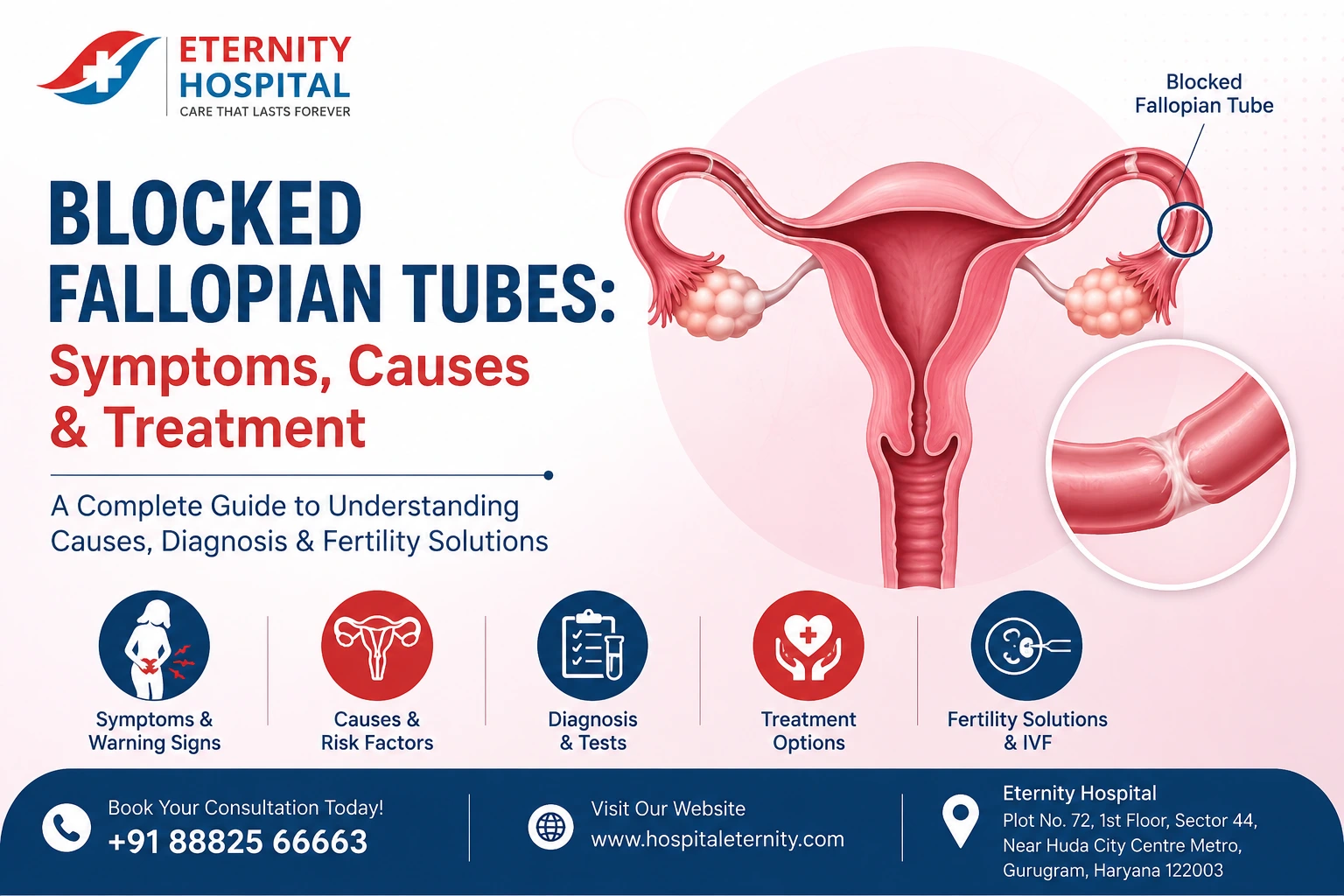
Imagine the fallopian tube as a pathway through which sperm and egg need to meet. If the tubes are blocked or damaged, natural conception may become more difficult.
Previous pelvic infections, some surgeries, and conditions such as endometriosis can contribute to problems involving the reproductive tract.
Problems involving the uterus can also affect fertility. Depending on your history, a fertility evaluation may therefore look not only at ovulation but also at the structure of the reproductive tract.
ASRM notes that tests such as hysterosalpingography (HSG) or sonohysterography (SHG) can be used to evaluate whether the fallopian tubes are open.
Endometriosis and Pelvic Conditions
Endometriosis occurs when tissue similar to the lining of the uterus grows outside the uterus. It can be associated with pelvic pain and may affect fertility.
Very painful periods, chronic pelvic pain, or a known history of endometriosis are reasons to discuss fertility with a doctor rather than simply continuing to wait.
A history of pelvic inflammatory disease can also be relevant because infections can damage the reproductive tract. The CDC specifically lists a history of pelvic inflammatory disease and known or suspected uterine or tubal disease among situations where couples should seek evaluation sooner.
Male Fertility Factors
Here is an important point that couples sometimes overlook: fertility problems are not only a woman’s issue.
Male factors can contribute to difficulty conceiving, either alone or together with female factors. WHO identifies problems involving sperm production, sperm movement, sperm shape, and semen ejaculation among possible causes of male infertility.
That is why evaluating only the woman may leave part of the picture unexplained.
Sperm Count, Movement and Shape
A semen analysis is commonly used to assess male fertility.
It can provide information about:
- Sperm concentration or number
- Sperm movement, known as motility
- Sperm shape, known as morphology
The CDC notes that male infertility may also involve testicular, hormonal, genetic, or ejaculatory problems.
A semen analysis is therefore an important part of many fertility evaluations.
Factors such as smoking, obesity, excessive alcohol or drug use, previous testicular injury, and exposure to certain medicines or environmental factors can also be relevant.
Lifestyle Factors That May Affect Fertility
Lifestyle is not the explanation for every fertility problem, but it can influence reproductive health.
Smoking, excessive alcohol use, recreational drugs, and significant weight problems have been associated with reduced fertility in men and women.
The goal should not be to create an unrealistic “perfect fertility lifestyle.” Instead, focus on practical improvements that support general health.
Factor | Why it may matter
Smoking Associated with reduced fertility
Excessive alcohol May negatively affect reproductive health
Obesity Associated with fertility problems in both sexes
Very low body weight Can interfere with reproductive function
Extreme weight changes May affect menstrual and hormonal function
Recreational drugs May affect reproductive function
Certain medications Some can affect sperm production or reproductive function
These factors do not prove that a particular person’s fertility problem is caused by lifestyle. They are risk factors that can be discussed during a medical assessment.
Timing Sex Around Ovulation
Sometimes the issue is not an underlying disease at all. Couples may simply be missing the fertile window.
The fertile window is the period during which intercourse is most likely to result in pregnancy. ASRM describes it as the six-day interval ending on the day of ovulation.
Intercourse every one to two days during the fertile window can help maximise the chance of conception.
If tracking ovulation becomes stressful, you do not necessarily need to monitor every detail of your cycle. Regular intercourse throughout the cycle can also be a practical approach for many couples.
Ovulation predictor kits may help some people identify the fertile period, but they are not a substitute for medical evaluation when there are signs of a fertility problem.
Could Stress or Weight Be Affecting Fertility?
Stress is often blamed for every fertility problem, but the relationship is more complicated.
Normal daily stress does not mean that you are responsible for not becoming pregnant. However, severe physical or emotional stress can sometimes disrupt menstrual function, particularly when it contributes to absent periods. The CDC lists excessive physical or emotional stress that results in amenorrhea as a possible fertility risk factor.
Weight can also matter. Both obesity and being significantly underweight may affect reproductive function.
The goal should therefore be healthy, sustainable habits, not extreme dieting or intense exercise in the hope of forcing pregnancy to happen.
Unexplained Infertility
What happens when all the tests appear normal, but pregnancy still does not occur?
This is called unexplained infertility.
It does not mean that the problem is imaginary. It means that currently available evaluation has not identified a clear cause.
The NHS notes that a cause cannot be identified in around 1 in 4 couples experiencing infertility.
Fertility is a complex process involving egg quality, sperm function, fertilisation, embryo development, implantation and many biological factors that cannot all be measured with routine tests.
For this reason, unexplained infertility should be discussed with a fertility specialist rather than treated as proof that nothing can be done.
When Should You See a Fertility Specialist?
You should consider professional evaluation if:
- You have been trying for 12 months and are under 35.
- You have been trying for 6 months and are 35 or older.
- You are over 40 and want to become pregnant.
- Your periods are irregular or absent.
- You have a history of endometriosis or very painful periods.
- You have had pelvic inflammatory disease.
- You have known or suspected problems with your uterus or fallopian tubes.
- You or your partner has a known condition that may affect fertility.
- There is a history of testicular injury, sexual dysfunction, or another possible male fertility factor.
These are not rigid rules for every patient. ASRM and CDC guidance both support earlier assessment when there are known risk factors.
If you are based in Ghaziabad, Indirapuram, Siddharth Vihar, Noida, Greater Noida, or Delhi NCR, choosing a healthcare facility where you can discuss your reproductive history and appropriate evaluation can be a practical next step.
For information about healthcare services, you can also visit Eternity Hospital.
What Tests May Be Recommended?
A fertility evaluation is not necessarily a long list of tests for everyone.
The tests depend on your age, medical history, menstrual cycle, previous pregnancies, and the circumstances of both partners.
A typical evaluation may include:
Area assessed Possible evaluation
Ovulation Menstrual history and selected hormonal assessment
Ovarian function Tests selected according to individual circumstances
Fallopian tubes HSG or SHG may be considered
Uterus Imaging when clinically indicated
Male fertility Semen analysis
Medical history Previous illnesses, surgery, infections and medications
Reproductive history Previous pregnancies, miscarriages and duration of trying
ASRM recommends that fertility evaluation assess ovulatory status, the structure and patency of the female reproductive tract, and semen evaluation of the male partner.
It is also important not to assume that every available fertility test is necessary. ASRM specifically advises against several specialised tests as routine parts of infertility evaluation when there is no other clinical indication.
Common Mistakes Couples Make While Trying to Conceive
Waiting too long despite warning signs
If periods are absent or highly irregular, there may be a reason to investigate sooner.
Assuming fertility is only a woman’s responsibility
Male factors can contribute significantly to infertility so that both partners may need assessment.
Trying only on one “perfect” day
Ovulation timing can vary. Focusing too narrowly on a single day can create unnecessary pressure.
Blaming stress for everything
Stress can affect health and, in some situations, reproductive function, but it should not be used to dismiss genuine fertility concerns.
Starting supplements without medical advice
More supplements do not automatically mean better fertility. Some products may interact with medicines or may not be appropriate for you.
Searching for a guaranteed fertility treatment
There is no single treatment that is suitable for every couple. The appropriate approach depends on the cause, age, reproductive history, and other medical factors.
Practical Steps to Take Now
If you are asking yourself, “Why am I not getting pregnant?”, start with these practical steps.
1. Track your menstrual cycle
Record when your period starts and how long your cycles usually last. This can give your doctor useful information about whether your cycles are regular.
2. Review your timing
Understand your fertile window and consider regular intercourse during that period. ASRM advises intercourse every one to two days during the fertile window when trying to maximise the chance of conception.
3. Look at both partners
Do not assume the issue is automatically related to the woman. A semen analysis may be an important part of the evaluation.
4. Review your medical history
Tell your doctor about previous pelvic infections, surgery, endometriosis, irregular periods, miscarriages, testicular injury, medications, and other relevant conditions.
5. Work on sustainable healthy habits
Avoid smoking and recreational drugs, limit excessive alcohol use, and aim for a healthy weight and balanced lifestyle.
6. Know when to seek help
Do not keep waiting indefinitely if you meet the recommended timeframe or have a known risk factor.
7. Ask questions before starting treatment
Before accepting a treatment plan, ask:
- What is the suspected cause of our fertility problem?
- Which tests are actually necessary?
- What are our treatment options?
- What are the benefits and risks?
- Are there alternatives?
- What happens if the first approach does not work?
- What follow-up will be required?
A good consultation should help you understand the reasoning behind the recommended plan rather than simply giving you a list of procedures.
Frequently Asked Questions
Why am I not getting pregnant even though my periods are regular?
Regular periods often suggest that ovulation is occurring, but they do not guarantee normal fertility. Fertility can also be affected by sperm health, fallopian tube problems, endometriosis, uterine conditions, egg-related factors, or other causes.
How long should I try before seeing a fertility doctor?
If the female partner is under 35 and there are no known risk factors, fertility evaluation is generally considered after 12 months of regular unprotected intercourse. At age 35 or older, evaluation is generally recommended after 6 months. Women over 40 may benefit from earlier assessment.
Can PCOS make it difficult to get pregnant?
Yes. PCOS can interfere with regular ovulation and therefore make conception more difficult for some women. However, PCOS does not automatically mean that pregnancy cannot occur. The appropriate evaluation and treatment depend on the individual.
Can a man be the reason a couple is not getting pregnant?
Yes. Male factors can contribute to infertility. Problems may involve sperm number, movement, or shape, testicular function, hormones, or ejaculation. A semen analysis is commonly used during evaluation.
When should I seek fertility help in Ghaziabad or Delhi NCR?
You can consider consulting a qualified healthcare professional if you have been trying for the recommended period, have irregular or absent periods, are over 35, have a known reproductive condition, or have another reason to be concerned about fertility. Both partners may need evaluation because fertility difficulties can involve either or both partners.
Conclusion
Not getting pregnant does not always have one obvious explanation. Ovulation, age, fallopian tubes, the uterus, sperm health, medical conditions, and lifestyle factors can all play a role.
The most useful next step is not to blame yourself or your partner. If you have been trying long enough to meet the recommended evaluation timeframe—or you already have a known fertility risk—consider speaking with a qualified healthcare professional. A proper assessment can help replace guesswork with a clearer understanding of your options.