

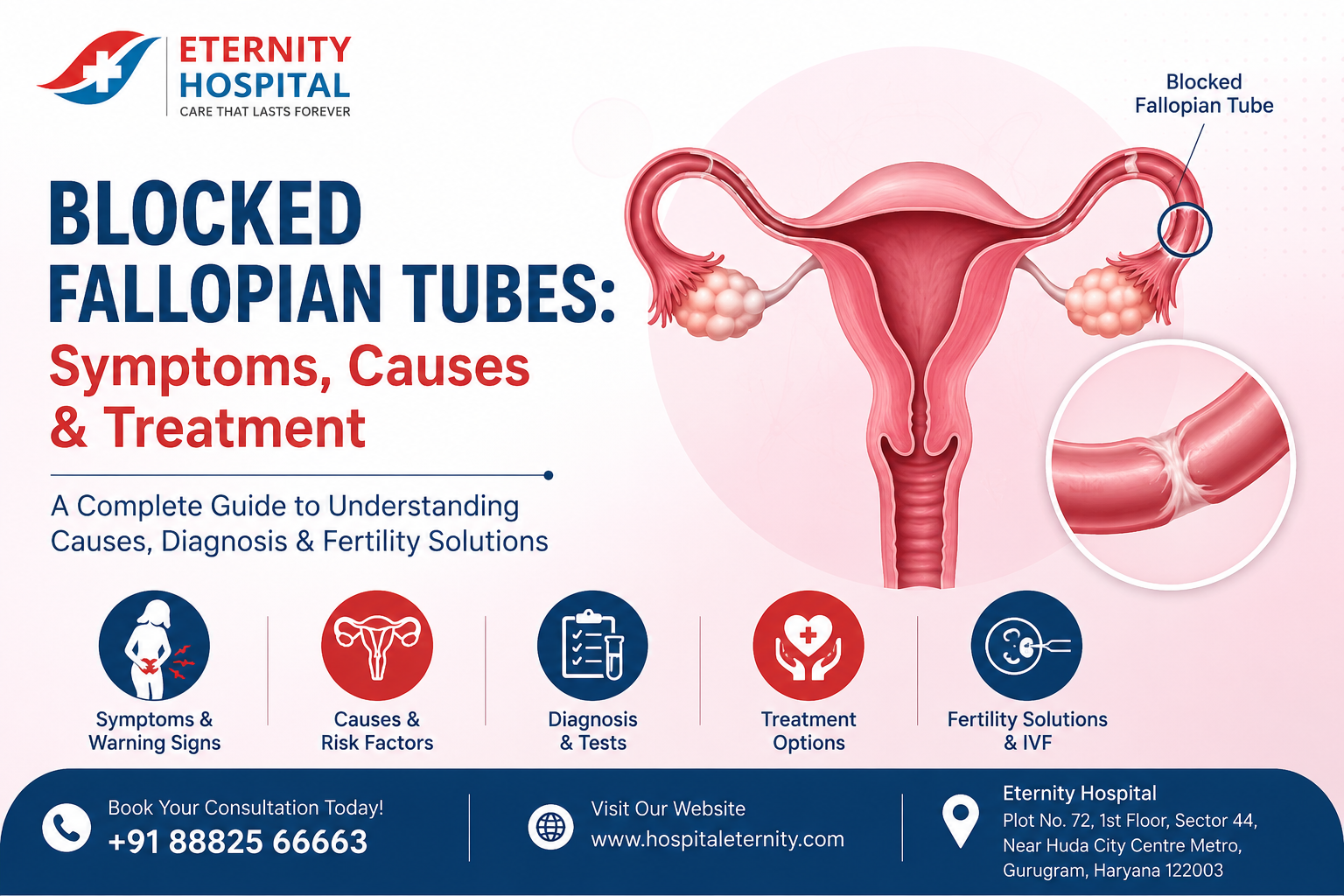
Blocked fallopian tubes are an important cause of infertility, but they do not always cause noticeable symptoms. A woman may have regular periods, normal ovulation, and no obvious pain while one or both tubes are partially or completely blocked. The problem may only become apparent when pregnancy does not occur after months of trying. According to the World Health Organization (WHO), bilateral tubal blockage accounted for 17.7% of identifiable female infertility causes in a large multi-country study, although the proportion varies between populations.
The good news is that a blocked tube does not automatically mean pregnancy is impossible. The appropriate treatment depends on whether one or both tubes are affected, where the blockage is located, the severity of tubal damage, your age, ovarian reserve, sperm health, previous pregnancies, and other fertility factors.
What Are Fallopian Tubes and Why Are They Important for Pregnancy?
Fallopian tubes are narrow structures connecting the ovaries with the uterus. After ovulation, an egg is picked up near the end of a fallopian tube and normally travels through the tube, where fertilisation can occur if sperm are present. The resulting embryo then travels toward the uterus for implantation.
When a tube is blocked or severely damaged, this pathway can be disrupted. A complete blockage can prevent sperm and egg from meeting, while damaged tubes may interfere with the movement of the egg or embryo. WHO describes tubal-factor infertility as a problem that can result from obstruction, scarring, disease, congenital abnormalities, or damage affecting the normal movement of reproductive cells or an embryo.
A 2024 retrospective study of 373 women undergoing fertility evaluation found that 95 women, or 25.5%, had at least one occluded tube. In that study, unilateral blockage was more common than bilateral blockage, and most identified occlusions were proximal. This illustrates why a diagnosis of “blocked tubes” needs more detail before treatment decisions are made.
One Blocked Tube vs Both Blocked Tubes
The effect on fertility is different depending on whether one or both tubes are affected.
Tubal condition Possible effect on natural conception Usual consideration
One tube open, one blocked Pregnancy may still occur naturally Depends on the health of the remaining tube and other fertility factors
Both tubes blocked Natural conception is significantly impaired Tubal treatment, or IVF may be considered
Tubes open but damaged Fertility may still be reduced Risk of complications such as ectopic pregnancy may need consideration
Hydrosalpinx Fluid-filled damaged tube can affect fertility treatment Specialist assessment is important
Having one open tube does not guarantee pregnancy, and having a blockage in one tube does not mean that fertility treatment is automatically required. Your doctor needs to consider the complete fertility picture rather than relying on the tubal finding alone.
What Causes Blocked Fallopian Tubes?
There is rarely a single cause that applies to every patient. Pelvic infections, previous pelvic surgery, endometriosis, abdominal or pelvic inflammation, previous ectopic pregnancy, and tubal procedures can all be associated with tubal damage or blockage.
Pelvic inflammatory disease (PID), including infections associated with Chlamydia trachomatis and Neisseria gonorrhoeae, can cause inflammation and scarring around the tubes. Previous abdominal or pelvic surgery can also result in adhesions that distort the normal anatomy. Endometriosis may cause inflammation and adhesions around the reproductive organs and can interfere with tubal function.
Tubal blockage can occur at different locations. A proximal blockage occurs closer to the uterus, while a distal blockage occurs toward the end of the tube near the ovary. This distinction matters because some proximal blockages can be related to temporary tubal spasm or material within the tube, while distal disease is more often associated with scarring and conditions such as hydrosalpinx.
Common Risk Factors
Your doctor may pay particular attention to tubal health if you have a history of:
- Pelvic inflammatory disease or certain sexually transmitted infections
- Endometriosis
- Previous ectopic pregnancy
- Pelvic or abdominal surgery
- Previous tubal surgery or sterilisation
- Significant pelvic adhesions
- Certain previous abdominal infections
- Problems identified during earlier fertility investigations
Not everyone with these risk factors will develop a blocked tube. Likewise, a person without an obvious risk factor can still have tubal-factor infertility.
Symptoms of Blocked Fallopian Tubes
One of the most important facts about blocked fallopian tubes is that many women have no specific symptoms. The blockage itself may not cause pain or changes in the menstrual cycle. Infertility may be the first reason a tubal problem is discovered.
When symptoms are present, they are usually related to the underlying condition rather than the blockage itself. For example, endometriosis may cause pelvic pain or painful periods, while a pelvic infection may cause pelvic discomfort, abnormal discharge, fever, or pain. Hydrosalpinx can sometimes be associated with pelvic discomfort or may be discovered during fertility testing.
Because symptoms cannot reliably confirm whether a fallopian tube is open, they should not be used as a substitute for fertility evaluation. The NHS explains that imaging tests can be used to look for signs of blocked tubes, with additional investigation sometimes required when a blockage is suspected.
When Should You Consider a Fertility Evaluation?
If you have been trying to conceive without success, particularly when there are known risk factors for tubal disease, a fertility evaluation may be appropriate. ASRM notes that infertility evaluation commonly involves assessment of reproductive history, ovulation, uterine and pelvic anatomy, tubal patency, and semen analysis.
For people younger than 35, evaluation is generally considered after 12 months of regular unprotected intercourse without pregnancy; for those aged 35 or older, evaluation is generally recommended after six months. Earlier assessment may be appropriate when there is a known or suspected fertility problem, such as previous pelvic infection, endometriosis, or tubal disease.
How Are Blocked Fallopian Tubes Diagnosed?
A doctor cannot determine tubal blockage simply by asking about symptoms. Testing is needed to assess whether the tubes are open and, in some cases, whether they are structurally damaged.
Hysterosalpingography (HSG)
Hysterosalpingography, commonly called HSG, is an X-ray examination in which contrast material is introduced through the cervix into the uterus and fallopian tubes. The movement of the contrast can show whether it passes through the tubes.
HSG is widely used for assessing tubal patency. ASRM describes it as a standard first-line test for evaluating tubal patency, particularly when tubal surgery may be considered.
An important point is that an apparent blockage, particularly bilateral proximal blockage, may sometimes require further assessment because contractions or technical factors can affect the result. A test suggesting blockage does not always mean that irreversible scarring is present.
Ultrasound-Based Testing
Specialised ultrasound techniques, including hysterosalpingo-contrast sonography (HyCoSy), can evaluate whether fluid passes through the fallopian tubes. The NHS also describes specialised contrast ultrasound as an option for assessing tubal patency.
Laparoscopy
Laparoscopy is a minimally invasive surgical procedure that allows a specialist to examine the pelvis directly. Dye can be introduced through the uterus to see whether it passes through the tubes.
It may be considered when there is a strong suspicion of pelvic disease, endometriosis, adhesions, or tubal abnormalities, or when surgery is already being considered. Because it is an invasive procedure, it is not automatically necessary for every person undergoing infertility testing.
Treatment for Blocked Fallopian Tubes
There is no single treatment that is appropriate for every blocked fallopian tube. The decision depends heavily on where the blockage is, how severe the damage is, whether one or both tubes are affected, age, ovarian reserve, sperm factors, and previous fertility history.
Treatment may include tubal recanalisation or other tubal surgery in selected cases. In other situations, in vitro fertilisation (IVF) may be a more appropriate way to bypass the fallopian tubes.
The WHO 2025 infertility guideline suggests surgery rather than IVF for some women under 35 with mild-to-moderate tubal disease, while suggesting IVF rather than surgery for severe tubal disease in women under 35 and for women aged 35 or older with tubal disease. These are conditional recommendations based on very low-certainty evidence, so individual clinical assessment remains essential.
Tubal Recanalisation
For certain proximal tubal blockages, a specialist may consider tubal cannulation or recanalisation. The aim is to restore an opening through the affected portion of the tube.
This approach is not appropriate for every type of blockage. Distal disease, extensive scarring, severe tubal damage, or hydrosalpinx may require a different strategy.
Tubal Surgery
Depending on the anatomy, surgical treatment may involve removing adhesions, repairing selected tubal abnormalities, or procedures designed to improve the opening at the end of the tube. The benefit must be balanced against the possibility of recurrent adhesions and other complications.
WHO identifies procedures such as adhesiolysis, fimbrioplasty, and salpingostomy among surgical approaches used for selected tubal disease.
IVF for Blocked Fallopian Tubes
IVF can bypass the fallopian tubes. Eggs are collected from the ovaries, fertilised with sperm in a laboratory, and an embryo is subsequently transferred into the uterus.
This can be particularly relevant when both tubes are severely damaged or blocked, when tubal surgery is unlikely to provide a reasonable benefit, or when other fertility factors make IVF more suitable. IVF does not repair the blocked tubes; it works around them.
What Is Hydrosalpinx and Why Does It Matter?
A hydrosalpinx is a fallopian tube that becomes blocked and distended with fluid, often because of previous inflammation or scarring. It is important because the fluid associated with hydrosalpinx can negatively affect implantation and IVF outcomes.
For patients with tubal-factor infertility due to hydrosalpinx who are proceeding with IVF, the WHO 2025 guideline suggests either salpingectomy or tubal occlusion before IVF, depending on the clinical circumstances and feasibility.
A fertility specialist should decide the correct option after evaluating the tubes, ovaries, uterus, ovarian reserve, age, previous surgeries, and reproductive goals.
Benefits, Risks and Expected Outcomes of Treatment
The main potential benefit of treating appropriate tubal disease is to improve the pathway for natural conception or to remove a barrier to fertility treatment. However, restoring tubal patency does not automatically result in pregnancy because conception depends on several other factors.
Tubal procedures can carry risks such as bleeding, infection, injury to nearby structures, recurrent blockage, or formation of adhesions. Even when a tube is successfully opened, previous damage may affect how well it functions.
A damaged fallopian tube can also increase concern about ectopic pregnancy, in which a fertilised egg implants outside the uterus, most commonly in a fallopian tube. Anyone who becomes pregnant after known tubal disease should receive appropriate early pregnancy assessment, particularly if there is pain or bleeding. Severe sudden abdominal pain, dizziness, fainting, or other concerning symptoms require urgent medical attention.
Blocked Fallopian Tube Treatment: Surgery vs IVF
FactorTubal Surgery/RecanalisationIVF
Main goal Restore or improve tubal function Bypass the fallopian tubes
Best suited to Selected types of tubal disease Severe/bilateral disease or selected fertility situations
Requires open functioning tubes afterward? Yes No
Treats the underlying blockage? Potentially No
Other fertility factors considered? Yes Yes
Invasive treatment? Depends on procedure Requires ovarian stimulation and egg retrieval.
Pregnancy outcome Depends on age, tubal function and other factors Depends on age, ovarian reserve, sperm quality, embryo factors and other factors.
There is no universally “better” option. WHO specifically recommends an individualised approach based on age and severity of tubal disease rather than applying one treatment to everyone.
Common Misconceptions About Blocked Fallopian Tubes
“Blocked tubes always cause pain.”
Not necessarily. Many women have no symptoms, and infertility may be the first indication.
“An HSG showing blockage means the tube can never open.”
Not always. Particularly with proximal findings, additional assessment may sometimes be needed to distinguish true obstruction from spasm or technical factors.
“If one tube is blocked, pregnancy is impossible.”
No. If the other tube is healthy and other fertility factors are favourable, natural conception may still occur.
“IVF is the only treatment.”
Not necessarily. Selected patients may benefit from tubal procedures, while others may be better candidates for IVF.
“Home remedies can unblock fallopian tubes.”
No established home remedy can reliably reopen a structurally blocked fallopian tube. Medical evaluation is important before choosing treatment.
What Should You Do If You Suspect Blocked Fallopian Tubes?
If you have been trying to conceive or have risk factors for tubal disease, avoid relying on symptoms alone. A practical next step is to discuss your reproductive history with a qualified gynaecologist or fertility specialist.
- Review your medical history, including previous infections, pelvic surgery, ectopic pregnancy, endometriosis, and previous fertility treatment.
- Assess both partners when appropriate, because infertility can involve female factors, male factors, combined factors, or unexplained causes.
- Ask whether tubal-patency testing is appropriate, such as HSG or another suitable investigation.
- Find out whether the blockage is proximal or distal and whether one or both tubes are affected.
- Discuss all reasonable options, including tubal treatment and IVF where clinically appropriate.
- Ask about risks, ectopic pregnancy, expected follow-up, and alternatives before proceeding with treatment.
Seeking Gynaecology and Fertility Care in Ghaziabad and Delhi NCR
For patients in Ghaziabad, Indirapuram, Siddharth Vihar, Noida, Greater Noida, and Delhi NCR, fertility concerns can be discussed with a qualified gynaecologist who can determine whether further evaluation is appropriate.
Eternity Hospital can be considered as a local healthcare option for patients seeking gynaecological consultation in the region. The appropriate investigation and treatment should be decided after an individual medical assessment rather than based on symptoms or online information alone.
Frequently Asked Questions
Can blocked fallopian tubes cause infertility?
Yes. Blocked or severely damaged fallopian tubes can interfere with the meeting of sperm and egg or the movement of an embryo toward the uterus. Tubal disease is recognised as an important cause of infertility.
What are the symptoms of blocked fallopian tubes?
Many women have no specific symptoms. When symptoms occur, they may be related to an underlying condition such as pelvic infection, endometriosis, or hydrosalpinx rather than the blockage itself.
Can blocked fallopian tubes be treated without IVF?
Sometimes. Selected proximal blockages may be treated with tubal recanalisation or other procedures, while selected patients may undergo tubal surgery. However, treatment depends on the location and severity of disease and the person’s overall fertility profile.
Can I get pregnant naturally with one blocked fallopian tube?
Yes, natural pregnancy may still be possible when one tube is open and functioning. The likelihood depends on several factors, including the health of the remaining tube, ovulation, age, sperm factors, and other reproductive conditions.
Is IVF necessary if both fallopian tubes are blocked?
IVF is one important treatment option because it bypasses the fallopian tubes. In some carefully selected cases, tubal surgery may also be considered. A fertility specialist can compare the options based on the individual’s age, tubal disease, ovarian reserve, sperm factors, and reproductive history.
Conclusion
A blocked fallopian tube is a treatable fertility problem in many situations, but the right approach depends on the individual diagnosis. Because symptoms alone cannot confirm tubal blockage, appropriate testing such as HSG, contrast ultrasound, or selected laparoscopic evaluation may be needed.
If you are concerned about blocked tubes or have been trying to conceive without success, the most useful next step is a professional fertility evaluation. Understanding exactly where the blockage is and how much tubal damage exists can help you and your doctor make a more informed decision between tubal treatment, IVF, or other fertility options