

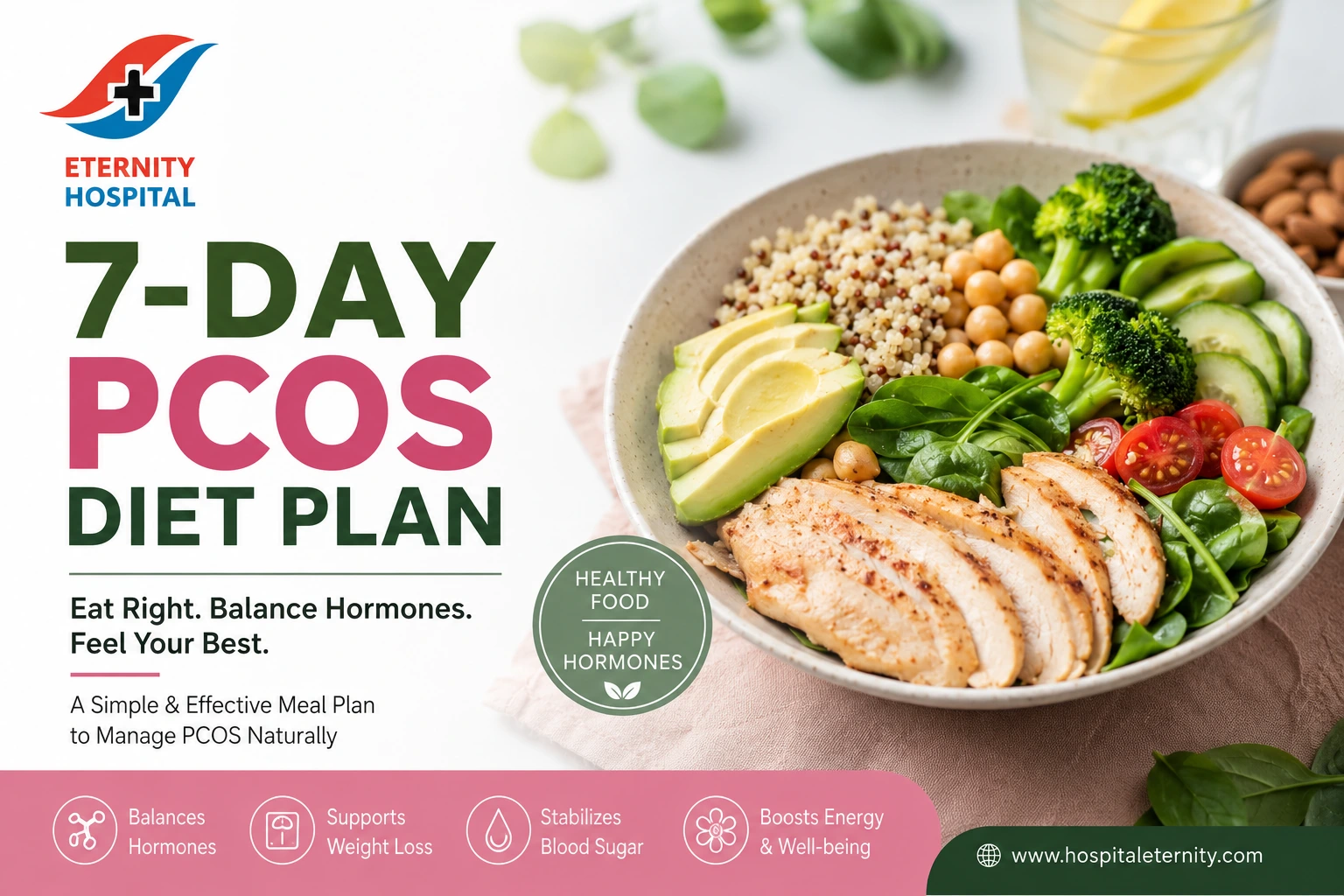
Day PCOS Diet Plan Polycystic Ovary Syndrome (PCOS) is one of the most common hormonal disorders affecting women of reproductive age. It can lead to irregular periods, weight gain, acne, excessive hair growth, insulin resistance, and fertility challenges. Research suggests that 8–13% of women worldwide are affected by PCOS, and many cases remain undiagnosed. Healthy eating, regular exercise, quality sleep, and stress management play a significant role in controlling symptoms.
A well-balanced 7-day PCOS diet plan focuses on high-fiber foods, lean protein, healthy fats, and low-glycemic carbohydrates to support hormone balance and improve insulin sensitivity. This guide provides an easy-to-follow Indian meal plan along with practical lifestyle tips.
What is PCOS?
PCOS is a hormonal condition where the ovaries produce higher-than-normal levels of male hormones (androgens). This hormonal imbalance affects ovulation and can lead to irregular menstrual cycles, ovarian cysts, acne, unwanted facial hair, and difficulty conceiving.
Although there is no permanent cure for PCOS, symptoms can often be managed successfully with the right combination of nutrition, physical activity, medical care, and lifestyle changes. Many women notice significant improvements after following a healthy eating plan consistently for several months.
Why Diet Matters in PCOS
Diet directly affects insulin levels. Since many women with PCOS have insulin resistance, controlling blood sugar becomes one of the most effective ways to reduce symptoms.
A PCOS-friendly diet can help:
- Improve insulin sensitivity
- Support healthy weight management.
- Reduce inflammation
- Balance hormones
- Improve menstrual regularity
- Enhance fertility
- Boost energy levels
Experts recommend choosing whole foods instead of highly processed meals and limiting added sugars whenever possible.
The Link Between Insulin Resistance and PCOS
Insulin resistance causes the body to produce extra insulin, which stimulates the ovaries to produce more androgens. This creates a cycle that worsens many PCOS symptoms.
Eating low-glycemic foods such as oats, whole grains, vegetables, legumes, and lean protein helps keep blood sugar levels stable and supports better hormonal health.
Benefits of a Healthy Diet
Following a structured meal plan may help:
- Reduce belly fat
- Improve ovulation
- Lower cholesterol
- Improve skin health
- Reduce acne
- Improve mood
- Increase fertility potential
Consistency is much more effective than crash dieting.
Foods to Eat
Choose foods rich in fiber, protein, and healthy fats.
| Whole grains | Oats, brown rice, quinoa, millet, whole wheat |
| Protein | Eggs, fish, chicken, tofu, paneer, dal |
| Vegetables | Spinach, broccoli, cucumber, carrots |
| Fruits | Apples, berries, oranges, guava |
| Healthy fats | Nuts, seeds, olive oil, avocado |
| Dairy | Unsweetened yogurt, low-fat milk |
Foods to Avoid
Reduce or avoid:
- Sugary drinks
- White bread
- Cakes
- Pastries
- Deep-fried foods
- Processed snacks
- Excess sweets
- Refined flour
- Fast food
These foods can increase insulin spikes and worsen inflammation.
7-Day PCOS Diet Plan
Day 1
Breakfast:
Vegetable oats with boiled eggs
Snack:
Apple with almonds
Lunch:
Brown rice, dal, mixed vegetables, salad
Snack:
Greek yogurt
Dinner:
Grilled chicken or paneer with sautéed vegetables
Day 2
Breakfast:
Moong dal chilla with mint chutney
Snack:
Roasted chana
Lunch:
Millet roti with palak paneer
Snack:
Buttermilk
Dinner:
Vegetable soup with grilled tofu
Day 3
Breakfast:
Greek yogurt with chia seeds
Snack:
Orange
Lunch:
Quinoa pulao with vegetables
Snack:
Mixed nuts
Dinner:
Grilled fish or paneer with broccoli
Day 4
Breakfast:
Vegetable poha
Snack:
Guava
Lunch:
Brown rice with rajma
Snack:
Pumpkin seeds
Dinner:
Mixed vegetable stir-fry
Day 5
Breakfast:
Besan chilla
Snack:
Cucumber slices
Lunch:
Whole wheat roti with dal and sabzi
Snack:
Unsweetened yogurt
Dinner:
Paneer tikka with salad
Day 6
Breakfast:
Oats upma
Snack:
Pear
Lunch:
Grilled chicken with vegetables
Snack:
Handful of walnuts
Dinner:
Vegetable khichdi
Day 7
Breakfast:
Vegetable omelet
Snack:
Apple
Lunch:
Millet roti with mixed vegetables
Snack:
Roasted makhana
Dinner:
Clear soup with grilled paneer
Lifestyle Tips
A healthy diet works best when combined with healthy habits.
Exercise
Aim for at least 150 minutes of moderate exercise every week. Walking, cycling, yoga, and strength training all help improve insulin sensitivity and support weight management.
Sleep
Try to get 7–9 hours of quality sleep every night. Poor sleep can affect hormone balance and increase cravings.
Stress Management
Practice yoga, meditation, deep breathing, or mindfulness. Managing stress may help reduce cortisol levels, which can indirectly improve PCOS symptoms.
When to Consult a Gynecologist
You should seek medical advice if you experience:
- Irregular periods
- Difficulty getting pregnant
- Rapid weight gain
- Severe acne
- Excess facial hair
- Heavy bleeding
- Pelvic pain
Early diagnosis and personalized treatment can help prevent long-term complications.
Why Choose Hospital Eternity
Managing PCOS often requires expert medical guidance along with lifestyle changes. At Hospital Eternity, experienced gynecologists provide comprehensive evaluation, diagnosis, and personalized treatment plans tailored to every woman’s needs.
The hospital offers advanced women’s healthcare services, fertility evaluation, hormone management, pregnancy care, and minimally invasive gynecological procedures in a patient-focused environment.
To learn more or book an appointment, visit https://www.hospitaleternity.com/.
Conclusion
A balanced diet remains one of the most effective ways to manage PCOS naturally. Choosing whole foods, limiting sugar, staying physically active, sleeping well, and maintaining a healthy weight can significantly improve hormone balance and overall well-being. Remember that every woman is different, so your meal plan may need adjustments based on your health, medications, and nutritional needs. Working with a qualified gynecologist or registered dietitian can help you achieve the best long-term results
.https://www.hospitaleternity.com/best-pregnancy-care-in-ghaziabad/