

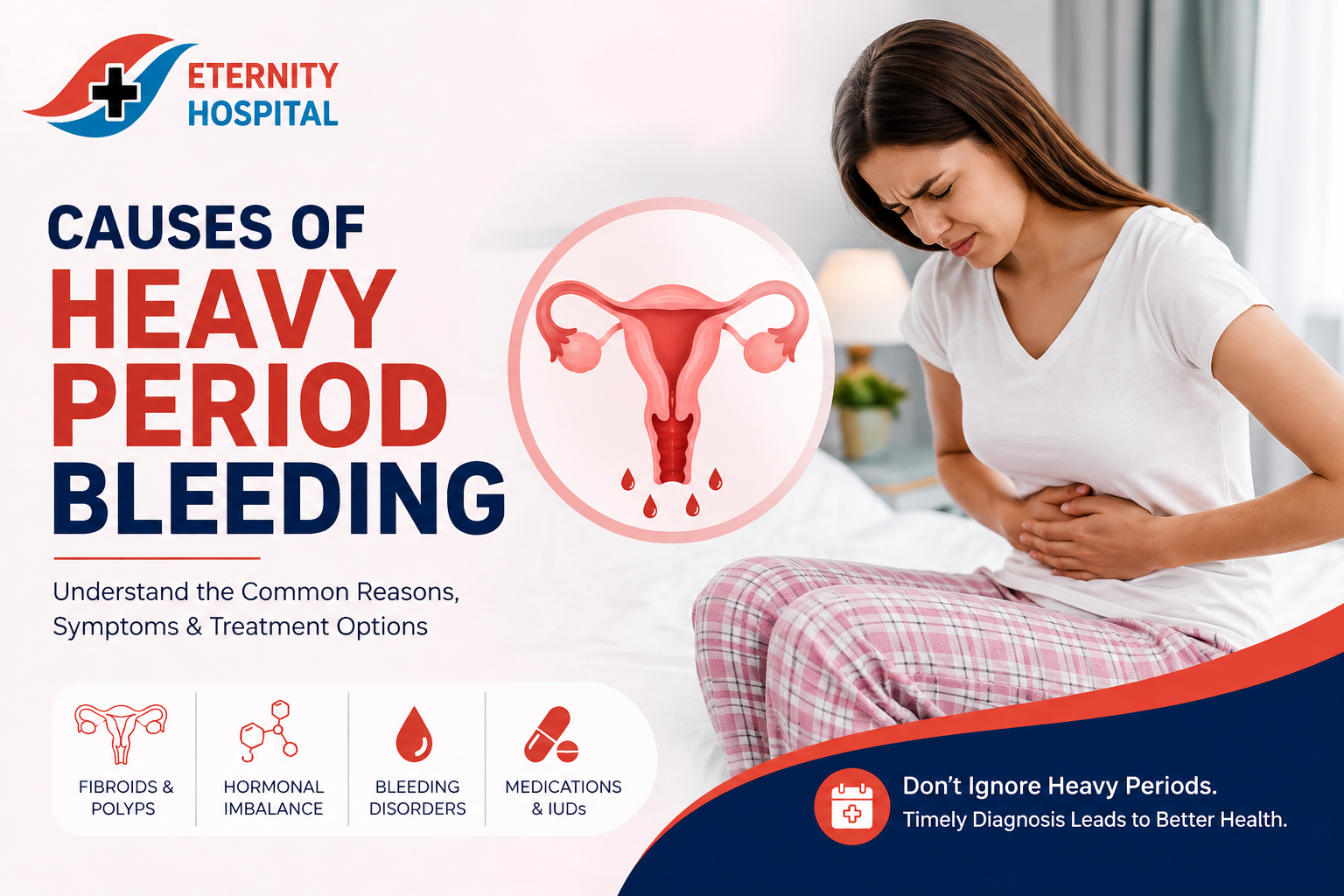
Causes of Heavy Period Bleeding Heavy period bleeding is more than simply having a “bad period.” If you regularly need to change a pad or tampon every 1–2 hours, bleed for more than 7 days, pass large blood clots, or find yourself avoiding normal activities because of your periods, the bleeding deserves medical attention. The American College of Obstetricians and Gynecologists (ACOG) defines heavy menstrual bleeding as excessive menstrual blood loss that interferes with physical, social, emotional, or material quality of life.
What Is Considered Heavy Period Bleeding?
There is no single amount of blood that determines whether every woman’s period is medically abnormal. ACOG describes normal uterine bleeding as generally lasting up to 8 days and occurring every 24–38 days, while heavy menstrual bleeding is defined more by excessive bleeding and its impact on daily life. The NHS lists several practical warning signs, including changing period products every 1–2 hours, bleeding for more than 7 days, passing clots larger than approximately 2.5 cm, bleeding through clothes or bedding, or experiencing significant tiredness or shortness of breath.
This distinction matters because some women naturally have heavier periods without an underlying disease, while others may have heavy bleeding because of fibroids, adenomyosis, hormonal problems, bleeding disorders, medication effects, or changes in the uterine lining. The goal of an evaluation is therefore not simply to confirm that the bleeding is heavy, but to understand why the bleeding is happening.
Why Heavy Periods Should Not Always Be Ignored
Heavy menstrual bleeding can gradually affect your health even when there is no dramatic emergency. Repeated blood loss can contribute to iron deficiency and anemia, which may cause fatigue, weakness, dizziness, headaches, reduced concentration, or shortness of breath. ACOG also notes that abnormal uterine bleeding is a common reason for gynecologic consultation.
The pattern of bleeding can provide useful clues. For example, heavy bleeding accompanied by painful periods may point toward conditions such as adenomyosis or fibroids, while irregular bleeding may be related to ovulation or hormonal changes. Bleeding that begins after menopause requires particularly careful evaluation because conditions involving the uterine lining can sometimes present this way.
The Main Causes of Heavy Period Bleeding
Doctors commonly organize causes of abnormal uterine bleeding using the PALM-COEIN classification developed through the International Federation of Gynecology and Obstetrics and used by ACOG. PALM refers mainly to structural causes—Polyps, Adenomyosis, Leiomyoma (fibroids), and Malignancy or hyperplasia—while COEIN refers to Coagulopathy, Ovulatory dysfunction, Endometrial causes, Iatrogenic causes, and causes Not Otherwise Classified.
This framework is useful because heavy bleeding can have more than one contributing factor. A woman may have fibroids and hormonal irregularity at the same time, for example, so a proper evaluation should consider the complete clinical picture rather than assuming that one symptom automatically identifies one disease.
Fibroids and Uterine Polyps
Fibroids are non-cancerous growths that develop in or around the muscular wall of the uterus. Depending on their size and location, they can contribute to heavy or prolonged periods, pelvic pressure, pain, or other menstrual changes. Fibroids located close to the uterine cavity may be particularly relevant when heavy bleeding is the main complaint.
Uterine polyps are growths involving the uterine lining. They are usually benign, but they can cause irregular or heavy bleeding. ACOG identifies both fibroids and polyps as common conditions that may be discovered when investigating heavy menstrual bleeding, and hysteroscopy can sometimes be used to identify and treat these problems.
The important point is that having heavy periods does not automatically mean that you have fibroids or polyps. Imaging or another appropriate examination is needed to determine whether a structural abnormality is actually present.
Adenomyosis and Endometriosis
Adenomyosis occurs when tissue similar to the uterine lining grows into the muscular wall of the uterus. It can be associated with heavy periods, painful menstruation, pelvic discomfort, and an enlarged or tender uterus. The condition is more commonly considered when heavy bleeding occurs alongside significant menstrual pain.
Endometriosis is different: tissue similar to the uterine lining grows outside the uterus. Endometriosis is particularly associated with pelvic pain, although menstrual symptoms can vary considerably between individuals. The NHS includes both adenomyosis and endometriosis among conditions that may be associated with heavy periods.
These conditions can sometimes overlap, which is why describing both the amount of bleeding and the type of pain to your gynecologist is helpful.
Hormonal Changes and Ovulation Problems
Hormonal fluctuations are another important cause of heavy or irregular bleeding. When ovulation does not occur regularly, the usual balance between estrogen and progesterone can change the way the uterine lining develops and sheds. This may result in bleeding that is unpredictable, prolonged, or unusually heavy.
Ovulatory dysfunction can occur at different stages of life. It may be seen during the early years after periods begin, during reproductive years in association with conditions such as polycystic ovary syndrome (PCOS), and during the years approaching menopause when ovarian function becomes less predictable.
ACOG’s classification specifically includes ovulatory dysfunction among the recognized causes of abnormal uterine bleeding. This is why a menstrual history is often as important as an ultrasound when a woman presents with heavy periods.
PCOS, Thyroid Problems and Other Hormonal Conditions
PCOS can affect ovulation and menstrual regularity. Some women with PCOS have long gaps between periods followed by prolonged or heavier bleeding. This pattern should not simply be dismissed as a normal feature of PCOS because persistent abnormal bleeding may require evaluation of the uterine lining.
Thyroid disorders can also influence menstrual patterns. Both the thyroid and reproductive hormones are involved in regulating multiple body processes, so thyroid dysfunction may be considered when menstrual changes occur alongside symptoms such as unexplained weight changes, temperature sensitivity, changes in energy, or altered heart rate.
The presence of a hormonal condition does not automatically explain every episode of heavy bleeding. A clinician may need to consider pregnancy, medications, structural abnormalities, anemia, and other causes depending on the individual’s age and history.
Bleeding Disorders Can Cause Heavy Periods
Not every cause of heavy menstrual bleeding originates in the reproductive system. Some women have an underlying bleeding or clotting disorder that makes it difficult for the body to control bleeding normally.
Von Willebrand disease is one example. ACOG identifies it as an important cause of heavy menstrual bleeding and reports that von Willebrand disease has been identified in approximately 5%–24% of women with chronic heavy menstrual bleeding in the studies cited in its clinical guidance.
A bleeding disorder may be particularly worth investigating when heavy periods have been present since the very beginning of menstruation, or when there is also a history of excessive bleeding after surgery, dental procedures, childbirth, frequent nosebleeds, easy bruising, gum bleeding, or a family history of abnormal bleeding.
Medicines and Contraception
Some medicines can influence menstrual bleeding. Anticoagulants or blood thinners, for example, can make bleeding heavier. The copper intrauterine contraceptive device can also increase menstrual bleeding in some women.
Hormonal contraception can change bleeding patterns as well. Depending on the method, some women may experience lighter periods, irregular spotting, or changes in the timing and duration of bleeding.
This does not mean that you should stop a prescribed medicine or contraceptive method on your own. If heavy bleeding begins after starting a medication or contraceptive, tell your healthcare professional so the potential benefits and side effects can be assessed together.
Pregnancy-Related Bleeding Must Be Considered
Heavy bleeding is not always a menstrual problem. If pregnancy is possible, abnormal bleeding can sometimes be related to pregnancy complications and should not automatically be treated as a normal period.
For this reason, pregnancy testing may be part of the initial evaluation of abnormal uterine bleeding in reproductive-age women. A sudden change in bleeding accompanied by abdominal or pelvic pain, dizziness, fainting, or other concerning symptoms requires prompt medical assessment.
The safest approach is simple: if pregnancy is possible and the bleeding is unusual for you, seek medical advice rather than assuming that it is just a heavier period.
Perimenopause Can Change Periods
Periods often become less predictable as menopause approaches. Ovulation may become irregular, which can produce changes in cycle length, flow, and duration. Some women notice that periods become heavier before becoming less frequent.
That does not mean every heavy period during perimenopause should be ignored. ACOG advises women to discuss abnormal bleeding changes with an obstetrician-gynecologist because conditions such as polyps, endometrial hyperplasia, and, less commonly, endometrial cancer can also cause abnormal bleeding.
Age alone does not provide a diagnosis. The bleeding pattern, medical history, risk factors, examination, and appropriate investigations all contribute to determining the cause.
Endometrial Hyperplasia and Other Uterine-Lining Problems
The endometrium is the lining inside the uterus that normally thickens during the menstrual cycle and is shed during menstruation. When hormonal stimulation causes the lining to become excessively thick, endometrial hyperplasia can develop.
Abnormal bleeding is a common symptom of endometrial hyperplasia. ACOG recommends medical evaluation for women with abnormal bleeding, with the specific approach depending on age, risk factors, and the clinical situation.
Endometrial cancer is less common than benign causes such as fibroids or hormonal dysfunction, but it is an important reason not to dismiss persistent abnormal bleeding. Bleeding after menopause is particularly important and should always be discussed with a qualified gynecologist.
Heavy Periods: Common Causes at a Glance
Possible cause | What may accompany heavy bleeding | How it may be evaluated
Fibroids Heavy or prolonged periods, pelvic pressure, pain Examination, ultrasound, sometimes hysteroscopy or other imaging
Polyps Irregular or heavy bleeding Ultrasound, hysteroscopy or tissue evaluation when indicated
Adenomyosis Heavy, painful periods, pelvic discomfort Clinical assessment and imaging
Ovulatory dysfunction Irregular cycles, unpredictable bleeding Menstrual history, blood tests and evaluation of underlying causes
PCOS Irregular periods, prolonged bleeding after missed periods Medical history, examination and targeted investigations
Thyroid disorder Menstrual changes with other thyroid-related symptoms Thyroid blood testing when appropriate
Bleeding disorder Heavy periods from an early age, easy bruising or other bleeding Medical history and targeted blood testing
Medicines Bleeding may begin or worsen after a medication change Medication review.
Copper IUD Heavier periods, especially after insertion Contraceptive history and clinical assessment
Endometrial hyperplasia Heavy, prolonged or irregular bleeding Ultrasound and, when indicated, endometrial sampling
Pregnancy-related causes Unusual bleeding with or without pain Pregnancy testing and urgent assessment when necessary
When Is Heavy Bleeding an Emergency?
Not every heavy period requires emergency treatment, but certain patterns should never be ignored. ACOG advises seeking medical attention when bleeding is so heavy that a pad or tampon needs to be changed every hour for more than two consecutive hours, particularly when this is accompanied by symptoms such as dizziness, light-headedness, chest pain, or shortness of breath.
Severe weakness, fainting, rapid heartbeat, or difficulty breathing can indicate significant blood loss or anemia and require urgent medical assessment. Heavy bleeding during a possible pregnancy should also be evaluated promptly.
If you are unsure whether your bleeding is severe enough to require urgent care, it is safer to contact a healthcare professional rather than trying to judge blood loss at home.
How Doctors Find the Cause of Heavy Periods
A medical evaluation usually begins with a detailed history. Your doctor may ask when the heavy bleeding started, how many days it lasts, how frequently you change pads or tampons, whether you pass clots, whether you have pain, whether your cycles are regular, and whether the problem has changed recently.
A complete blood count (CBC) may be used to look for anemia. Depending on your symptoms and history, your doctor may also consider pregnancy testing, thyroid testing, bleeding-disorder evaluation, pelvic examination, ultrasound, hysteroscopy, or assessment of the uterine lining.
ACOG recommends keeping an abnormal bleeding diary because documenting bleeding over several weeks can help your gynecologist understand the pattern. You can record the dates of bleeding, approximate number of products used, clotting, pain, spotting between periods, and any associated symptoms.
Treatment Depends on the Cause
There is no single treatment for heavy menstrual bleeding because the right approach depends on what is causing it and on factors such as age, reproductive plans, medical history, severity of bleeding, and personal preferences.
For some women, medicines may be appropriate. Depending on the clinical situation, options can include hormonal treatments, tranexamic acid, certain anti-inflammatory medicines, or other therapies. If a structural problem such as a polyp or certain types of fibroid is responsible, a procedure may be considered.
The treatment decision should therefore follow evaluation rather than precede it. A medicine that works well for one cause may not address another cause, which is why identifying the underlying problem is an important part of care.
Common Misconceptions About Heavy Period Bleeding
One common misconception is that heavy periods are always normal because they run in the family. Family patterns can occur, but inherited bleeding disorders and other medical conditions can also run in families, so persistent heavy bleeding still deserves appropriate assessment.
Another misconception is that large clots are always harmless. Clots can occur during heavy menstrual flow, but frequent or unusually large clots combined with prolonged or disruptive bleeding should be discussed with a doctor.
It is also incorrect to assume that fibroids automatically cause heavy bleeding. Fibroids are one possible cause, but hormonal disorders, adenomyosis, polyps, medications, bleeding disorders, and uterine-lining abnormalities can also contribute.
What You Can Do Before Your Gynecology Appointment
Keeping accurate information can make your consultation much more useful. Rather than simply saying “my periods are very heavy,” record what actually happens during your cycle.
- Track your cycle dates and record when bleeding starts and ends.
- Record how often you change period products, especially during the heaviest days.
- Note the size and frequency of blood clots if you experience them.
- Write down associated symptoms, such as pelvic pain, dizziness, fatigue, shortness of breath, or bleeding between periods.
- Prepare a medication and contraception list, including supplements and blood thinners.
- Mention any history of excessive bleeding after surgery, childbirth, dental procedures, or injuries.
- Tell your doctor about family history of bleeding disorders or gynecologic conditions.
ACOG’s abnormal bleeding diary is specifically designed to help patients and clinicians identify patterns that may otherwise be difficult to remember during a consultation.
When Should You See a Gynecologist?
You should consider a gynecologic evaluation if heavy bleeding is recurring, lasts longer than usual, interferes with work or daily activities, causes fatigue, or represents a significant change from your normal periods.
Medical evaluation is especially important when heavy bleeding begins suddenly, occurs between periods, follows sexual intercourse, develops after menopause, or occurs with significant pelvic pain. It is also important when you have symptoms that could suggest anemia, such as persistent tiredness, weakness, dizziness, or shortness of breath.
For women in Ghaziabad, Indirapuram, Siddharth Vihar, Noida, and Greater Noida, a gynecology consultation can help determine whether heavy periods are related to hormonal changes, fibroids, adenomyosis, polyps, anemia, medication effects, or another condition. Eternity Hospital provides healthcare services for patients who need professional evaluation, and details about available services can be reviewed on the hospital’s official website.
Conclusion
Heavy period bleeding is a symptom, not a diagnosis. The cause may be relatively straightforward, such as hormonal changes or medication effects, but it can also be linked to fibroids, polyps, adenomyosis, bleeding disorders, problems involving the uterine lining, or other medical conditions.
The most useful step is to stop measuring the problem only by how much blood you think you are losing and start looking at the pattern, duration, impact, and associated symptoms. If your periods regularly interfere with daily life, last longer than 7 days, require very frequent product changes, or leave you tired or breathless, arrange an evaluation with a qualified gynecologist rather than simply accepting the bleeding as your normal.