

Autoimmune Disorders and Immune System-Related Fertility Problems
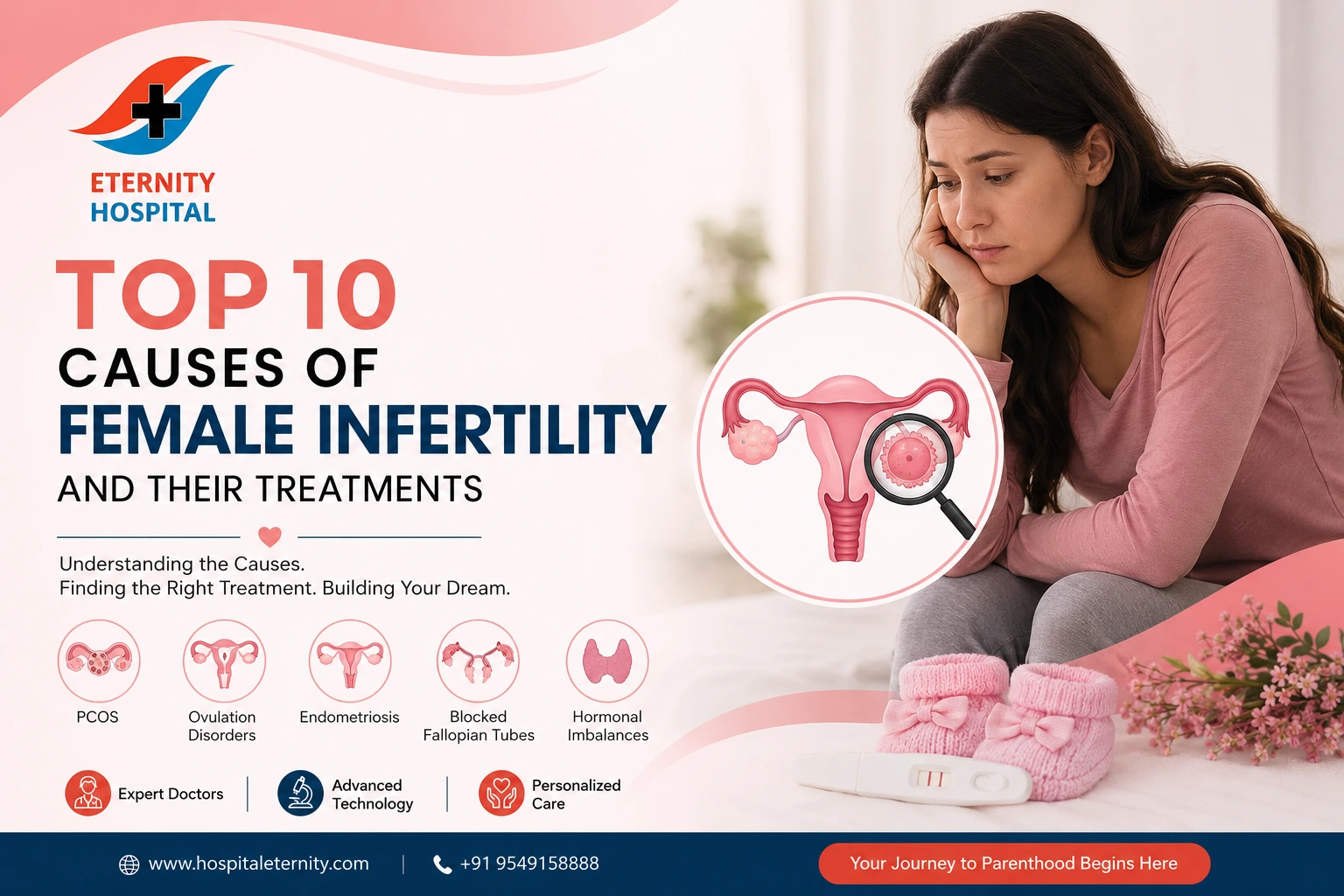
Top 10 Causes of Female Infertility and Their Treatments Sometimes the body’s immune system mistakenly attacks healthy reproductive tissues, creating challenges for conception. Autoimmune conditions such as lupus, rheumatoid arthritis, and autoimmune thyroid disease can interfere with ovulation, implantation, and embryo development. Although autoimmune infertility is less common than conditions like PCOS or endometriosis, it remains an important factor that fertility specialists investigate when no obvious cause is found.
Women with autoimmune disorders may experience repeated implantation failure, recurrent miscarriages, or unexplained infertility. In these situations, doctors perform specialized blood tests to evaluate immune markers, thyroid function, and inflammatory responses. Managing the underlying autoimmune condition often improves fertility outcomes significantly.
Treatment may include medications to control inflammation, thyroid hormone replacement therapy when necessary, and personalized fertility treatments. Fertility specialists carefully balance immune management with reproductive goals to maximize the chances of a healthy pregnancy. Modern reproductive medicine has greatly improved outcomes for women facing autoimmune-related fertility challenges.
. Premature Ovarian Insufficiency (POI)
Premature Ovarian Insufficiency, sometimes called premature ovarian failure, occurs when the ovaries stop functioning normally before the age of 40. This condition can dramatically reduce egg production and estrogen levels, making natural conception difficult. According to medical research, POI may result from genetic factors, autoimmune disorders, chemotherapy treatments, or unknown causes.
Women with POI often experience irregular periods, hot flashes, night sweats, mood changes, and difficulty conceiving. The diagnosis usually involves hormone testing, including FSH, LH, AMH, and estrogen levels, combined with ultrasound assessments of ovarian reserve.
Treatment options depend on the severity of ovarian decline and the patient’s reproductive goals. Some women may still conceive naturally if occasional ovulation occurs. Fertility specialists often recommend IVF using the woman’s own eggs when possible, while donor egg IVF remains one of the most successful options for women with advanced POI. Early diagnosis plays a critical role because fertility preservation opportunities may be available in the initial stages.
Thyroid Disorders and Hormonal Imbalances
The thyroid gland acts like the body’s metabolic control center. Even minor disturbances in thyroid hormone levels can affect ovulation, menstrual regularity, and fertility. Both hypothyroidism and hyperthyroidism are linked to fertility challenges because reproductive hormones rely on a delicate hormonal balance.
An underactive thyroid can lead to irregular periods, anovulation, weight gain, and increased miscarriage risk. An overactive thyroid may cause menstrual disturbances, anxiety, and reduced fertility. Many women remain unaware that they have thyroid dysfunction because symptoms can be subtle and develop gradually.
Fortunately, thyroid-related infertility is often highly treatable. Blood tests measuring TSH, T3, and T4 levels can identify abnormalities. Treatment usually involves medication to normalize thyroid hormone levels. Once hormonal balance is restored, ovulation frequently improves, significantly increasing the chances of natural conception. Fertility specialists routinely screen for thyroid disorders because correcting them can sometimes eliminate the need for more advanced fertility treatments.
Lifestyle Factors Affecting Female Fertility
Modern lifestyles have introduced several fertility challenges that were less common in previous generations. Stress, obesity, smoking, excessive alcohol consumption, poor nutrition, lack of sleep, and environmental toxin exposure can all negatively affect reproductive health. A single factor does not control fertility; it reflects the overall health of the entire body.
Excess body weight can worsen insulin resistance and hormonal imbalances, especially in women with PCOS. On the other hand, being significantly underweight can disrupt ovulation by affecting estrogen production. Chronic stress may interfere with hormonal signaling between the brain and ovaries, leading to irregular menstrual cycles.
Treatment focuses on sustainable lifestyle improvements. Women are often advised to maintain a healthy BMI, adopt a nutrient-rich diet, exercise regularly, avoid smoking, limit alcohol consumption, and prioritize quality sleep. While lifestyle changes alone may not solve every fertility problem, they significantly improve the effectiveness of fertility treatments and increase the likelihood of a successful pregnancy.
. Unexplained Infertility
One of the most frustrating diagnoses for couples is unexplained infertility. In these cases, standard fertility tests appear normal, yet pregnancy does not occur despite regular attempts. Medical experts estimate that a significant percentage of infertility cases fall into this category because current testing cannot identify every subtle reproductive issue.
Unexplained infertility does not mean there is no problem. It simply means that existing diagnostic tools have not yet identified the exact cause. Hidden issues may involve egg quality, sperm-egg interaction, implantation defects, genetic abnormalities, or subtle hormonal disturbances.
Treatment usually follows a stepwise approach. Doctors may recommend ovulation induction, intrauterine insemination (IUI), or IVF depending on the woman’s age and fertility history. Many couples with unexplained infertility eventually achieve pregnancy through a combination of medical intervention, lifestyle optimization, and persistence.
Modern Treatments for Female Infertility
Advances in reproductive medicine have transformed fertility care. Today’s treatments are highly personalized, allowing specialists to address specific causes rather than applying a one-size-fits-all approach.
Cause Common Treatment Options
PCOS Weight management, ovulation induction, IVF
Endometriosis: Laparoscopic surgery, fertility medications, IVF
Blocked Tubes Tubal surgery, IVF
Fibroids & Polyps Hysteroscopic removal, myomectomy
Diminished Ovarian Reserve IVF, donor eggs
Thyroid Disorders: Hormone replacement therapy
POI Fertility preservation, donor egg IVF
Hormonal Imbalances, Medication, and Hormone Regulation
Lifestyle Factors: Nutrition, exercise, stress management
Unexplained Infertility IUI, IVF, fertility monitoring
The key to successful treatment lies in identifying the root cause accurately and starting intervention at the appropriate time.
Why Early Fertility Evaluation Matters
Many couples delay seeking help because they assume pregnancy will happen naturally with enough time. While patience is important, fertility has a biological timeline. Women under 35 are generally advised to seek evaluation after one year of trying to conceive. Women over 35 should consider a fertility assessment after six months of unsuccessful attempts.
Early diagnosis allows doctors to identify conditions such as PCOS, endometriosis, thyroid disorders, or tubal blockages before they become more severe. Prompt intervention often improves treatment success rates while reducing emotional stress and financial burden.
Fertility evaluations typically include hormone testing, ultrasound scans, ovulation monitoring, semen analysis, and assessment of the reproductive organs. These investigations provide valuable insights that guide personalized treatment planning.
Expert Fertility Care at Eternity Hospital
If you are struggling with infertility, seeking specialized medical guidance can make a significant difference. Eternity Hospital offers comprehensive fertility evaluation, advanced reproductive treatments, and personalized care for women facing fertility challenges.
The hospital’s experienced gynecologists and fertility specialists focus on identifying the underlying cause of infertility and creating customized treatment plans. Whether the issue involves PCOS, endometriosis, hormonal imbalance, tubal blockage, or unexplained infertility, patients receive evidence-based care supported by modern diagnostic technology.
From fertility counseling and ovulation induction to advanced assisted reproductive techniques, the goal is to help couples move confidently toward parenthood while receiving compassionate support throughout their journey.
Conclusion
Female infertility is not a single disease but a collection of medical conditions that can affect ovulation, fertilization, implantation, or pregnancy maintenance. The top 10 causes of female infertility include PCOS, endometriosis, blocked fallopian tubes, uterine abnormalities, age-related fertility decline, autoimmune disorders, premature ovarian insufficiency, thyroid disorders, lifestyle factors, and unexplained infertility. Each condition presents unique challenges, but modern reproductive medicine offers effective solutions for most women.
Understanding the cause is the first step toward successful treatment. With early diagnosis, proper medical guidance, and individualized care, many women who once struggled with infertility are now achieving healthy pregnancies. The journey may require patience and perseverance, but today’s fertility treatments provide more hope than ever before.