

Types of Placenta: Complete Guide to Placental Positions, Functions, Risks, and Pregnancy Care
Pregnancy is one of the most beautiful journeys in a woman’s life. Throughout these nine months, one temporary organ plays an extraordinary role in supporting both the mother and the growing baby. That organ is the placenta. Although many people have heard the word before, very few truly understand how important it is, the different types of placenta, and how its location can influence pregnancy and childbirth.
The placenta is often referred to as the baby’s lifeline because it delivers oxygen, nutrients, hormones, and antibodies while removing waste products from the baby’s blood. It grows alongside the baby and adapts continuously throughout pregnancy to meet the increasing nutritional demands of fetal development. Every healthy pregnancy depends on a well-functioning placenta, making it one of the most remarkable organs the human body creates.
The position of the placenta varies from one pregnancy to another. Some women have an anterior placenta, while others may have a posterior, fundal, or low-lying placenta. In certain cases, abnormalities such as placenta previa or placenta accreta can develop, requiring specialized medical care. Fortunately, modern ultrasound technology allows doctors to monitor placental health closely, helping ensure the safest possible pregnancy and delivery.
In this comprehensive guide, you’ll learn everything about the types of placenta, their functions, possible complications, diagnosis, treatment options, and practical tips for maintaining a healthy pregnancy.
What is a Placenta?
The placenta is a temporary yet highly specialized organ that develops inside the uterus shortly after conception. It forms from cells that originate from the fertilized egg and attaches securely to the uterine wall. Through the umbilical cord, it creates a direct connection between the mother and her developing baby. This unique connection allows nutrients, oxygen, and immune protection to reach the fetus while removing carbon dioxide and waste products efficiently.
Unlike any other organ, the placenta functions as the baby’s lungs, kidneys, digestive system, and immune support throughout pregnancy. It also produces essential hormones such as human chorionic gonadotropin (hCG), progesterone, estrogen, and human placental lactogen, all of which are necessary for maintaining pregnancy and supporting fetal growth. Without these hormones, pregnancy cannot continue normally.
The placenta also acts as a protective filter. While it blocks many harmful substances, it is important to understand that certain infections, alcohol, smoking, chemicals, and some medications can still cross the placenta and affect the developing baby. This is why healthcare providers emphasize healthy lifestyle choices during pregnancy.
Typically weighing around 500 to 700 grams by full term, the placenta is delivered shortly after the baby is born during the third stage of labor. Despite existing for only about nine months, its contribution to a baby’s development is truly remarkable.
Why is the Placenta Important During Pregnancy?
The placenta performs numerous life-sustaining functions that make healthy fetal development possible. Every minute of every day, it works tirelessly to maintain the baby’s environment inside the womb. It is responsible for delivering oxygen-rich blood from the mother to the fetus while simultaneously carrying waste products away for elimination. This constant exchange keeps the baby’s organs developing properly.
Another essential role of the placenta is nutrient transportation. Vitamins, proteins, fats, carbohydrates, minerals, and water all pass through the placenta to nourish the baby. As pregnancy progresses and the baby grows rapidly, the placenta becomes increasingly efficient at meeting these nutritional demands.
Hormone production is equally important. Hormones produced by the placenta help maintain the uterine lining, prevent premature labor, prepare the breasts for breastfeeding, regulate maternal metabolism, and support fetal growth. These hormones also help the mother’s body adapt to pregnancy by influencing circulation, blood volume, and immune responses.
The placenta additionally transfers protective antibodies from the mother to the baby during the final months of pregnancy. These antibodies provide temporary immunity after birth, helping newborns fight infections during their first few months of life before their own immune systems mature.
When the placenta functions properly, it creates the ideal environment for healthy fetal development. However, placental abnormalities can lead to complications such as restricted fetal growth, premature birth, excessive bleeding, or delivery challenges, highlighting the importance of regular prenatal care and ultrasound monitoring.
How Does the Placenta Develop?
Placental development begins almost immediately after fertilization. Once the fertilized egg implants into the lining of the uterus, specialized cells known as trophoblasts begin forming the placenta. These cells invade the uterine wall and establish an intricate network of blood vessels that will eventually allow nutrients and oxygen to pass from mother to baby.
During the first trimester, the placenta grows rapidly alongside the embryo. Tiny finger-like projections called chorionic villi develop, dramatically increasing the surface area available for nutrient exchange. This sophisticated structure enables efficient communication between maternal and fetal blood supplies without allowing the two bloodstreams to mix directly.
By the second trimester, the placenta becomes fully functional and assumes complete responsibility for nourishing the fetus. It continuously expands as pregnancy progresses, adapting to the baby’s changing nutritional needs. Blood flow through the placenta increases significantly during the final months of pregnancy, ensuring adequate oxygen delivery for rapid fetal growth.
The placenta usually remains attached to the uterine wall until after delivery. Once the baby is born, uterine contractions help separate the placenta naturally, allowing it to be delivered safely. Any difficulty in placental separation requires immediate medical attention to prevent excessive maternal bleeding.
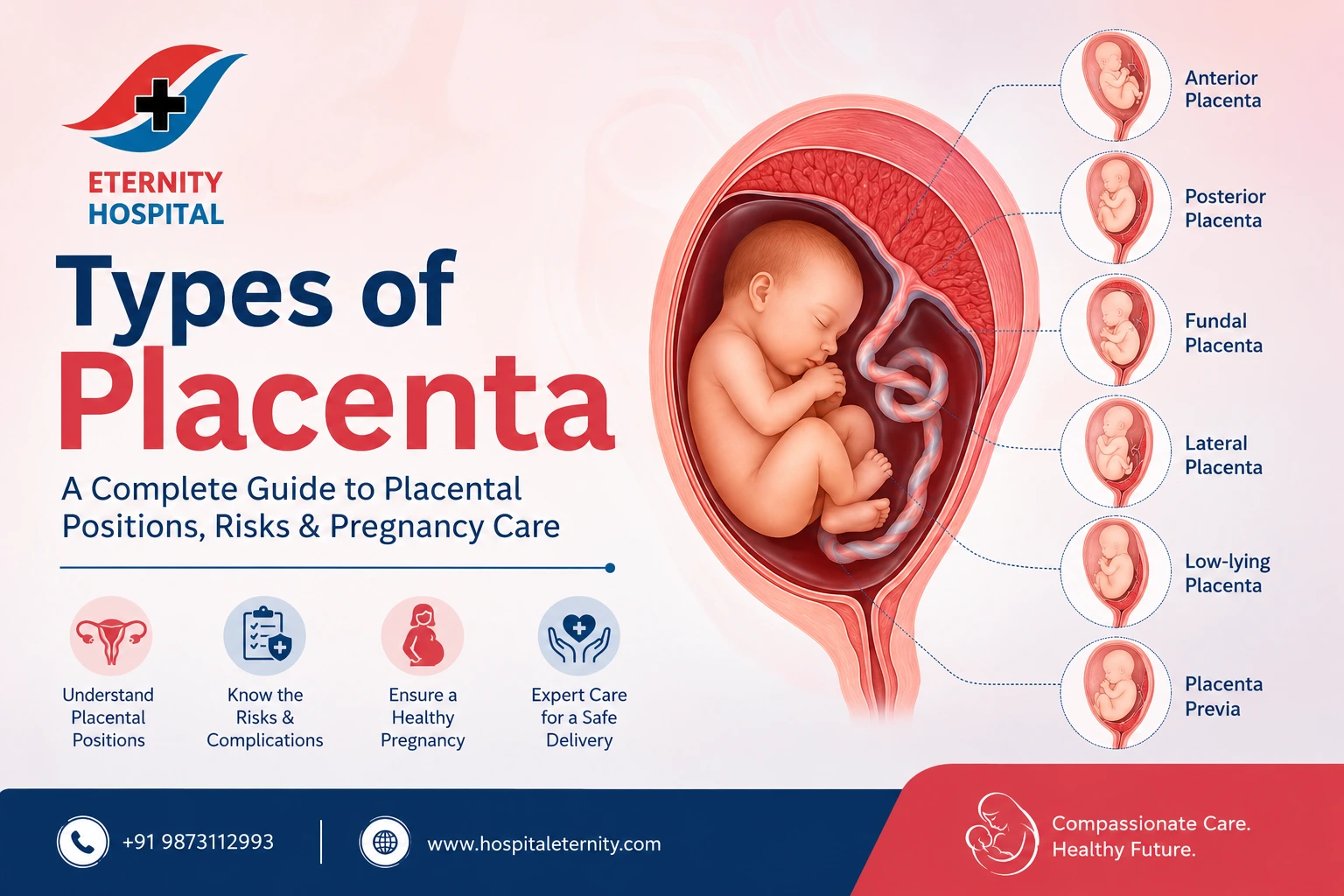
Types of Placenta Based on Position
The location of the placenta inside the uterus is one of the most commonly discussed findings during pregnancy ultrasounds. Fortunately, most placental positions are completely normal and do not interfere with pregnancy or childbirth. Doctors classify placental position based on where it attaches inside the uterus.
1. Anterior Placenta
An anterior placenta is attached to the front wall of the uterus, facing the mother’s abdomen. This is one of the most common placental positions and is considered completely normal. Many women with an anterior placenta enjoy healthy pregnancies and uncomplicated deliveries.
Because the placenta lies between the baby and the abdominal wall, fetal movements may feel slightly softer or may be noticed later than usual, especially for first-time mothers. This sometimes causes unnecessary anxiety, but it rarely indicates any problem with the baby.
An anterior placenta generally does not increase pregnancy risks. However, it may occasionally make fetal heartbeat monitoring or certain ultrasound examinations slightly more challenging due to the extra tissue between the baby and the ultrasound probe. Experienced obstetricians can easily overcome these limitations using modern imaging techniques.
For most women, an anterior placenta has no impact on labor or the ability to have a normal vaginal delivery. Regular prenatal checkups remain sufficient unless other pregnancy complications are present.
2. Posterior Placenta
A posterior placenta develops along the back wall of the uterus, closest to the mother’s spine. Many obstetricians consider this one of the most favorable placental positions because fetal movements are often felt earlier and more clearly compared to an anterior placenta.
Women with a posterior placenta frequently notice strong kicks during the second trimester since there is less tissue cushioning the baby’s movements. Ultrasound imaging is also generally easier because the placenta does not obstruct the view of the fetus.
From a delivery perspective, a posterior placenta rarely causes complications and is compatible with both vaginal delivery and cesarean birth when medically indicated. As pregnancy advances, the posterior placenta continues supporting fetal growth efficiently without affecting the baby’s positioning inside the uterus.
Most importantly, a posterior placenta is regarded as a completely normal finding and does not require any special treatment or precautions beyond routine prenatal care.
Types of Placenta: Complete Guide to Placental Positions, Functions, Risks, and Pregnancy Care (Part 2)
3. Fundal Placenta
A fundal placenta is attached to the top portion of the uterus, known as the fundus. Among obstetricians, this is considered one of the most ideal placental positions because it provides excellent blood circulation while leaving plenty of room for the baby to move naturally as pregnancy progresses. The placenta remains well away from the cervix, which significantly reduces the likelihood of delivery complications related to placental placement. Women diagnosed with a fundal placenta can generally expect a normal pregnancy unless other unrelated medical conditions arise.
The position of the placenta at the top of the uterus also supports efficient nutrient and oxygen transfer. Since the placenta occupies the upper region, the baby usually has enough space to settle into the head-down position during the later stages of pregnancy, increasing the chances of a successful vaginal delivery. Most expectant mothers with a fundal placenta experience fetal movements normally, and ultrasound examinations are generally straightforward because the placenta does not obstruct the baby’s major structures.
A fundal placenta requires no additional treatment or restrictions. Routine prenatal visits, regular ultrasounds, balanced nutrition, hydration, and healthy lifestyle choices remain the foundation of care. Healthcare providers continue monitoring fetal growth and placental function throughout pregnancy, but the placental position itself is considered entirely normal and reassuring.
4. Lateral Placenta
A lateral placenta develops on either the right or left side of the uterus. Like anterior, posterior, and fundal placentas, this position is generally considered a normal anatomical variation and rarely causes complications by itself. The exact side of attachment has little influence on fetal development because the placenta still receives an adequate blood supply through the uterine wall.
Many women become concerned after reading ultrasound reports mentioning a “right lateral placenta” or “left lateral placenta.” In reality, this terminology describes the placental location and does not indicate a disease or abnormality. The baby continues receiving oxygen and nutrients normally, and pregnancy usually progresses without any additional risks associated with the placental position.
Doctors continue routine monitoring through scheduled prenatal ultrasounds to ensure the placenta remains healthy and away from the cervix as pregnancy advances. In rare situations, a placenta initially attached low on one side may migrate upward as the uterus expands, reducing concerns about delivery. Overall, a lateral placenta supports healthy fetal growth and does not typically require any changes in pregnancy management.
5. Low-Lying Placenta
A low-lying placenta occurs when the placenta develops close to the cervix but does not completely cover it. This condition is relatively common during the first half of pregnancy because the uterus is still small, and the placenta may initially implant near the lower uterine segment. Fortunately, as pregnancy progresses and the uterus stretches, the placenta often appears to move upward naturally, a process commonly referred to as placental migration.
Many women diagnosed with a low-lying placenta during the second trimester become unnecessarily worried. In most cases, follow-up ultrasounds performed around 32 to 36 weeks show that the placenta has moved sufficiently away from the cervix, allowing for a normal vaginal birth. Because of this natural movement, doctors usually avoid making early decisions regarding the mode of delivery.
However, if the placenta remains too close to the cervix later in pregnancy, it may increase the risk of bleeding, especially during the third trimester. Women may be advised to avoid strenuous physical activity, heavy lifting, or sexual intercourse depending on the severity of the condition and the doctor’s recommendations. Immediate medical attention is necessary if vaginal bleeding occurs because timely intervention can protect both mother and baby.
6. Placenta Previa
Placenta previa is one of the most important placental conditions that requires close medical supervision. In this condition, the placenta partially or completely covers the cervix, which is the opening through which the baby normally passes during delivery. Because the placenta blocks this pathway, vaginal delivery may become dangerous or impossible depending on the extent of cervical coverage.
The hallmark symptom of placenta previa is painless vaginal bleeding during the second or third trimester. Although the bleeding may stop temporarily, it can recur and become severe enough to threaten both maternal and fetal health. For this reason, any bleeding during pregnancy should never be ignored and requires immediate evaluation by an obstetrician.
Placenta previa is classified into several categories depending on how much of the cervix is covered. Complete placenta previa covers the entire cervical opening, while partial or marginal placenta previa covers only part of it or lies very close to it. Ultrasound imaging allows doctors to determine the exact placental location and plan the safest delivery method.
In many cases of complete placenta previa, a planned cesarean section is recommended before labor begins. Careful monitoring, hospital observation if necessary, and avoidance of activities that may trigger bleeding all contribute to improved pregnancy outcomes.
Types of Placenta Based on Attachment
While placental position describes where the placenta is located inside the uterus, placental attachment refers to how deeply it grows into the uterine wall. Normally, the placenta attaches only to the inner lining of the uterus and separates naturally after childbirth. In some pregnancies, however, the placenta grows too deeply into the uterine tissue, creating a condition known as the Placenta Accreta Spectrum (PAS). These conditions are uncommon but potentially serious because they increase the risk of severe bleeding during delivery.
7. Placenta Accreta
Placenta accreta is the mildest and most common form of the Placenta Accreta Spectrum. In this condition, the placenta attaches more deeply than normal into the uterine wall but does not penetrate the muscle completely. Because of this abnormal attachment, the placenta cannot separate easily after the baby is delivered.
Women with placenta accreta often have no symptoms during pregnancy, and the condition is usually detected through detailed ultrasound examinations or MRI scans. Certain risk factors increase the likelihood of placenta accreta, including previous cesarean deliveries, uterine surgeries, placenta previa, and advanced maternal age.
If placenta accreta is diagnosed before delivery, obstetricians develop a carefully planned birth strategy involving experienced specialists, anesthesiologists, blood bank support, and neonatal care teams. Early diagnosis significantly improves maternal safety by reducing emergency complications associated with excessive bleeding.
8. Placenta Increta
Placenta increta is a more severe condition in which the placenta grows deeper into the muscular layer of the uterus, known as the myometrium. Because the placental tissue becomes firmly embedded within the uterine muscle, separation after childbirth becomes even more difficult than in placenta accreta.
This condition carries a substantially higher risk of heavy postpartum hemorrhage, making delivery planning extremely important. Obstetricians often recommend delivery in specialized hospitals equipped to manage complex pregnancies. In some cases, blood transfusions and advanced surgical procedures may become necessary to control bleeding safely.
Women diagnosed with placenta increta require regular imaging studies throughout pregnancy to monitor placental invasion. Multidisciplinary medical teams carefully determine the safest timing for delivery while balancing fetal maturity with maternal health.
9. Placenta Percreta
Placenta percreta represents the rarest but most severe form of abnormal placental attachment. In this condition, the placenta penetrates completely through the uterine wall and may invade nearby organs such as the bladder or, less commonly, the bowel. Because of its aggressive growth pattern, placenta percreta is considered a high-risk obstetric emergency.
Management requires exceptional expertise from obstetricians, maternal-fetal medicine specialists, anesthesiologists, urologists, and surgical teams. Planned cesarean delivery is almost always required, and in many cases, a hysterectomy may be necessary to save the mother’s life by preventing catastrophic bleeding.
Although placenta percreta is uncommon, advances in prenatal imaging have greatly improved early diagnosis and treatment planning. Delivering at an advanced maternity hospital with experienced specialists significantly improves outcomes for both mother and baby.
https://www.hospitaleternity.com/gynaecological-problems-treatment-in-ghaziabad/