

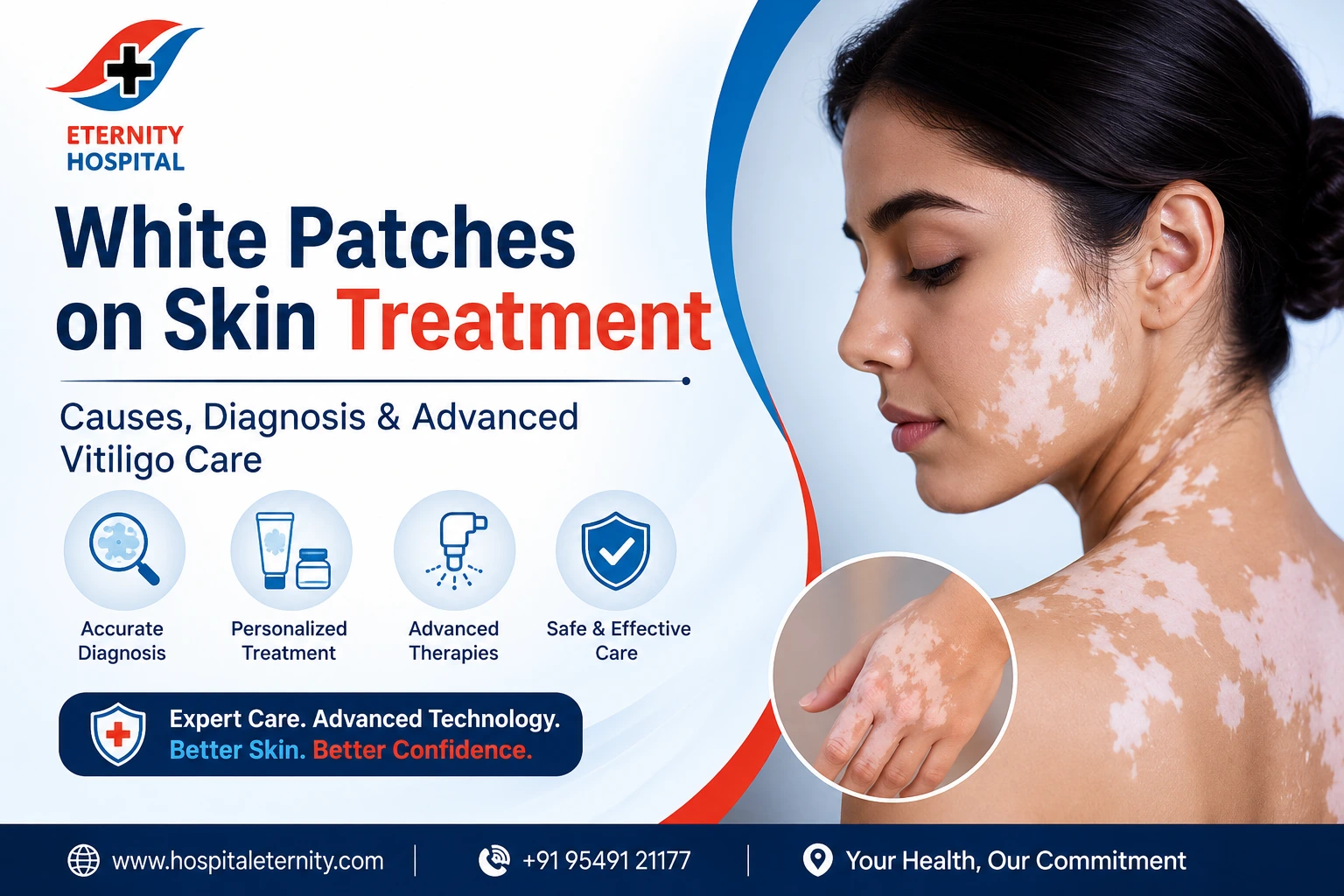
Understanding White Patches on the Skin
White Patches on Skin Treatment Discovering white patches on your skin can be alarming. Many people immediately assume it is a serious disease, while others ignore the symptoms until the patches begin spreading. The truth is that white patches can develop due to several different skin conditions, and proper diagnosis is the first step toward effective treatment. Among all causes, vitiligo is one of the most common and widely recognized conditions responsible for white patches on the skin.
Vitiligo occurs when melanocytes, the cells responsible for producing melanin, stop functioning or are destroyed by the immune system. As a result, the affected skin loses its natural color and develops clearly visible white patches. These patches can appear on the face, hands, feet, lips, around the eyes, or anywhere on the body. Research shows that vitiligo affects approximately 0.5% to 2% of the global population and can occur at any age. Early diagnosis significantly improves the chances of successful treatment and repigmentation.
What Causes White Patches on the Skin?
White patches are not always caused by vitiligo. Several skin conditions can result in loss of pigmentation, making professional evaluation essential. Common causes include vitiligo, fungal infections such as tinea versicolor, post-inflammatory hypopigmentation, pityriasis alba, nutritional deficiencies, and certain autoimmune disorders. Each condition requires a different treatment approach.
Vitiligo is considered an autoimmune disorder where the body’s immune system mistakenly attacks melanocytes. Genetics also plays a role, and individuals with a family history of autoimmune diseases may have a higher risk of developing the condition. Environmental triggers such as severe sunburn, emotional stress, skin injuries, and exposure to specific chemicals may contribute to disease onset or progression. Understanding the underlying cause allows dermatologists to design a personalized treatment plan that addresses both symptoms and disease progression.
Common Symptoms of Vitiligo
The most obvious symptom of vitiligo is the appearance of white or depigmented patches on the skin. These patches often begin as small areas and gradually enlarge over time. The borders may be sharply defined, contrasting with normal skin and highly visible, especially in individuals with darker complexions.
In addition to skin discoloration, some patients may notice whitening of hair, eyebrows, eyelashes, or beard hair. In rare cases, pigment loss may affect the inside of the mouth or other mucous membranes. Vitiligo itself is not painful or contagious, but its emotional and psychological effects can be significant. Many patients experience reduced self-confidence, social anxiety, and stress related to changes in appearance. This is why modern vitiligo management focuses not only on skin treatment but also on overall quality of life.
Types of Vitiligo
Non-Segmental Vitiligo
Non-segmental vitiligo is the most common form, accounting for the majority of cases worldwide. It usually appears symmetrically on both sides of the body. Common areas include the face, neck, hands, knees, and elbows. The condition may progress gradually over several years and often requires long-term management.
Segmental Vitiligo
Segmental vitiligo affects only one side of the body and tends to appear at a younger age. It progresses rapidly in the early stages and often stabilizes over time. Patients with stable segmental vitiligo may be good candidates for surgical repigmentation procedures.
Universal Vitiligo
Universal vitiligo is a rare form where most of the body’s skin loses pigment. Management often focuses on achieving a uniform appearance and protecting the skin from sun damage.
How Dermatologists Diagnose White Patches
Accurate diagnosis is essential before beginning treatment. Dermatologists typically start with a detailed medical history and physical examination. A Wood’s lamp examination may be used to evaluate pigment loss more clearly. In some cases, blood tests may be recommended to identify associated autoimmune disorders such as thyroid disease.
The diagnostic process helps distinguish vitiligo from fungal infections, eczema-related pigment loss, and other skin conditions. Since treatment strategies vary significantly depending on the cause, self-diagnosis can lead to delays and ineffective remedies. Consulting an experienced dermatologist ensures that the condition is correctly identified and appropriately treated.
Best Treatments for White Patches on Skin
Topical Medications
Topical treatments remain among the first-line therapies for localized vitiligo. Dermatologists may prescribe corticosteroid creams or calcineurin inhibitors such as tacrolimus. These medications help reduce immune activity in affected areas and encourage melanocyte recovery.
Topical treatments often work best when started early. Small and recently developed patches generally respond better than long-standing lesions. Regular follow-up is necessary to monitor progress and adjust treatment as needed. Studies show that combining topical therapy with light-based treatments can improve overall outcomes.
Narrowband UVB Phototherapy
Narrowband UVB phototherapy is widely considered the gold standard treatment for widespread vitiligo. This therapy uses controlled exposure to ultraviolet light to stimulate melanocyte activity and encourage repigmentation. Treatments are usually performed two to three times per week under medical supervision.
Many patients begin noticing visible improvement after several months of consistent treatment. Success rates vary depending on disease duration, patch location, and individual response. Areas such as the face and neck often respond more favorably than hands and feet. Modern phototherapy protocols have significantly improved patient outcomes and remain a cornerstone of vitiligo management worldwide.
Excimer Laser Treatment
Excimer laser therapy has emerged as one of the most effective options for localized patches of vitiligo. This advanced technology delivers concentrated ultraviolet light directly to affected areas without exposing healthy skin. It is particularly beneficial for facial lesions and smaller treatment zones.
Recent systematic reviews indicate that 308 nm excimer therapies can provide superior repigmentation outcomes compared with traditional methods in selected patients. Many dermatologists combine excimer laser sessions with topical medications to maximize results. Treatment schedules vary, but consistency remains the key to successful repigmentation.
Surgical Vitiligo Treatments
For patients with stable vitiligo that has not changed for a significant period, surgical treatment may be considered. Procedures such as melanocyte transplantation and skin grafting aim to restore pigment to resistant areas. These techniques are generally reserved for patients who have not responded adequately to medical therapies.
Modern surgical methods have become increasingly sophisticated and can provide impressive cosmetic results when performed by experienced specialists. Careful patient selection is essential, as surgery is not suitable for actively spreading vitiligo.
Latest Advances in Vitiligo Treatment
The field of vitiligo treatment is evolving rapidly. Researchers are investigating newer therapies that target the immune pathways responsible for melanocyte destruction. JAK inhibitors have attracted significant attention in recent years because they may help restore pigmentation in certain patients. Ongoing research is also exploring oral medications, advanced combination therapies, and approaches to prevent relapse after successful treatment.
Patients today have access to more treatment options than ever before. The combination of modern medications, phototherapy, and advanced laser technologies has transformed the outlook for many individuals living with vitiligo.
Why Choose Hospital Eternity for White Patches Treatment?
For individuals seeking expert care, Hospital Eternity offers comprehensive evaluation and treatment for white patches and vitiligo. The medical team focuses on accurate diagnosis, personalized treatment planning, and evidence-based dermatological care. Patients benefit from modern treatment facilities, experienced specialists, and advanced technologies designed to support successful repigmentation outcomes.
Whether the condition is newly diagnosed or has been present for years, a customized treatment strategy can help manage progression and improve skin appearance. Early consultation often leads to better results and increased treatment success.
Website: https://www.hospitaleternity.com/
Lifestyle Tips for Managing Vitiligo
Living with vitiligo requires more than medical treatment alone. Daily sun protection is essential because depigmented skin lacks natural defense against ultraviolet radiation. Broad-spectrum sunscreen, protective clothing, and avoiding excessive sun exposure can reduce the risk of sunburn and prevent additional skin damage.
A healthy lifestyle may also support overall skin health. Managing stress, maintaining balanced nutrition, getting adequate sleep, and following prescribed treatment plans can contribute to better outcomes. While no specific diet cures vitiligo, a nutrient-rich diet supports overall wellness and immune system function. Patients should also avoid unverified home remedies that may irritate the skin and worsen symptoms.
Conclusion
White patches on the skin can result from various conditions, but vitiligo remains one of the most common causes. Modern dermatology has made remarkable progress in treating this condition through topical medications, phototherapy, excimer laser therapy, and surgical interventions. Early diagnosis and timely treatment provide the best opportunity for successful repigmentation and long-term disease management.
If you notice white patches developing on your skin, seeking professional evaluation is essential. With expert care, advanced treatment options, and a personalized approach, many patients achieve significant improvement and regain confidence in their appearance.
https://www.hospitaleternity.com/vitiligo-treatment-in-ghaziabad/
https://www.hospitaleternity.com/best-liposuction-surgery-in-ghaziabad/
https://www.hospitaleternity.com/best-tummy-tuck-surgery-in-ghaziabad/
https://www.hospitaleternity.com/body-lift-surgery-in-ghaziabad/
https://www.hospitaleternity.com/mommy-makeover-surgery-in-ghaziabad/
https://www.hospitaleternity.com/weight-loss-surgery-in-ghaziabad/
https://www.hospitaleternity.com/lipoma-removal-surgery-in-ghaziabad/
https://www.hospitaleternity.com/buttock-augmentation-surgery-in-ghaziabad/
https://www.hospitaleternity.com/brazilian-buttock-lift-surgery-in-ghaziabad/
https://www.hospitaleternity.com/hair-transplant-in-ghaziabad/
https://www.hospitaleternity.com/vitiligo-treatment-in-ghaziabad/