

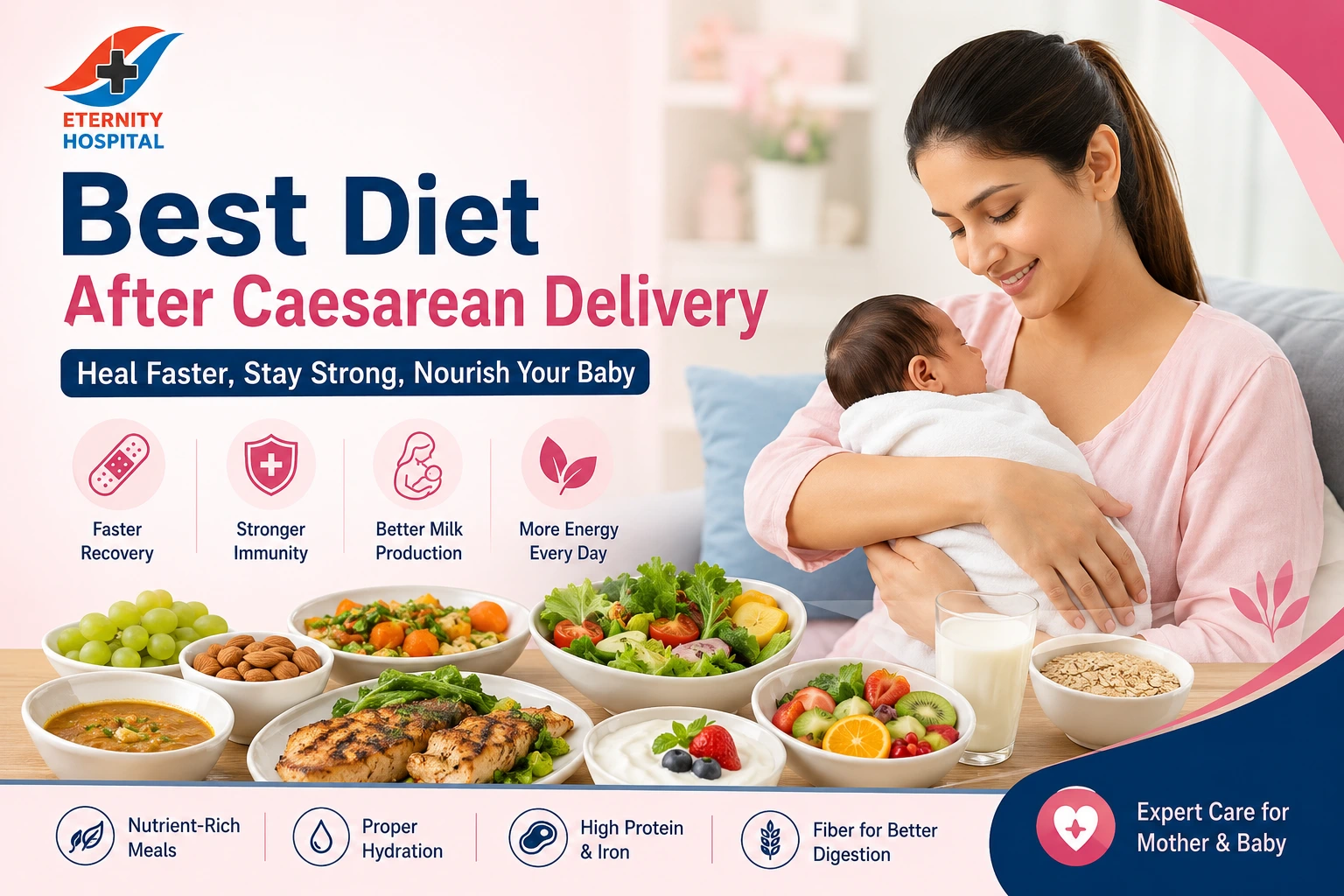
Best Diet After Caesarean Delivery Recovering from a Caesarean delivery is different from recovering after a normal vaginal birth. A C-section is a major surgical procedure that requires your body to heal internally and externally while also producing enough nutrition for your newborn baby. The food you eat during this crucial period can significantly affect wound healing, energy levels, milk production, immunity, and overall recovery. Medical experts recommend focusing on protein, iron, calcium, fiber, vitamins, and adequate hydration to support post-operative healing and breastfeeding needs.
For mothers seeking expert maternity care, postpartum guidance, and women’s healthcare services, Eternity Hospital offers comprehensive support before and after delivery to help them achieve a smoother recovery.
Why Nutrition Matters After a C-Section
A Caesarean section is not just childbirth; it is also a surgical procedure that places significant stress on the body. During surgery, several layers of tissue are cut and later stitched back together. This means your body requires additional nutrients to rebuild damaged tissues, reduce inflammation, and prevent complications. Proper nutrition can accelerate wound healing, improve immunity, and reduce the risk of infection. Experts consistently emphasize that protein, vitamins, and minerals play a central role in post-surgical recovery.
New mothers often underestimate the amount of energy their bodies need during the first few weeks after delivery. Sleep deprivation, hormonal fluctuations, breastfeeding demands, and surgical recovery can create intense physical stress. Eating nutrient-dense meals helps maintain stable energy levels throughout the day. Rather than focusing on weight loss immediately after childbirth, mothers should prioritize nourishment and recovery.
Nutrition also affects emotional well-being. Deficiencies in iron, calcium, and other nutrients can contribute to fatigue, weakness, and mood disturbances. A balanced diet provides the foundation needed to care effectively for both yourself and your baby.
Understanding Your Body’s Recovery Process
Healing Surgical Incisions
Your body immediately begins repairing tissues after surgery. Proteins act as the building blocks for new cells and collagen production, helping the incision heal faster. Without sufficient protein intake, wound healing may slow down, and recovery can become more difficult. Foods like eggs, lentils, paneer, chicken, fish, and dairy products are particularly beneficial during this stage.
The healing process also requires antioxidants, vitamins, and minerals that reduce oxidative stress. Colorful fruits and vegetables supply vitamin C and other nutrients necessary for collagen formation. Combining these foods with protein-rich meals creates a powerful nutritional strategy for surgical recovery.
Restoring Blood Loss
Blood loss during delivery is common, especially during surgical births. Iron becomes one of the most important nutrients because it helps rebuild red blood cells and prevents postpartum anemia. Iron-rich foods such as spinach, legumes, egg yolks, lean meats, seeds, and dried fruits can help replenish iron stores naturally.
Pairing iron-rich foods with vitamin C sources such as oranges, guavas, strawberries, and lemons significantly improves iron absorption. This simple dietary adjustment can make a noticeable difference in energy levels and recovery speed.
Essential Nutrients After Caesarean Delivery
Protein for Tissue Repair
Protein is arguably the most critical nutrient after a C-section. It supports tissue regeneration, strengthens muscles, repairs damaged cells, and promotes faster Healing. Health experts recommend including a source of protein in every meal during the recovery period.
Excellent protein sources include:
- Eggs
- Chicken
- Fish
- Paneer
- Greek yogurt
- Lentils
- Chickpeas
- Soy products
- Nuts and seeds
Iron for Recovery
Iron helps combat postpartum fatigue and supports oxygen transport throughout the body. Mothers recovering from surgery often need increased iron intake due to blood loss during delivery. Iron-rich foods should become a regular part of daily meals.
Calcium for Bone Health
Breastfeeding mothers transfer calcium to their babies through breast milk. Adequate calcium intake helps protect maternal bone health while supporting infant development. Dairy products, fortified foods, tofu, and leafy green vegetables are excellent sources of calcium.
Fiber for Digestive Health
Constipation is common after Caesarean delivery due to surgery, reduced movement, medications, and hormonal changes. Fiber-rich foods such as oats, fruits, vegetables, legumes, and whole grains help promote healthy digestion and regular bowel movements.
Best Foods to Eat After Caesarean Delivery
High-Protein Foods
Protein-rich foods should form the foundation of your recovery diet. Eggs provide complete protein along with important vitamins. Lentils and beans are excellent vegetarian options that also supply fiber and iron. Lean chicken and fish contribute high-quality protein while supporting muscle repair and immune function. Dairy products such as milk, yogurt, and paneer add both protein and calcium.
Iron-Rich Foods
Iron-rich foods become especially important during the first few weeks postpartum. Include spinach, methi leaves, beetroot, pumpkin seeds, sesame seeds, raisins, dates, lean meat, and legumes regularly. These foods help restore hemoglobin levels and reduce fatigue.
Calcium-Rich Foods
Calcium supports muscle function, bone health, and breastfeeding requirements. Milk, yogurt, cheese, fortified soy products, almonds, and green leafy vegetables are excellent choices. Regular consumption helps maintain adequate calcium stores during lactation.
Fruits and Vegetables
Fresh fruits and vegetables supply vitamins, minerals, antioxidants, and fiber. Guava, oranges, papaya, apples, berries, carrots, broccoli, spinach, and sweet potatoes are particularly beneficial. Their nutrients help reduce inflammation and strengthen immunity.
Hydration and Fluid Intake
Water is often overlooked despite being one of the most important components of postpartum recovery. Adequate hydration supports digestion, circulation, milk production, and wound healing. Many experts recommend consuming 1.5–3 liters of fluids daily, depending on individual needs and breastfeeding status.
Good hydration options include:
- Water
- Coconut water
- Soups
- Buttermilk
- Fresh fruit-infused water
- Milk
Limiting sugary beverages is advisable because they add unnecessary calories without significant nutritional value.
Sample Diet Plan After C-Section
MealRecommended Foods
Early Morning Warm water with soaked almonds
Breakfast Oats porridge with milk and fruits
Mid-Morning Fresh fruit and yogurt
Lunch: Dal, chapati, vegetables, salad, curd
Evening Snack: Roasted chana and coconut water
Dinner Soup, grilled paneer or chicken, and vegetables
Bedtime: Warm milk with turmeric
This meal structure ensures a steady supply of protein, vitamins, minerals, and hydration throughout the day.
Foods to Avoid After Caesarean Delivery
While most healthy foods are beneficial, some should be consumed with caution during recovery. Highly processed foods, excessive sugar, deep-fried snacks, and alcohol can interfere with Healing and overall health. Excess caffeine may also affect hydration and breastfeeding comfort.
Foods that commonly cause bloating or digestive discomfort should be limited if they trigger symptoms. Each mother’s tolerance level differs, so paying attention to your body’s response is important.
Diet Tips for Breastfeeding Mothers
Breastfeeding significantly increases nutritional demands. Your body requires additional calories, protein, fluids, calcium, and micronutrients to support milk production and infant growth. A breastfeeding diet should emphasize nutrient-dense foods rather than empty calories.
Key recommendations include:
- Eat protein with every meal.
- Stay hydrated throughout the day.
- Include calcium-rich foods daily.
- Consume iron-rich foods regularly.
- Focus on whole grains and fresh produce.
- Continue prenatal supplements if recommended by your doctor.
Many healthcare providers also recommend continuing calcium and iron supplementation during breastfeeding when clinically indicated.
Common Recovery Challenges and Nutritional Solutions
ChallengeNutritional Solution
Fatigue, iron-rich foods, and adequate protein
Constipation: Fiber-rich foods and water
Low Milk Supply: Balanced meals and hydration
Slow Healing, increased protein and vitamin C
Weakness: Iron, calcium, and nutrient-dense foods
Understanding the relationship between nutrition and recovery allows mothers to address common postpartum issues more effectively.
Why Choose Eternity Hospital for Postpartum Care?
Recovering after a Caesarean delivery often requires more than just a healthy diet. Professional guidance, regular monitoring, and personalized healthcare support can significantly improve outcomes. Eternity Hospital provides expert maternity services, gynecology care, postpartum consultations, and comprehensive support for mothers throughout their recovery journey.
The experienced medical team focuses on helping mothers heal safely while ensuring optimal nutrition, breastfeeding support, and long-term wellness. Whether you are preparing for delivery or recovering afterward, professional medical guidance can make a remarkable difference.
When to Consult Your Doctor
Seek medical advice if you experience:
- Persistent wound pain
- Signs of infection
- Severe fatigue
- Dizziness
- Poor appetite
- Difficulty breastfeeding
- Ongoing constipation
Prompt medical evaluation helps prevent complications and ensures a smoother recovery.
Conclusion
The best diet after Caesarean delivery focuses on nourishing the body from the inside out. Protein supports tissue repair, iron restores blood levels, calcium strengthens bones, fiber promotes digestive health, and hydration supports every aspect of recovery. Rather than chasing rapid weight loss, new mothers should prioritize Healing, strength, and overall well-being.
A balanced diet rich in whole foods, fresh fruits and vegetables, high-quality protein, and adequate fluids can dramatically improve recovery outcomes. Combined with proper medical guidance from trusted healthcare providers like Eternity Hospital, mothers can enjoy a healthier, smoother, and more comfortable postpartum journey
https://www.hospitaleternity.com/best-pregnancy-care-in-ghaziabad/
https://www.hospitaleternity.com/cervical-cancer-screening-in-ghaziabad/
https://www.hospitaleternity.com/menopausal-problems-treatment-in-ghaziabad/
https://www.hospitaleternity.com/adolescent-issues-treatment-in-ghaziabad/
https://www.hospitaleternity.com/gynaecological-problems-treatment-in-ghaziabad/
https://www.hospitaleternity.com/best-medical-abortion-in-ghaziabad/
.https://www.hospitaleternity.com/best-normal-delivery-in-ghaziabad/
https://www.hospitaleternity.com/caesarean-delivery-in-ghaziabad/