

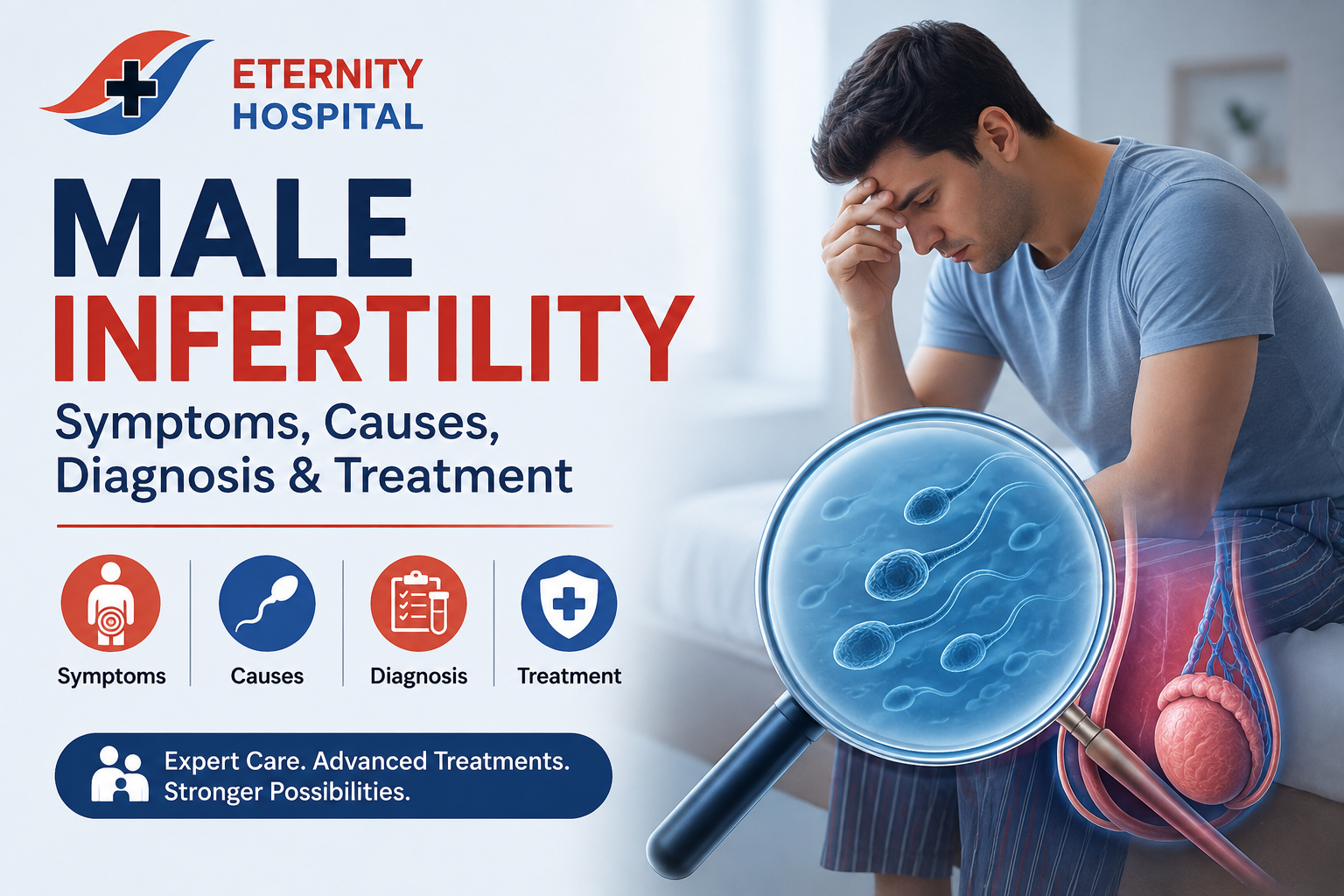
What Is Male Infertility and How Common Is It?
Male infertility refers to difficulty contributing to a pregnancy because of problems involving sperm production, sperm quality, sperm transport, ejaculation, or other aspects of the male reproductive system. It is important to understand that infertility is a couple-level reproductive health issue, not automatically a problem caused by the woman. The World Health Organization estimates that approximately one in six people of reproductive age worldwide experience infertility during their lifetime, and male factors can contribute substantially to infertility within couples. WHO identifies problems involving semen ejection, low or absent sperm, and abnormal sperm shape or movement among the important male reproductive causes.
The practical challenge is that male infertility often gives you no obvious warning. A man may have normal sexual desire, erections, ejaculation, and appearance while having a low sperm count or poor sperm movement. That is why fertility should not be judged by sexual performance alone. A proper evaluation looks at the reproductive system itself, particularly sperm quantity and quality, and considers medical history, medications, previous surgery, infections, hormonal conditions, lifestyle factors, and possible structural problems. The current WHO infertility guideline also specifically includes evidence-based recommendations addressing infertility caused by male factors.
When Should a Man Seek a Fertility Evaluation?
For most couples, an evaluation is appropriate after 12 months of regular unprotected intercourse without achieving pregnancy. Earlier assessment can make sense when a man already has a known fertility risk, such as a history of testicular disease or surgery, chemotherapy or radiation, significant sexual or ejaculation problems, a previous diagnosis of low sperm count, or abnormalities involving the testes. Mayo Clinic also recommends medical assessment sooner when there are concerns such as testicular swelling, a history of prostate or sexual conditions, or known sperm abnormalities.
One important point often gets missed: fertility evaluation should generally involve both partners. Pregnancy depends on several biological steps working together, so finding a male factor does not necessarily mean there is no female factor, and vice versa. A coordinated assessment can prevent months of guessing and help the couple choose the most appropriate next step rather than treating one person in isolation.
Symptoms of Male Infertility
The most common symptom of male infertility is surprisingly simple: difficulty achieving a pregnancy. Many men with fertility problems have no pain, no visible abnormality, and no change in sexual function. Mayo Clinic notes that there may be no other clear symptoms even when sperm count or sperm function is impaired. This is one reason a semen analysis can be much more informative than trying to identify infertility through symptoms alone.
Some men do experience signs that point toward an underlying medical problem. These can include reduced sexual desire, erectile or ejaculatory difficulties, pain or swelling around the testicles, a lump in the scrotum, or changes associated with hormonal disorders. Reduced facial or body hair may sometimes accompany hormonal or genetic conditions affecting reproductive function. These signs do not prove infertility, but they are useful clues that deserve professional evaluation rather than self-treatment.
Physical and Sexual Warning Signs
Possible finding What it may indicate | What to do
Difficulty achieving pregnancy Possible male, female, or combined infertility Fertility evaluation
Low sperm count Reduced sperm production or another underlying problem Repeat/confirm testing as advised.
Testicular pain or swelling Infection, varicocele or another condition Medical examination
Erectile dysfunction Sexual or hormonal issue affecting conception Discuss with a doctor.
Ejaculation problems Difficulty delivering sperm into the reproductive tract Specialist evaluation
Very small or underdeveloped testes Possible hormonal or testicular disorder Urological/endocrine assessment
History of chemotherapy or radiation Possible impaired sperm production Fertility evaluation
These findings are not a diagnosis by themselves. For example, erectile dysfunction does not automatically mean poor sperm quality, while completely normal erections do not guarantee normal fertility.
Why Infertility Can Have No Obvious Symptoms
Think of fertility as a chain rather than a single switch. The testicles must produce sperm, the sperm must mature properly, the reproductive ducts must transport them, ejaculation must deliver them, and the sperm must ultimately reach and fertilize an egg. A problem at any point can reduce the chance of conception without necessarily producing a symptom you can feel. WHO specifically identifies low or absent sperm and abnormal sperm movement or morphology as important male reproductive causes of infertility.
This is why internet searches such as “How can I know if I am infertile without a test?” can be misleading. There is no reliable way to confirm male infertility from appearance, semen volume, sexual stamina, or the frequency of ejaculation. A medical evaluation, beginning with an appropriate history and usually semen testing, provides substantially more useful information.
Common Causes of Male Infertility
Male infertility can result from several overlapping factors, and sometimes doctors cannot identify a single definitive cause. Problems may involve sperm production, sperm movement, sperm transport, hormones, genetics, sexual function, infections, previous injury or surgery, or environmental and lifestyle exposures. Mayo Clinic lists conditions such as undescended testicles, genetic disorders, hormone problems, diabetes, certain infections, and varicocele among potential causes.
Understanding the cause matters because treatment is not one-size-fits-all. A man with a hormonal disorder may need a very different approach from someone with a surgically correctable obstruction. Likewise, a couple with very low sperm numbers may eventually consider assisted reproductive technology, while another couple may benefit from treating an identifiable medical condition first.
Problems With Sperm Production
Healthy sperm production requires properly functioning testicles and an appropriate hormonal environment. Problems can occur because of genetic conditions, testicular injury, infections, undescended testicles, hormonal disorders, or certain medical treatments. Cancer treatments such as chemotherapy and radiation can also damage sperm production, sometimes temporarily and sometimes for a longer period.
Varicocele, an enlargement of veins around the testicle, is another recognized cause of reduced sperm quality in some men. The exact mechanism is not always straightforward, but altered blood flow and testicular temperature may play a role. Importantly, not every varicocele requires treatment, so its presence on an examination or scan does not automatically mean surgery is necessary. The decision depends on the clinical picture and fertility goals.
Blockages, Varicocele and Reproductive Conditions
Even when the testicles produce sperm normally, sperm may have difficulty reaching the semen because of a blockage or abnormality in the reproductive tract. Previous surgery, injury, infection, and certain congenital conditions can contribute to obstruction. Some men may also experience retrograde ejaculation, where semen travels backward into the bladder rather than exiting normally through the penis.
Sexual conditions can also interfere with conception. Erectile dysfunction, premature ejaculation, or difficulty ejaculating may make it difficult for sperm to be deposited appropriately. These conditions should be treated as medical issues rather than as something a man has to feel embarrassed about. Depending on the cause, treatment may involve medication, counseling, hormonal management, surgery, or assisted reproductive techniques.
Lifestyle, Medicines and Environmental Factors
Lifestyle does not explain every case of male infertility, but it can influence reproductive health. Smoking, heavy alcohol use, recreational drugs, obesity, exposure to certain toxins, and excessive heat around the testes have all been associated with fertility concerns. Mayo Clinic also advises men to discuss medicines that may affect fertility with a healthcare professional rather than stopping prescribed medication independently.
This distinction is important because fertility advice online can become extreme very quickly. You do not need to eliminate every normal daily activity or purchase expensive supplements simply because someone online claims they “boost sperm.” A sensible approach is to identify genuine risk factors, address smoking or harmful substance use, maintain regular physical activity and a healthy weight where appropriate, review medications with a clinician, and avoid unnecessary exposure to reproductive toxins.
How Male Infertility Is Diagnosed
Diagnosis usually starts with a detailed medical and reproductive history, physical examination, and semen analysis. Your doctor may ask about previous pregnancies, puberty, sexual function, testicular problems, infections, injuries, surgeries, medications, supplements, substance use, and medical treatments such as chemotherapy. These questions are not intrusive for the sake of being intrusive; each can provide clues about where the reproductive process may be failing.
Semen analysis is one of the central tests because it examines the final product of several reproductive processes. A laboratory can evaluate the number of sperm, their movement and their morphology, along with other semen characteristics. Because sperm measurements can vary between samples, a clinician may request more than one analysis before making decisions based on the result.
Semen Analysis and Laboratory Testing
A semen analysis generally requires a semen sample collected according to the laboratory’s instructions. Preparation requirements can vary, so it is best to follow the specific instructions provided by the fertility clinic or laboratory. Mayo Clinic notes that sperm counts can vary from one sample to another, which is why repeat testing may be recommended.
A single abnormal result also should not automatically be interpreted as permanent infertility. Sperm production can be influenced by illness, medication, heat, and other factors, and the complete clinical picture matters. A specialist can explain whether the result is mildly abnormal, significantly abnormal, or suggestive of a condition requiring additional investigation.
Hormone, Imaging and Genetic Tests
Additional testing depends on the initial findings. Blood tests may assess testosterone and other reproductive hormones when a hormonal problem is suspected. Scrotal ultrasound can help identify structural problems such as varicocele, while other imaging may be considered when a blockage is suspected. Genetic testing can be relevant in men with extremely low or absent sperm, particularly when the medical history or semen analysis suggests a possible genetic cause.
Diagnostic approach: Main purpose
Medical history Identify risk factors, illnesses, medicines and previous procedures.
Physical examination Assess testes, scrotum and reproductive structures
Semen analysis Evaluate sperm concentration, movement and morphology
Hormone testing Investigate endocrine causes
Scrotal ultrasound Assess testicular and scrotal structures
Genetic testing Investigate selected cases of severe sperm abnormalities
Post-ejaculation urine test Look for retrograde ejaculation
Specialized testing Investigate suspected obstruction or other selected conditions
Not every man needs every test. Good fertility care is targeted: the doctor uses the history, examination and initial results to decide what additional information is actually useful.
Male Infertility Treatment Options
Treatment depends on the underlying cause, the severity of the fertility problem, the couple’s reproductive goals and the findings from evaluation. Some men can be treated by correcting an underlying condition, while others may require surgery or assisted reproductive technology. In some cases, no specific cause is found, yet pregnancy may still be possible with appropriately selected fertility treatment.
Medicines, Lifestyle Changes and Treating Underlying Causes
If an infection is contributing to reproductive problems, appropriate treatment may be considered. Hormonal disorders can sometimes be treated with medicines designed to correct the specific endocrine problem. Sexual dysfunction may also be managed with appropriate medication or counseling depending on the diagnosis.
Lifestyle measures can support overall reproductive health, but they should not be presented as a guaranteed cure. Stopping tobacco, avoiding recreational drugs, limiting excessive alcohol intake, exercising regularly, and addressing unhealthy weight can be sensible parts of a broader fertility plan. Importantly, testosterone replacement is not a routine treatment for male infertility; because sperm production depends on hormonal signaling, testosterone therapy can actually interfere with sperm production in some men. A qualified clinician should therefore supervise any hormone treatment.
Surgery and Sperm Retrieval
Surgery may be appropriate when there is a correctable structural problem. For example, selected men with clinically significant varicocele may benefit from varicocele repair, while men with reproductive-tract obstruction may sometimes undergo procedures intended to restore sperm transport. In certain situations, sperm can be retrieved directly from the reproductive tract or testicular tissue for use in assisted reproduction.
Surgical treatment should be individualized. The presence of a varicocele, blockage or other abnormality does not automatically mean surgery is the best first step. A fertility specialist considers sperm findings, the female partner’s fertility status, duration of infertility, previous treatments and the couple’s reproductive goals before recommending an intervention.
IVF, ICSI and Other Assisted Reproductive Options
When sperm numbers or function remain significantly impaired, assisted reproductive technology (ART) can provide another pathway to pregnancy. In vitro fertilization, or IVF, involves fertilizing an egg with sperm in a laboratory. Intracytoplasmic sperm injection (ICSI) takes this a step further by injecting an individual sperm directly into an egg. Mayo Clinic lists IVF and ICSI among treatment options for selected male infertility cases.
Treatment approach When it may be considered Main consideration
Lifestyle modification Modifiable risk factors are present Supports general reproductive health
Medical treatment Specific infection, hormonal or sexual problem Must target the underlying diagnosis
Varicocele repair Selected men with clinically relevant varicocele Suitability varies by case
Reconstructive surgery Certain reproductive-tract blockages Depends on location and severity
Sperm retrieval Very low/absent sperm in ejaculate in selected cases May be combined with ICSI
IVF Appropriate sperm and egg can be used in laboratory fertilization Requires treatment of both partners as needed
ICSI Significant sperm-related problems or selected ART situations Individual sperm is injected into an egg
There is no single “best” fertility treatment for every man. The goal is to use the least invasive effective approach that fits the medical circumstances, while recognizing that treatment decisions often depend on both partners.
Choosing the Right Treatment and Getting Medical Help
If you are concerned about male infertility, the most productive first step is usually not ordering multiple supplements or searching for a miracle treatment. Start with a qualified fertility, urology, or reproductive-medicine consultation and bring a complete list of medicines, supplements, and relevant medical records. If you have already had a semen analysis, take the report with you rather than relying on a verbal description of the result. A structured evaluation can turn a vague concern into a specific clinical question.
For patients in Ghaziabad, Indirapuram, Siddharth Vihar, Noida, Greater Noida, and the wider Delhi NCR region, choosing a hospital or fertility service should involve practical questions about specialist availability, diagnostic testing, treatment options, laboratory support, and follow-up. Eternity Hospital can be considered a local healthcare resource for patients seeking information about available services; however, treatment suitability and specialist availability should be confirmed directly with the hospital rather than assumed from general online information.
Before starting treatment, ask questions such as: What is the likely cause? Which tests are actually necessary? What does the semen analysis show? Are there reversible factors? Is surgery appropriate? When should IVF or ICSI be considered? What are the alternatives? These questions help you understand the decision instead of simply agreeing to the first treatment suggested.
Practical Next Steps for Men Concerned About Fertility
- Review the timeline. If pregnancy has not occurred after 12 months of regular unprotected intercourse, consider a fertility evaluation; seek advice sooner if there are known reproductive or sexual health concerns.
- Arrange a proper medical assessment. Do not rely on symptoms alone because male infertility frequently has no obvious symptoms.
- Have semen analysis performed according to laboratory instructions. Repeat testing may be recommended because results can vary.
- Review medications and health conditions. Tell your doctor about prescription drugs, supplements, previous surgery, infections, and cancer treatment.
- Address modifiable risk factors. Avoid tobacco and recreational drugs, limit excessive alcohol, and maintain regular physical activity.
- Do not self-prescribe testosterone or fertility medicines. Hormonal treatment should be based on an appropriate diagnosis.
- Evaluate both partners. A coordinated assessment can prevent unnecessary delays and help determine whether natural conception, medical treatment, surgery, or ART is most appropriate.
Conclusion
Male infertility is not defined by sexual performance, semen appearance, or masculinity. It is a medical issue involving sperm production, sperm quality, sperm transport, ejaculation, hormones, and other reproductive factors, and many men have no obvious symptoms beyond difficulty achieving pregnancy. The most important step is therefore proper evaluation rather than guesswork. Current evidence-based guidance supports a structured approach that identifies potentially reversible causes first and then considers medicines, surgery, sperm retrieval or assisted reproductive techniques when appropriate.
If you and your partner have been trying to conceive without success, speaking with a qualified fertility or urology specialist can help clarify what is happening and what options are realistically available. For patients considering care in the Delhi NCR region, you can also review the services and contact information available through Eternity Hospital’s official website and discuss your individual situation directly with the appropriate healthcare team.