

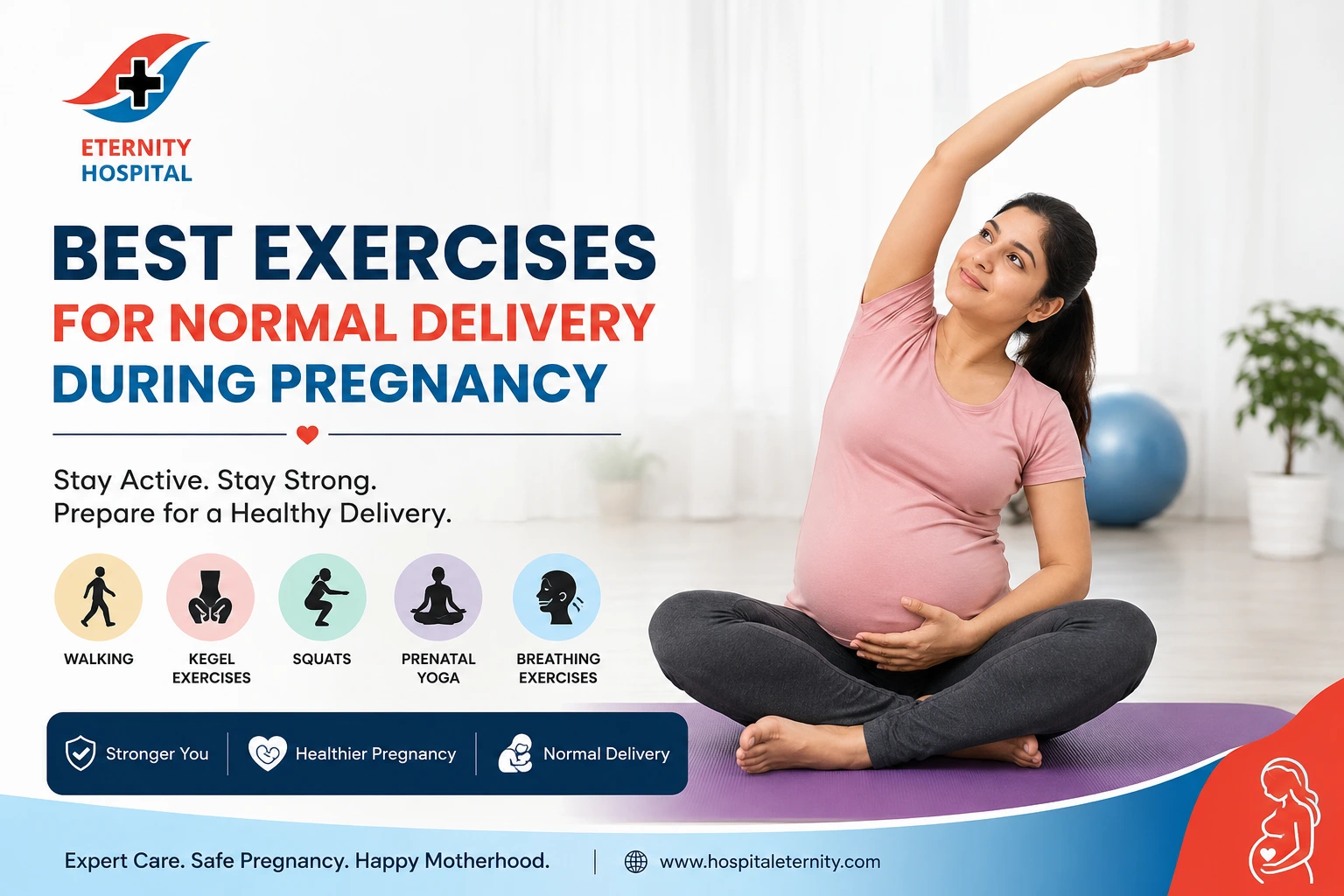
Best Exercises for Normal Delivery During Pregnancy Pregnancy is one of the most beautiful journeys in a woman’s life. As your body changes to support your growing baby, staying active becomes one of the most effective ways to maintain strength, improve flexibility, and prepare for childbirth. Many expectant mothers often ask, “Can exercise increase my chances of a normal delivery?” The answer is yes. Safe and doctor-approved exercises can help strengthen the muscles involved in labor, improve stamina, reduce pregnancy discomfort, and support a smoother vaginal delivery. Research and healthcare experts consistently recommend regular physical activity during pregnancy for healthy women, as it can contribute to better labor outcomes and faster postpartum recovery.
For women seeking expert maternity care, prenatal guidance, and comprehensive pregnancy support, Eternity Hospital provides specialized obstetric and gynecological services designed to help mothers experience a safe and comfortable pregnancy journey.
Why Exercise Matters During Pregnancy
Pregnancy places unique physical demands on the body. As the baby grows, the mother’s muscles, joints, ligaments, and cardiovascular system work harder than usual. Regular exercise helps the body adapt to these changes more effectively. Instead of feeling overwhelmed by weight gain, hormonal shifts, and physical discomfort, active mothers often experience better energy levels and improved overall well-being.
Studies have shown that physically active pregnant women may experience fewer pregnancy complications, improved circulation, reduced swelling, better sleep quality, and lower risks of gestational diabetes. Regular movement also helps maintain a healthy weight, which can positively influence labor outcomes. Healthcare organizations worldwide recommend moderate physical activity throughout pregnancy for women without medical complications.
Exercise also benefits emotional health. Pregnancy can bring anxiety, mood swings, and stress about labor. Physical activity releases endorphins, often called “feel-good hormones,” which naturally improve mood and reduce stress levels. When a mother feels physically and mentally strong, she often approaches childbirth with greater confidence and less fear.
Benefits for Mother
BenefitHow It Helps
Improved stamina Supports longer labor endurance
Better circulation reduces swelling and discomfort
Stronger muscles assist during pushing
Reduced back pain, improves comfort throughout pregnancy
Better sleep supports overall maternal health
Faster recovery helps postpartum healing
Benefits for Baby
A healthy and active mother creates a supportive environment for fetal development. Improved circulation means better oxygen delivery and nutrient transport to the baby. Exercise also contributes to overall maternal health, which indirectly supports fetal growth and development.
How Exercise Supports Normal Delivery
Many women imagine labor as a test of strength, and in many ways, it truly is. Labor requires endurance, controlled breathing, muscle coordination, flexibility, and mental resilience. Exercise helps prepare the body for these demands long before labor begins.
Building Strength for Labor
During vaginal delivery, muscles of the abdomen, pelvis, lower back, and legs work together. Exercises such as squats, pelvic tilts, and prenatal yoga strengthen these critical muscle groups. A stronger body often copes better with labor contractions and prolonged periods of physical effort.
Improving Endurance and Flexibility
Labor can last several hours. Walking, swimming, and low-impact aerobic activities improve cardiovascular endurance, helping mothers sustain energy levels throughout childbirth. Flexibility-focused exercises, such as stretching and yoga, improve pelvic mobility and may encourage optimal fetal positioning.
Safety Guidelines Before Starting Pregnancy Exercises
Before beginning any exercise program, pregnant women should consult their obstetrician or healthcare provider. Every pregnancy is different, and exercise recommendations may vary depending on medical history, gestational age, and individual health conditions.
A few important safety tips include:
- Stay hydrated before, during, and after exercise.
- Avoid overheating.
- Wear comfortable clothing and supportive footwear.
- Stop exercising if you feel dizzy or short of breath.
- Avoid activities with a high risk of falling.
- Listen to your body and avoid overexertion.
Healthcare experts recommend maintaining a pace where you can comfortably hold a conversation while exercising. This simple guideline helps ensure safe intensity levels during pregnancy.
Walking – The Safest Exercise for Pregnancy
Walking remains one of the most recommended exercises during pregnancy because it is simple, effective, and accessible to almost everyone. Unlike intense workouts that require equipment or specialized training, walking can be performed almost anywhere.
Regular walking improves cardiovascular fitness, enhances circulation, strengthens leg muscles, and supports healthy weight management. It also helps maintain endurance, which becomes increasingly important during labor. Research-backed recommendations suggest aiming for around 30 minutes of moderate walking most days of the week, depending on individual comfort levels.
Walking outdoors offers additional benefits. Fresh air, sunlight, and a change of environment can improve mood and reduce stress. Many pregnant women find that daily walks become a calming ritual that helps them stay active without feeling overwhelmed.
Pelvic Floor Exercises (Kegels)
The pelvic floor muscles support the bladder, uterus, and bowel. During pregnancy, these muscles experience increased pressure due to the growing baby. Strengthening them can play an important role in labor preparation and postpartum recovery.
Kegel exercises involve contracting and relaxing the pelvic floor muscles. They can be performed while sitting, standing, or lying down. Consistent practice may reduce urinary leakage, improve pelvic support, and contribute to better control during labor. Experts frequently recommend pelvic floor exercises throughout pregnancy because they are simple, safe, and highly effective.
Think of the pelvic floor as a supportive hammock. The stronger and more flexible this hammock becomes, the better it can support the demands of pregnancy and childbirth.
Squats During Pregnancy
Squats are often considered one of the best exercises for preparing the body for vaginal delivery. They strengthen the thighs, glutes, hips, and pelvic muscles while encouraging pelvic opening.
Performing squats regularly can improve lower-body strength and endurance, both of which are valuable during labor. Squats also encourage proper posture and may support optimal fetal positioning. Many childbirth educators recommend modified squats during pregnancy, especially in the second and third trimesters, when performed under medical guidance.
Proper technique is essential. Pregnant women should maintain a straight back, keep weight distributed through the heels, and avoid forcing deep squat positions that feel uncomfortable.
Pelvic Tilts for Back Pain Relief
Back pain is one of the most common pregnancy complaints. As the baby’s weight increases, the lower back often experiences additional strain. Pelvic tilts can help relieve this discomfort while strengthening core and pelvic muscles.
These exercises improve posture, reduce lower back tension, and promote pelvic mobility. They can be performed standing against a wall or on hands and knees. Many women find pelvic tilts especially beneficial during the later stages of pregnancy when back discomfort tends to increase.
Regular pelvic tilt practice can help maintain better alignment and comfort while supporting muscles involved in labor.
Butterfly Stretch
The butterfly stretch is a gentle flexibility exercise that targets the inner thighs, groin, and pelvic region. It is particularly useful for improving hip mobility and reducing stiffness.
To perform the stretch, sit comfortably, bring the soles of the feet together, and gently allow the knees to move toward the floor. Deep breathing during the stretch enhances relaxation and flexibility.
As labor approaches, maintaining flexibility in the pelvic region can help the body adapt more comfortably to different birthing positions.
Prenatal Yoga
Prenatal yoga combines stretching, breathing, relaxation, and gentle strengthening exercises into one comprehensive practice. It has become increasingly popular because it addresses both physical and emotional aspects of pregnancy.
Yoga improves flexibility, posture, balance, and body awareness. Breathing techniques learned during prenatal yoga classes can be particularly valuable during labor contractions. Many women report feeling calmer, more confident, and more prepared for childbirth after regularly practicing prenatal yoga.
Cat-Cow Stretch
The Cat-Cow stretch is a simple movement performed on hands and knees. It gently mobilizes the spine, reduces back tension, and promotes pelvic flexibility.
Pregnant women often experience relief from lower back discomfort after practicing this exercise. It also encourages proper posture and can be incorporated into daily stretching routines.
Swimming During Pregnancy
Swimming is an excellent low-impact exercise that provides a full-body workout while minimizing stress on joints. Water supports the body’s weight, making movement easier and more comfortable.
Swimming can improve cardiovascular fitness, muscle strength, and flexibility while helping reduce swelling and pressure on the spine. Many pregnant women find swimming especially refreshing during the later months of pregnancy when land-based exercises may feel more challenging.
Breathing Exercises for Labor
Breathing is often underestimated until labor begins. Controlled breathing techniques help manage contractions, conserve energy, and reduce anxiety.
Practicing deep breathing during pregnancy trains the body to stay calm under stress. Slow inhalations through the nose and controlled exhalations through the mouth can help maintain relaxation during labor.
Prenatal yoga and childbirth preparation classes frequently incorporate breathing exercises because of their proven role in labor coping strategies.
Exercise Recommendations by Trimester
First Trimester
Focus on establishing consistent exercise habits. Walking, pelvic floor exercises, and gentle stretching are excellent options. Energy levels may fluctuate due to nausea and fatigue, so flexibility in scheduling is important.
Second Trimester
Many women experience increased energy during this stage. This is often an ideal time to incorporate squats, prenatal yoga, swimming, and light strength training. Balance and posture should receive additional attention as the baby grows.
Third Trimester
The focus shifts toward mobility, flexibility, and labor preparation. Walking, breathing exercises, pelvic floor work, and gentle stretching become especially valuable. High-impact activities should generally be avoided.
Exercises to Avoid During Pregnancy
Not every exercise is suitable during pregnancy. Activities that involve a high risk of falling, abdominal trauma, or excessive physical strain should be avoided.
Examples include:
- Contact sports
- Scuba diving
- High-risk gymnastics
- Horse riding
- Extreme skiing
- Activities requiring prolonged lying flat on the back after mid-pregnancy
Always seek professional guidance before attempting new workouts.
Role of Nutrition Alongside Exercise
Exercise alone is not enough. A balanced diet supports maternal energy needs, fetal growth, and recovery after physical activity.
Pregnant women should focus on:
- Lean proteins
- Fresh fruits and vegetables
- Whole grains
- Healthy fats
- Adequate hydration
Proper nutrition and regular exercise work together like two wheels of the same bicycle. Without one, optimal pregnancy health becomes harder to achieve.
When to Stop Exercising and Contact Your Doctor
Exercise should be stopped immediately if you experience:
- Vaginal bleeding
- Severe dizziness
- Chest pain
- Shortness of breath
- Painful contractions
- Fluid leakage
- Severe abdominal pain
Prompt medical evaluation ensures both maternal and fetal safety.
Why Choosing the Right Maternity Hospital Matters
Even with the best exercise routine, quality medical support remains essential. Expert obstetric care ensures that mothers receive proper monitoring, guidance, and emergency support if needed.
Eternity Hospital offers comprehensive maternity services, experienced gynecologists, prenatal care programs, advanced diagnostic facilities, and personalized pregnancy support. Whether you are planning for your first baby or expanding your family, professional medical guidance can significantly enhance your pregnancy experience and childbirth journey.
Conclusion
Regular exercise during pregnancy is one of the most effective ways to prepare for a normal delivery. Activities such as walking, pelvic floor exercises, squats, prenatal yoga, swimming, and breathing exercises help build strength, endurance, flexibility, and confidence. These benefits extend beyond labor, supporting overall maternal health and postpartum recovery.
Every pregnancy is unique, so exercise plans should always be tailored to individual needs and approved by a healthcare provider. Combined with proper nutrition and expert prenatal care, a safe exercise routine can help mothers feel stronger, healthier, and more prepared for the exciting journey of childbirth
https://www.hospitaleternity.com/cervical-cancer-screening-in-ghaziabad/
https://www.hospitaleternity.com/menopausal-problems-treatment-in-ghaziabad/
https://www.hospitaleternity.com/adolescent-issues-treatment-in-ghaziabad/
https://www.hospitaleternity.com/gynaecological-problems-treatment-in-ghaziabad/
.https://www.hospitaleternity.com/best-medical-abortion-in-ghaziabad/
https://www.hospitaleternity.com/caesarean-delivery-in-ghaziabad/
https://www.hospitaleternity.com/best-normal-delivery-in-ghaziabad/
https://www.hospitaleternity.com/best-pregnancy-care-in-ghaziabad/