

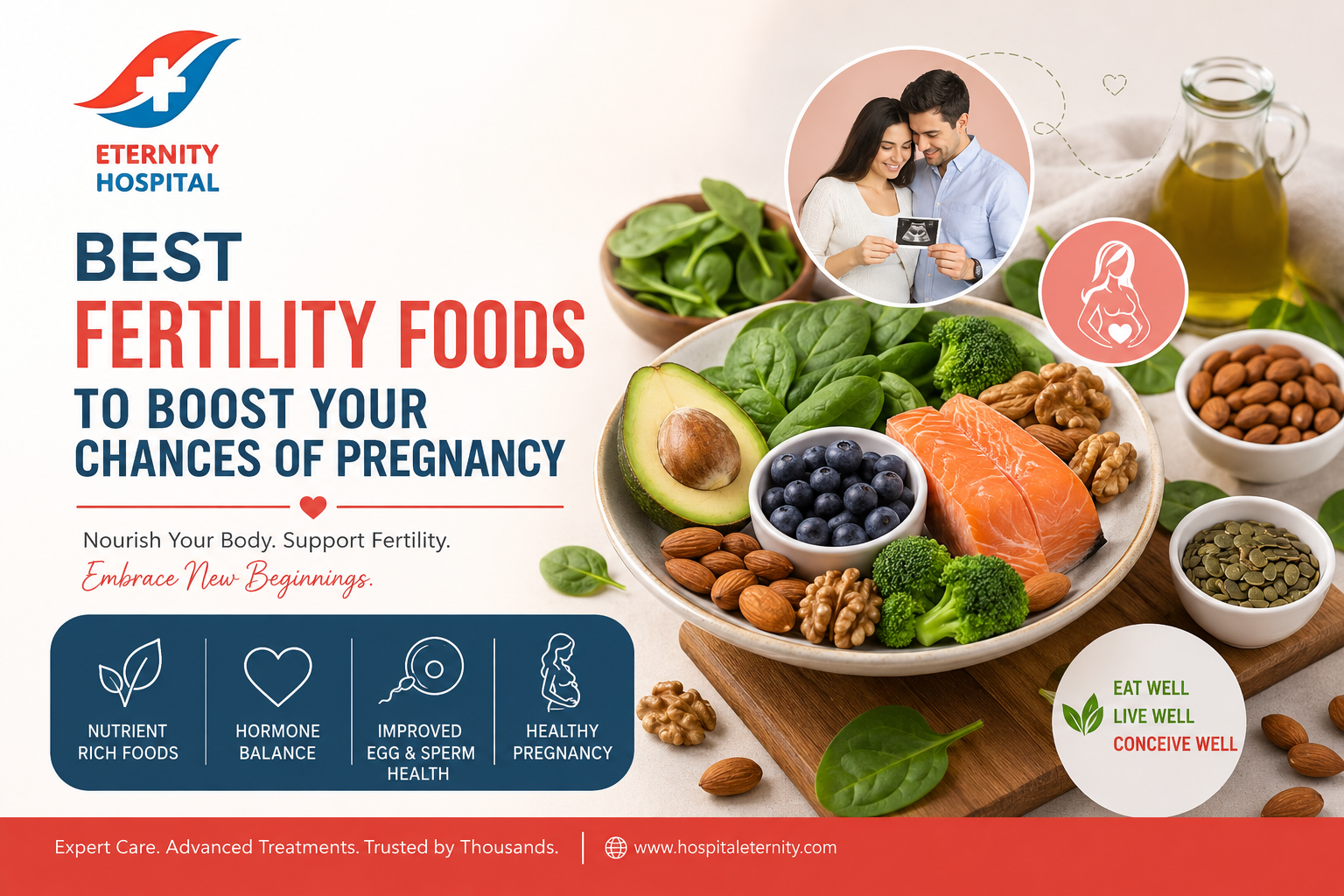
Best Fertility Foods to Boost Your Chances of Pregnancy Trying to conceive can be an exciting yet challenging journey. While medical treatments play a vital role for many couples, one often-overlooked factor is nutrition. The food you eat every day can influence hormone balance, egg quality, sperm health, ovulation, and even the environment needed for successful implantation. Research continues to show that a nutrient-rich diet, particularly one based on Mediterranean-style eating patterns, may improve fertility outcomes for both women and men.
For couples planning a pregnancy, focusing on fertility-friendly foods is one of the simplest and most natural steps to support reproductive health. This guide explores the best fertility foods, nutrients, lifestyle tips, and when to seek expert fertility care. If you’re looking for specialized fertility guidance and reproductive healthcare, Hospital Eternity Fertility & IVF Center provides advanced fertility treatments and personalized care for couples at every stage of their parenthood journey.
Understanding the Connection Between Nutrition and Fertility
Numerous factors, including age, genetics, hormonal balance, lifestyle habits, and overall health, influence fertility. Among these factors, nutrition stands out because it is something couples can actively improve every day. The body requires a steady supply of vitamins, minerals, proteins, and healthy fats to support reproductive functions. When nutrient levels are inadequate, hormone production can become disrupted, ovulation may become irregular, and sperm quality can decline.
Studies suggest that dietary patterns rich in fruits, vegetables, whole grains, healthy fats, and lean proteins are associated with improved fertility outcomes. Conversely, diets high in processed foods, trans fats, and added sugars may negatively affect reproductive health. Researchers have also observed that adherence to Mediterranean-style eating patterns is linked with better pregnancy rates and improved sperm quality.
Nutrition is not a magic solution that guarantees pregnancy, but it creates a strong foundation for reproductive wellness. Think of your body as a garden. Healthy soil does not guarantee that every seed will grow, but it dramatically improves the chances of successful growth. The same principle applies to fertility nutrition.
How Food Impacts Reproductive Health
Every reproductive process relies on nutrients. Eggs require antioxidants to protect them from oxidative stress. Hormones depend on healthy fats for production. Sperm cells need zinc, selenium, and omega-3 fatty acids to maintain mobility and structure. Blood sugar regulation also plays a crucial role because insulin imbalances can interfere with ovulation, especially in women with PCOS.
Why Both Partners Should Focus on Nutrition
Fertility is not solely a woman’s responsibility. Male factors contribute significantly to infertility cases worldwide. Research shows that healthy dietary patterns may improve sperm count, motility, morphology, and DNA integrity. Men who consume nutrient-rich foods often experience better reproductive outcomes compared to those who consume highly processed diets.
Essential Nutrients for Fertility
The body relies on specific nutrients to support conception and a healthy pregnancy. Rather than focusing on isolated supplements, it is often beneficial to obtain these nutrients from whole foods whenever possible.
Nutrient Benefits for Fertility: Food Sources
Folate supports egg development and fetal health. Spinach, lentils, beans
Omega-3 improves hormone function and reduces inflammation. Salmon, walnuts, flaxseeds
Zinc supports sperm production and egg maturation. Pumpkin seeds, eggs
Selenium protects reproductive cells from damage. Fish, nuts
Vitamin D supports reproductive hormone balance. Dairy, fish, and sunlight
Iron supports ovulation and a healthy pregnancy. Spinach, legumes, lean meats
Folate and B Vitamins
Folate plays an essential role before and during pregnancy. It supports DNA synthesis, healthy cell division, and fetal neural tube development. Women attempting conception are often advised to ensure adequate folate intake because deficiencies can affect fertility and pregnancy outcomes.
Omega-3 Fatty Acids
Omega-3 fatty acids help reduce inflammation and support hormone signaling pathways. Research suggests that omega-3 intake may contribute to improved fertility outcomes and reproductive health. These healthy fats are found in fatty fish, walnuts, chia seeds, and flaxseeds.
Antioxidants
Antioxidants combat free radicals that can damage eggs and sperm. Foods rich in vitamin C, vitamin E, beta-carotene, and polyphenols are particularly beneficial for reproductive health. Berries, citrus fruits, leafy greens, and colorful vegetables are excellent sources.
Top Fertility Foods for Women
Leafy Green Vegetables
Spinach, kale, methi, and other leafy greens deserve a place on every fertility-focused meal plan. They are loaded with folate, iron, calcium, magnesium, and antioxidants. These nutrients support healthy ovulation and help prepare the body for pregnancy. Women with low iron levels may experience ovulatory challenges, making iron-rich greens especially valuable.
Adding leafy greens to smoothies, salads, soups, or traditional Indian dishes can significantly boost nutrient intake. Their versatility makes them one of the easiest fertility foods to include regularly.
Berries and Citrus Fruits
Berries are tiny nutritional powerhouses. Blueberries, strawberries, raspberries, oranges, and lemons provide high levels of antioxidants that protect reproductive cells from damage. Oxidative stress can negatively affect both egg quality and implantation success. Regular consumption of antioxidant-rich fruits helps create a healthier reproductive environment.
Eggs and Dairy Products
Eggs contain choline, protein, vitamin B12, and healthy fats. These nutrients support hormone production and reproductive health. Full-fat dairy products have also been associated with improved ovulation in some studies, particularly among women experiencing ovulatory disorders.
Whole Grains
Whole grains such as oats, brown rice, quinoa, ragi, and bajra help stabilize blood sugar levels. Stable insulin levels are particularly important for women with PCOS because insulin resistance can interfere with ovulation. Whole grains also provide fiber, B vitamins, and essential minerals that support overall reproductive health.
Best Fertility Foods for Men
Fatty Fish
Salmon, sardines, and mackerel provide omega-3 fatty acids that support sperm health and hormone production. These healthy fats may improve sperm motility and overall semen quality. Regular fish consumption is often recommended as part of fertility-focused dietary plans.
Nuts and Seeds
Walnuts, almonds, pumpkin seeds, flaxseeds, and chia seeds contain healthy fats, zinc, selenium, and antioxidants. These nutrients help protect sperm from oxidative damage and support healthy testosterone levels. Walnuts, in particular, have gained attention for their potential benefits on sperm quality.
Lean Protein Sources
Protein provides the building blocks needed for the development of reproductive cells. Lean poultry, fish, eggs, lentils, beans, chickpeas, and paneer offer high-quality protein without excessive saturated fat. Replacing processed meats with healthier protein sources may positively impact fertility.
Mediterranean Diet and Fertility Success
Among all fertility-focused dietary approaches, the Mediterranean diet consistently receives strong support from researchers. This eating pattern emphasizes fruits, vegetables, legumes, whole grains, olive oil, nuts, seeds, fish, and moderate dairy consumption.
Key Components of the Diet
The Mediterranean diet focuses on nutrient density rather than restriction. It encourages healthy fats, colorful produce, high-fiber foods, and minimally processed ingredients. This combination helps reduce inflammation, improve insulin sensitivity, and support hormonal balance.
Scientific Evidence Supporting Fertility Benefits
Multiple studies have linked adherence to the Mediterranean diet with improved fertility outcomes in both men and women. Research has shown potential improvements in pregnancy rates, sperm quality, embryo development, and reproductive health markers among individuals who closely follow this dietary pattern.
Foods to Avoid While Trying to Conceive
Ultra-Processed Foods
Recent research highlights concerns about ultra-processed food consumption and fertility outcomes. Women consuming higher amounts of ultra-processed foods appear to have lower odds of conception compared to those following healthier dietary patterns. These foods often contain excess sugar, unhealthy fats, additives, and preservatives that may disrupt hormonal balance.
Excess Sugar and Trans Fats
Foods high in added sugars can contribute to insulin resistance, while trans fats may negatively impact ovulation and reproductive health. Fried foods, packaged snacks, sugary beverages, and bakery products should be limited whenever possible. Replacing them with whole-food alternatives creates a healthier nutritional environment for conception.
Role of Fertility Specialists in Pregnancy Planning
While healthy eating is an important step, nutrition alone may not address all fertility challenges. Couples who have been trying to conceive without success may benefit from a professional fertility evaluation. Factors such as blocked fallopian tubes, severe male factor infertility, endometriosis, or hormonal disorders often require medical intervention.
When to Seek Professional Help
Couples under age 35 should generally consider fertility evaluation after one year of trying to conceive. For women over 35, seeking help after six months is often recommended. Early assessment can identify underlying issues and provide access to effective treatment options.
For expert fertility consultation, advanced IVF treatments, reproductive diagnostics, and personalized fertility care, Hospital Eternity Fertility & IVF Center offers comprehensive services designed to help couples achieve their dream of parenthood. Their experienced fertility specialists provide individualized treatment plans based on each couple’s unique needs.
Conclusion
Nutrition plays a powerful role in supporting fertility for both women and men. A diet rich in leafy greens, berries, whole grains, eggs, nuts, seeds, fatty fish, and healthy fats can provide the nutrients needed for optimal reproductive health. Research increasingly supports Mediterranean-style eating patterns as one of the most beneficial approaches for improving fertility outcomes. At the same time, reducing ultra-processed foods, excessive sugar, and trans fats may further enhance your chances of conception.
Every fertility journey is unique. While healthy eating creates a strong foundation, couples experiencing difficulties should not hesitate to seek professional medical guidance. Combining good nutrition with expert fertility care can significantly improve the path toward a healthy pregnancy
https://www.hospitaleternity.com/cervical-cancer-screening-in-ghaziabad/
https://www.hospitaleternity.com/menopausal-problems-treatment-in-ghaziabad/
https://www.hospitaleternity.com/adolescent-issues-treatment-in-ghaziabad/
.https://www.hospitaleternity.com/gynaecological-problems-treatment-in-ghaziabad/
https://www.hospitaleternity.com/best-medical-abortion-in-ghaziabad/
https://www.hospitaleternity.com/caesarean-delivery-in-ghaziabad/
https://www.hospitaleternity.com/best-normal-delivery-in-ghaziabad/
https://www.hospitaleternity.com/best-pregnancy-care-in-ghaziabad/