

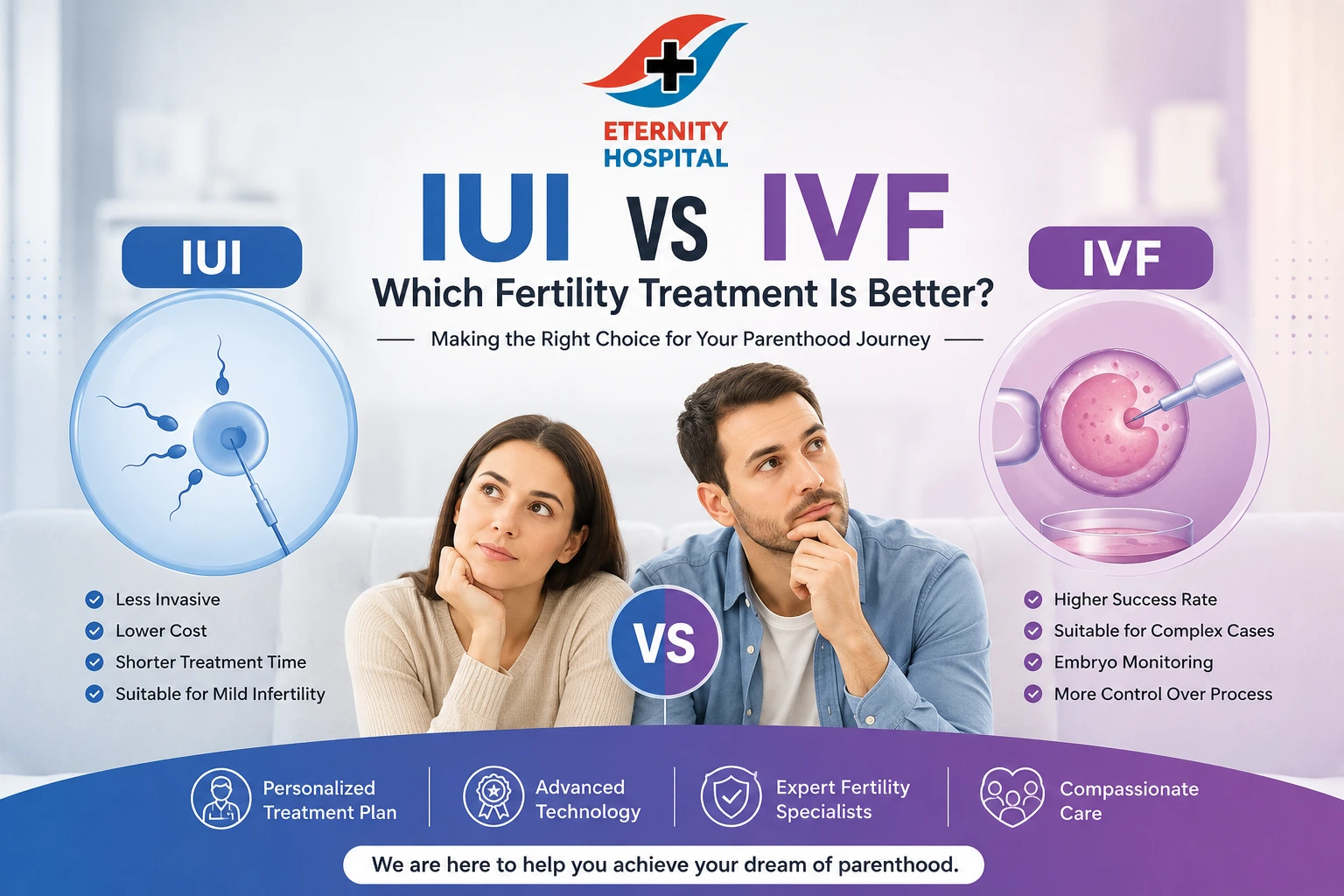
Understanding Infertility and Fertility Treatment
IUI vs IVF
Trying to conceive can feel surprisingly complicated, especially when months of trying turn into a year of uncertainty. Infertility can involve female factors, male factors, a combination of both, or sometimes no clearly identifiable cause. According to the World Health Organization, approximately 1 in 6 people of reproductive age experience infertility during their lifetime, making fertility care a major global health concern rather than an unusual problem.
When pregnancy does not happen naturally, treatment is not automatically synonymous with IVF. Doctors may consider several approaches depending on age, ovarian reserve, ovulation, fallopian-tube health, sperm quality, previous pregnancy history, and the duration of infertility. IUI and IVF are two established fertility treatments, but they work in fundamentally different ways. IUI gives fertilisation a chance to occur naturally inside the reproductive tract after prepared sperm are placed directly into the uterus. At the same time, IVF involves retrieving eggs, fertilising them in a laboratory, and transferring an embryo into the uterus.
That difference matters. Think of IUI as giving the sperm a helpful shortcut, whereas IVF brings several critical steps into a controlled laboratory environment. The question is therefore not simply, “Which treatment is better?” The more useful question is, “Which treatment is more appropriate for my specific fertility situation?” A qualified fertility specialist can answer that after evaluating both partners, rather than choosing a treatment based only on cost, popularity, or what worked for another couple.
When Should You Seek a Fertility Evaluation?
A fertility evaluation is generally appropriate when a couple has been unable to achieve pregnancy after 12 months of regular unprotected intercourse, although earlier assessment may be recommended depending on age, medical history, menstrual problems, previous pelvic surgery, known reproductive disorders, or concerns about sperm health. WHO defines infertility around this 12-month timeframe and emphasizes that infertility may arise from male, female, or unexplained factors.
The evaluation may include a detailed medical history, menstrual and ovulation assessment, ultrasound examination, ovarian-reserve testing when appropriate, assessment of the uterus and fallopian tubes, and semen analysis. The purpose is not simply to label someone as infertile; it is to identify what may be preventing conception and determine the least complicated treatment that has a reasonable chance of working. This is particularly important because jumping directly to an advanced procedure without understanding the underlying problem may add unnecessary expense, medication, emotional pressure, and treatment time.
What Is IUI?
Intrauterine insemination (IUI) is a fertility treatment in which prepared sperm are placed directly inside the uterus around the time of ovulation. Before insemination, the semen sample is processed so that suitable, motile sperm can be concentrated for the procedure. The goal is to place sperm closer to the fallopian tubes, reducing some of the barriers they would normally encounter during natural intercourse.
IUI is generally less invasive than IVF because the eggs are not removed from the ovaries and fertilisation still takes place naturally within the body. Depending on the individual’s circumstances, IUI may be performed during a natural ovulatory cycle or alongside medicines used to stimulate ovulation. When medication is used, ultrasound monitoring may be needed to determine follicular development and reduce the risk of excessive follicle development and multiple pregnancy.
For some couples, this makes IUI an attractive first-line option. It can be particularly useful when the fertility problem is relatively mild, and the reproductive anatomy allows sperm and egg to meet naturally. However, IUI is not appropriate for every fertility diagnosis, and choosing it simply because it is cheaper or easier can sometimes delay a treatment that would be more effective.
How Does IUI Work?
An IUI cycle typically begins with evaluation of ovulation and, where appropriate, ovarian stimulation. The doctor monitors follicle development using ultrasound and may use medication to help time ovulation. Around the appropriate time, a prepared sperm sample is introduced into the uterus using a thin catheter. The procedure itself generally takes only a few minutes, after which the sperm must still travel through the reproductive tract and fertilise an egg naturally.
Because fertilisation occurs inside the body, IUI does not allow doctors to confirm fertilisation in the laboratory or observe embryo development before implantation. That is one of the major distinctions between IUI and IVF. IUI can therefore be a sensible option when the fallopian tubes are open, ovulation is possible, and sperm parameters are adequate for the treatment to have a reasonable chance of success.
What Is IVF?
In vitro fertilisation (IVF) is a more advanced assisted reproductive treatment in which eggs are collected from the ovaries and fertilised with sperm in a laboratory. If fertilisation and embryo development occur successfully, an embryo can subsequently be transferred into the uterus. IVF therefore moves the fertilisation stage outside the body and gives the fertility team greater control over several stages of the reproductive process.
A conventional IVF cycle commonly involves ovarian stimulation, monitoring, egg retrieval, fertilisation, embryo culture, and embryo transfer. Depending on the individual’s situation, embryos may also be frozen for later use. Some patients may require additional techniques, such as ICSI, particularly when significant male-factor infertility is present.
IVF is often considered when simpler approaches are unlikely to work or when there are significant fertility challenges. Blocked fallopian tubes, certain forms of severe male-factor infertility, reduced ovarian reserve, some cases of endometriosis, advanced reproductive age, or previous unsuccessful treatments may influence the decision. The exact recommendation, however, depends on the complete fertility assessment rather than a single diagnosis.
How Does IVF Work?
The IVF process begins with medication designed to stimulate the ovaries so multiple follicles can develop. Ultrasound and hormonal monitoring help the medical team determine when the follicles are ready. Eggs are then retrieved using a specialised procedure, after which they are fertilised with sperm in the laboratory.
Embryos are observed as they develop, and an appropriate embryo may be transferred into the uterus. Unlike IUI, IVF allows clinicians to see whether fertilisation has occurred and to observe early embryo development before transfer. That additional control is one reason IVF can be more effective for certain fertility problems, although it also makes the process more medically involved.
IUI vs IVF: Key Differences
The easiest way to understand the difference is to look at where fertilisation occurs. With IUI, sperm are placed inside the uterus, but fertilisation still happens naturally inside the body. With IVF, eggs are collected, and fertilisation takes place in a laboratory before an embryo is transferred to the uterus. HFEA describes IUI as less invasive and less expensive than IVF, while also noting that IUI generally has lower success rates per cycle.
| Fertilisation | Occurs inside the body | Occurs in a laboratory |
| Egg retrieval | No | Yes |
| Invasiveness | Lower | Higher |
| Laboratory embryo development | No | Yes |
| Typical complexity | Lower | Higher |
| Cost per cycle | Usually lower | Usually higher |
| Success per cycle | Generally lower | Generally higher for suitable patients |
| Suitable for blocked tubes | Usually no | Often considered |
| Severe male-factor infertility | Often unsuitable | IVF/ICSI may be considered |
| Treatment control | Lower | Greater |
The important takeaway is that more advanced does not automatically mean better for everyone. A person with a mild fertility issue and healthy fallopian tubes may not need IVF immediately. Conversely, someone with blocked tubes should not expect repeated IUI cycles to solve a problem that prevents sperm and egg from meeting naturally.
IUI vs IVF Success Rates
Success rates are one of the first things most couples want to know, but they are also among the easiest fertility statistics to misunderstand. There is no single success percentage that applies to every patient because age, diagnosis, ovarian reserve, sperm quality, embryo quality, treatment protocol, and clinic expertise can all affect outcomes.
HFEA states that IUI generally has lower success rates per cycle than IVF and describes IUI success as being around a third of IVF success in general terms, while emphasizing that individual circumstances matter. This does not mean that every IVF cycle will succeed or that every IUI cycle has a fixed probability. Comparing percentages without comparing the patient populations behind those percentages can produce a misleading picture.
For example, a younger patient with regular ovulation, open tubes, and relatively healthy sperm may have a reasonable chance with IUI. Another patient of greater reproductive age with significantly reduced ovarian reserve or blocked tubes may have a very different treatment pathway. The goal should therefore be to ask your fertility specialist about your expected probability of success, rather than relying on a generic number found online.
Factors That Influence Success
Age is one of the most important considerations because egg quantity and quality generally decline with increasing reproductive age. Ovarian reserve, sperm quality, ovulation, tubal function, uterine health, endometriosis, and previous fertility-treatment history can also affect outcomes. Even lifestyle and overall health may influence reproductive wellbeing, although no lifestyle change can guarantee pregnancy.
Another important factor is whether the chosen treatment actually addresses the underlying problem. IUI can work well when sperm need assistance reaching the egg, but fertilisation can reasonably occur inside the body. IVF becomes more logical when the reproductive pathway has problems that IUI cannot overcome. In other words, the best fertility treatment is not necessarily the one with the highest headline success rate—it is the one that matches the reason pregnancy has not occurred.
When Is IUI Recommended?
IUI may be considered when the fallopian tubes are open, and the medical team believes sperm and egg can still meet naturally. It may be used in selected cases of unexplained infertility, certain ovulatory problems, mild male-factor infertility, or when donor sperm is being used. HFEA also notes that IUI may be used in circumstances where vaginal intercourse is not possible or where donor sperm is required.
For someone suitable for IUI, its lower invasiveness can be a meaningful advantage. There is no egg retrieval, and the procedure itself is comparatively simple. That can make IUI a reasonable treatment to attempt before moving to IVF, particularly when the patient’s age and fertility assessment allow sufficient time for several attempts.
However, IUI becomes less attractive when the probability of success is very low. Severe sperm abnormalities, blocked fallopian tubes, certain severe forms of endometriosis, markedly diminished ovarian reserve, and other significant fertility factors may push the treatment plan toward IVF or another assisted reproductive approach.
When Is IVF Recommended?
IVF is often considered when fertilisation needs to occur outside the body or when other fertility treatments have a low likelihood of success. It can be particularly useful when the fallopian tubes are blocked because the IVF process bypasses the need for sperm and egg to meet within the tubes. IVF may also be considered in selected cases involving severe male-factor infertility, advanced reproductive age, diminished ovarian reserve, endometriosis, or repeated unsuccessful fertility treatments.
The benefit of IVF is control. Eggs can be retrieved directly, fertilisation can be assessed in the laboratory, and embryos can be monitored before transfer. This does not guarantee pregnancy, but it gives doctors additional opportunities to manage the reproductive process.
IVF may also incorporate specialised procedures when clinically indicated. For example, ICSI involves injecting a single sperm directly into an egg and may be considered in certain cases of male-factor infertility. The appropriate technique should be based on the diagnosis and evidence rather than automatically adding every available procedure.
IUI vs IVF: Cost Comparison
Cost is naturally an important part of fertility planning, particularly because fertility treatment may require more than one cycle. IUI generally costs less per treatment cycle because it involves fewer medications, no egg retrieval, and no laboratory embryo-culture stage. IVF is more expensive because it involves ovarian stimulation, egg retrieval, laboratory fertilisation, embryo culture, and additional clinical and laboratory services.
HFEA similarly describes IUI as considerably less expensive than IVF, while emphasising that IUI also has lower success rates per cycle. That creates an important financial question: Is the cheaper treatment actually cheaper if several unsuccessful cycles are needed before moving to IVF?
There is no universal answer. A patient with a good prognosis for IUI may benefit financially and medically from trying IUI first. Someone with a low likelihood of IUI success could spend more over time while losing valuable reproductive time. A fertility specialist should therefore discuss both cost per cycle and expected treatment pathway, not simply quote the price of the first procedure.
IUI vs IVF: Risks and Side Effects
Both IUI and IVF are established fertility treatments, but neither is completely risk-free. IUI is generally less invasive, although medications used to stimulate ovulation can increase the chance of multiple pregnancy. HFEA specifically identifies multiple pregnancy as one of the main concerns associated with IUI because twins or higher-order pregnancies can carry additional risks for the mother and babies.
IVF involves more procedures and medication, so the potential risks are different. Ovarian stimulation can cause side effects, and in some patients, excessive ovarian response can result in ovarian hyperstimulation syndrome. Egg retrieval is an invasive procedure and carries procedural risks, while embryo transfer and pregnancy following IVF have their own considerations.
This is why treatment should be medically supervised rather than approached as a simple procedure that can be selected from a menu. A responsible fertility plan considers both the potential benefits and risks before treatment begins.
IUI vs IVF: Treatment Timeline
IUI usually has a simpler treatment pathway. Depending on whether the cycle is natural or stimulated, the patient may undergo ovulation monitoring, receive medication when appropriate, and then have the insemination timed around ovulation. The insemination itself is relatively quick, but pregnancy still depends on natural fertilisation and implantation afterward.
IVF typically requires more stages. Ovarian stimulation is followed by monitoring, egg retrieval, fertilisation, embryo development, and embryo transfer or freezing. The precise timeline differs between patients and protocols, so a clinic should provide an individual schedule rather than promising that every IVF cycle will follow exactly the same number of days.
The emotional timeline matters too. Fertility treatment can create repeated periods of anticipation, uncertainty, and disappointment. Couples should consider not only how long the medical process takes but also whether they have enough emotional, practical, and financial support throughout the journey.
How Age Affects IUI and IVF
Age is an important consideration when choosing between IUI and IVF because reproductive potential changes over time. As age increases, the number and quality of available eggs generally decline, which can affect the likelihood of pregnancy through both natural conception and fertility treatment.
This does not mean that every woman above a particular age should automatically undergo IVF. Instead, age should be considered alongside ovarian reserve, medical history, sperm quality, previous pregnancy history, and the couple’s treatment goals. In some patients, spending many months attempting lower-intensity treatments may not be the most appropriate strategy.
HFEA notes that patients in their late 30s or over 40 may be advised to consider IVF depending on their circumstances because age can reduce the likelihood of successful IUI. This is exactly why an individual fertility consultation is more useful than applying a one-size-fits-all treatment rule.
Male Infertility and Choosing Between IUI and IVF
Fertility is not solely a woman’s issue. Male factors contribute to infertility in a significant proportion of couples, and semen analysis is therefore an important component of many fertility evaluations. Sperm count, concentration, motility, morphology, and other clinical findings can influence whether IUI is reasonable or whether IVF, sometimes with ICSI, would be more appropriate.
IUI can concentrate and place the more suitable sperm closer to the egg, which may help in selected cases of mild male-factor infertility. However, when sperm numbers or motility are severely compromised, IUI may have a low chance of success. In such situations, IVF with an appropriate laboratory fertilisation technique may offer a more effective route.
The key is to evaluate both partners. Treating only the female partner without properly assessing sperm health can delay diagnosis and lead to unnecessary treatment cycles.
IUI or IVF for Unexplained Infertility?
Unexplained infertility can be especially frustrating because routine tests may appear normal while pregnancy still does not occur. In these situations, doctors may consider factors that are not easily detected through standard testing, including subtle issues with fertilisation, embryo development, sperm function, or reproductive timing.
IUI may sometimes be used as a relatively less invasive treatment option, particularly when the patient has open tubes and otherwise favourable fertility characteristics. IVF may be considered when IUI has not worked or when factors such as age and ovarian reserve make a more effective treatment strategy desirable.
The WHO’s 2025 infertility guideline emphasises a progressive approach to fertility care, moving from simpler management strategies toward treatments such as IUI or IVF based on clinical findings and patient preferences. That principle is useful: treatment should be personalised rather than automatic.
Can You Move From IUI to IVF?
Yes. Moving from IUI to IVF is a common part of fertility treatment planning. A couple may begin with IUI because their clinical profile suggests a reasonable chance of success, then reconsider the strategy if pregnancy does not occur after an appropriate number of attempts.
The decision to move to IVF may depend on the patient’s age, ovarian reserve, number of previous IUI cycles, sperm parameters, emotional and financial considerations, and whether new information has emerged during treatment. HFEA notes that people may undergo several IUI cycles and that IVF may be considered if IUI is unsuccessful.
There is no universal rule saying every couple must have exactly a certain number of IUI cycles before IVF. The right point to change treatment depends on the individual situation. A good fertility specialist should explain the decision-making process before treatment begins so that couples are not left wondering what happens next.
How Doctors Decide Which Treatment Is Better
A fertility doctor does not choose between IUI and IVF based on one test result. Instead, the decision usually comes from putting several pieces of information together. This includes the patient’s age, ovarian reserve, ovulation status, tubal health, uterine condition, sperm parameters, duration of infertility, previous treatments, and personal priorities.
A doctor may recommend IUI when the biological conditions for natural fertilisation remain favourable, and a lower-intensity approach has a reasonable chance of working. IVF may be recommended when there is a significant barrier to natural fertilisation or when greater control over fertilisation and embryo development is beneficial.
Patient preference also matters. WHO’s current infertility guidance highlights the importance of considering clinical findings together with patient preferences when progressing through fertility treatment.
Preparing for IUI or IVF
Good preparation starts before the treatment cycle. Patients should provide their doctors with a complete medical history, including previous pregnancies, miscarriages, pelvic surgery, medications, menstrual patterns, previous fertility treatments, and relevant family history. Both partners should be involved in the evaluation because infertility can affect either partner or both.
Lifestyle habits can also be reviewed. WHO recommends healthy lifestyle measures such as maintaining a healthy diet, physical activity, and tobacco cessation for people planning or attempting pregnancy. These steps cannot guarantee fertility-treatment success, but they are part of sensible preconception health.
It is also useful to prepare emotionally and financially. Ask what is included in the treatment cost, what happens if the first cycle fails, which medications are required, what monitoring is needed, and whether additional procedures are genuinely recommended. Be cautious about expensive fertility “add-ons” that promise dramatically better results without strong evidence; HFEA notes that many optional add-ons have limited or insufficient evidence of effectiveness.\
Choosing a Fertility Specialist and Hospital
Choosing a fertility provider is about more than finding the lowest advertised price. Look for qualified doctors, appropriate diagnostic facilities, transparent treatment plans, good communication, laboratory support where required, and a clinic environment where you feel comfortable asking difficult questions.
You should be able to understand why a doctor is recommending IUI instead of IVF—or IVF instead of IUI. Ask how your age, ovarian reserve, semen analysis, tubal status, and previous treatment history affect the recommendation. Also ask what the next step would be if the first treatment does not work.
For couples in Ghaziabad and surrounding Delhi NCR areas, Eternity Hospital provides gynecology and obstetrics care, including fertility assessment and treatment support. Its gynecology department states that it offers fertility treatments, ovulation induction, and assisted reproductive techniques, while its profile for Dr. Rashmi Jain lists infertility management among her areas of care.
IUI vs IVF at Eternity Hospital
At Eternity Hospital, fertility care is positioned around evaluation, personalised treatment planning, and comprehensive women’s healthcare. The hospital’s gynecology and obstetrics department states that its services include fertility treatments and assisted reproductive techniques, while its gynecology pages describe support for infertility, PCOS, reproductive health, pregnancy, and related women’s health concerns.
Dr. Rashmi Jain is listed by Eternity Hospital as a Senior Consultant in Obstetrics and Gynecology, with infertility management among her clinical areas. The hospital also describes her work in pregnancy, high-risk pregnancy, menstrual problems, PCOD, fibroids, ovarian cysts, and other reproductive-health concerns.
For a couple wondering “Should I choose IUI or IVF?”, the best starting point is a fertility evaluation rather than choosing a procedure independently. A personalised consultation can help identify whether ovulation problems, tubal factors, sperm-related issues, age, ovarian reserve, or another condition is influencing the treatment decision. You can learn more about Eternity Hospital’s gynecology and fertility services through its official website: Eternity Hospital – Gynecology & Obstetrics
Conclusion
So, IUI vs IVF: which fertility treatment is better? The honest answer is that neither treatment is universally better. IUI is generally simpler, less invasive, and less expensive per cycle, but it depends on the sperm and egg meeting naturally inside the reproductive tract. IVF is more complex and usually more expensive, but it gives doctors greater control over fertilisation and embryo development and can bypass certain fertility barriers.
For the right patient, IUI can be an excellent first step. For another patient, particularly where there are significant tubal, ovarian, sperm, or age-related concerns, IVF may make more sense from the beginning. The smartest decision is therefore not based on which treatment sounds more advanced, but on which treatment addresses the actual cause of infertility and offers a reasonable chance of achieving pregnancy within the patient’s circumstances.
If you are trying to conceive and are unsure whether IUI or IVF is appropriate, consider consulting a qualified fertility specialist for a complete evaluation. For couples in Ghaziabad and the Delhi NCR region, Eternity Hospital offers gynecology, infertility management, fertility assessment, and reproductive-health services.