

Introduction
Missing a period can be worrying, especially when pregnancy has already been ruled out. Many women immediately begin wondering whether something serious is wrong with their reproductive health, while others may ignore the delay, assuming that the cycle will eventually return to normal. The truth lies somewhere in between. A delayed menstrual cycle is common and often temporary, but it can also be an early warning sign of an underlying hormonal or medical condition that deserves proper evaluation.
The menstrual cycle is controlled by a delicate balance of hormones produced by the brain, ovaries, thyroid gland, and adrenal glands. Even a small disruption in this hormonal communication can delay ovulation, which in turn postpones menstruation. Factors such as emotional stress, significant weight changes, excessive physical activity, poor nutrition, certain medications, and health conditions like PCOS, thyroid disorders, or premature ovarian insufficiency may all contribute to delayed periods without pregnancy.
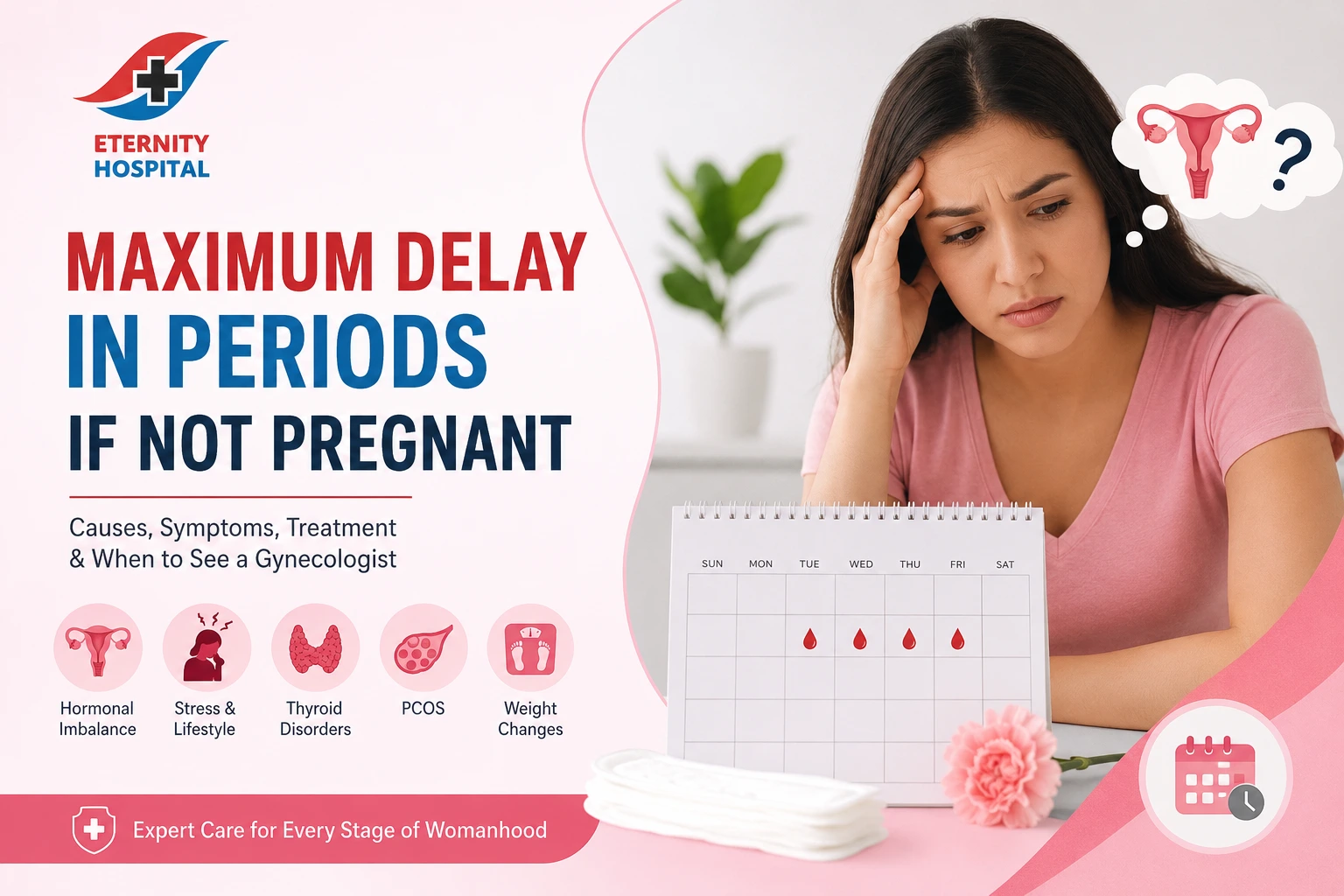
Many women ask, “What is the maximum delay in periods if not pregnant?” There is no single answer because every woman’s body is unique. While a few days’ delay is usually normal, a missed period lasting several weeks or recurring irregular cycles should never be ignored. Seeking timely medical advice helps identify the root cause before complications develop.
If you are experiencing delayed or irregular periods, the experienced gynecologists at Hospital Eternity provide comprehensive women’s healthcare, advanced diagnostic facilities, and personalized treatment plans for menstrual disorders, fertility concerns, PCOS management, pregnancy care, and hormonal conditions. Visit https://www.hospitaleternity.com/ to learn more or schedule an appointment with a specialist.
What Is Considered a Normal Menstrual Cycle?
A normal menstrual cycle is much more than simply getting your period every month. It is a reflection of your overall reproductive and hormonal health. Most healthy women have cycles ranging from 21 to 35 days, with menstrual bleeding lasting approximately 2 to 7 days. Contrary to popular belief, not everyone follows the textbook 28-day cycle. Some women naturally experience slightly shorter or longer cycles while remaining perfectly healthy.
Cycle length can also change throughout different stages of life. Teenagers often have irregular periods during the first few years after menstruation begins because hormone levels are still stabilizing. Women approaching menopause may also notice increasing irregularity as estrogen levels decline. These variations are usually physiological rather than pathological, provided there are no alarming symptoms.
Minor fluctuations of 3 to 7 days from month to month are generally considered normal. Everyday factors such as emotional stress, international travel, illness, changes in sleep patterns, or dietary modifications can temporarily affect hormone production and delay ovulation. Since menstruation occurs approximately two weeks after ovulation, even a slight shift in ovulation can delay the menstrual period.
Understanding what constitutes a normal cycle allows women to identify changes early. Keeping track of menstrual dates through a calendar or mobile application helps detect patterns and provides valuable information during gynecological consultations.
Average Cycle Length
Although 28 days is widely recognized as the average menstrual cycle, it is not the universal standard. Healthcare providers typically consider any cycle between 21 and 35 days normal for adult women. Consistency is often more important than the exact number of days. A woman whose cycle is consistently 32 days generally has a healthier pattern than someone whose cycle fluctuates unpredictably between 24 and 45 days every month.
Ovulation generally occurs around the midpoint of the cycle, although this timing varies among individuals. After ovulation, progesterone prepares the uterus for pregnancy. If fertilization does not occur, hormone levels decline, causing the uterine lining to shed as menstruation. Any disruption to ovulation inevitably affects the timing of menstruation.
Lifestyle changes can influence cycle length without indicating disease. Exam stress, demanding work schedules, emotional trauma, rapid weight loss, or changes in exercise intensity may all temporarily alter ovulation. Most women notice that their cycles normalize once these triggers resolve.
However, if periods repeatedly occur more than 35 days apart or are absent for several months despite negative pregnancy tests, medical evaluation becomes important to identify hormonal disorders or reproductive conditions requiring treatment.
When a Delayed Period Is Normal
Not every delayed period signals a medical problem. In fact, several life events naturally influence menstrual timing without causing long-term reproductive damage. Understanding these normal situations can help reduce unnecessary anxiety while encouraging appropriate medical consultation when required.
Teenage girls commonly experience irregular cycles during the first two to three years after their first menstrual period because hormonal regulation is still maturing. Similarly, women approaching menopause often notice increasing variability in cycle length due to fluctuating estrogen production. Breastfeeding mothers may also experience delayed or absent menstruation because prolactin suppresses ovulation.
Temporary lifestyle factors are equally important. Emotional stress increases cortisol production, which interferes with reproductive hormones. Sudden dietary changes, fasting, rapid weight loss, obesity, excessive exercise, long-distance travel, and inadequate sleep can all delay ovulation. Once these stressors are addressed, menstrual cycles frequently return to their usual pattern without medication.
While occasional delays are common, persistent irregularity should never be ignored. Missing periods for more than two or three consecutive months without pregnancy warrants a complete gynecological assessment to exclude hormonal disorders, ovarian conditions, thyroid disease, or other underlying medical issues.
How Long Can a Period Be Delayed If You Are Not Pregnant?
This is one of the most frequently asked questions in gynecology. A healthy menstrual cycle may occasionally be delayed by a few days to one week, and this variation is generally not considered abnormal. Temporary stress, illness, travel, changes in routine, or emotional events commonly explain these short delays.
When a period is delayed by more than 7 to 10 days, taking a pregnancy test is usually the first recommendation if pregnancy is possible. If pregnancy has been ruled out and menstruation still does not occur, additional evaluation may be necessary depending on age, symptoms, and medical history.
A delay lasting more than 35 to 40 days often suggests that ovulation has not occurred. Conditions such as PCOS, thyroid dysfunction, elevated prolactin levels, chronic stress, nutritional deficiencies, or premature ovarian insufficiency are among the common causes. Women experiencing repeated long cycles should avoid self-medicating with hormonal tablets without medical advice, as doing so may mask an underlying problem rather than treat it.
If you have missed three consecutive menstrual cycles, healthcare providers refer to this as secondary amenorrhea, a condition requiring comprehensive investigation. Blood tests, pelvic ultrasound, hormone analysis, and a detailed clinical examination help determine the exact cause so that appropriate treatment can begin promptly.
Common Causes of Delayed Periods
A delayed period without pregnancy can occur for many different reasons, and identifying the exact cause is essential for choosing the right treatment. Menstruation depends on the healthy functioning of the hypothalamus, pituitary gland, ovaries, thyroid gland, and uterus. When one or more of these organs fail to work in harmony, ovulation may not occur on time, leading to a delayed menstrual cycle. While occasional delays are usually harmless, repeated irregular periods should never be ignored because they may indicate an underlying hormonal imbalance or medical condition.
Modern lifestyles have also contributed significantly to menstrual irregularities. Increased work pressure, poor dietary habits, lack of sleep, obesity, excessive fitness routines, and emotional stress all influence hormone production. Even women who have always had regular periods may suddenly notice changes when their bodies undergo physical or psychological stress. Some medications, including antidepressants, hormonal contraceptives, chemotherapy drugs, and steroids, may also interfere with normal menstrual function.
Doctors usually evaluate delayed periods by reviewing menstrual history, lifestyle factors, medical conditions, medications, and family history. Blood tests, hormone analysis, thyroid function tests, pelvic ultrasound, and sometimes MRI scans help identify the underlying problem. Rather than simply inducing menstruation with medicines, experienced gynecologists focus on treating the root cause to restore healthy reproductive function.
Stress and Anxiety
Stress is one of the most common reasons for delayed periods in women who are not pregnant. The body reacts to emotional or physical stress by releasing cortisol, commonly known as the stress hormone. Elevated cortisol levels interfere with the hypothalamus, the brain region responsible for regulating reproductive hormones. As a result, ovulation may be delayed or completely skipped, causing menstruation to occur much later than expected.
Stress can arise from many situations, including workplace pressure, examinations, financial problems, relationship issues, grief, chronic illness, or lack of sleep. Even positive life events such as marriage, moving to a new city, or starting a new job can temporarily disturb hormonal balance. Many women notice that their menstrual cycle returns to normal once stress levels decrease and healthy routines are restored.
Managing stress is therefore an important part of menstrual health. Regular exercise, meditation, yoga, deep breathing techniques, adequate sleep, and balanced nutrition can significantly improve hormone regulation. Women experiencing chronic anxiety or depression should also seek professional mental health support because emotional well-being and reproductive health are closely connected.
Hormonal Imbalance
Hormones act as chemical messengers that coordinate every stage of the menstrual cycle. Estrogen stimulates the growth of the uterine lining, progesterone prepares the uterus for pregnancy after ovulation, and hormones released by the brain regulate ovarian function. When this delicate balance is disrupted, menstruation often becomes irregular.
Hormonal imbalance may develop due to thyroid disease, elevated prolactin levels, insulin resistance, obesity, aging, certain medications, or ovarian disorders. Symptoms frequently include irregular periods, acne, weight gain, excessive facial hair, mood swings, fatigue, headaches, or difficulty conceiving. Some women experience very light periods, while others may skip menstruation entirely for several months.
Treatment depends on identifying the underlying hormonal disturbance. Lifestyle improvements, weight management, medications, and hormone therapy may all play a role depending on the diagnosis. Consulting an experienced gynecologist instead of self-medicating ensures that treatment addresses the actual cause rather than simply masking symptoms.
Polycystic Ovary Syndrome (PCOS)
Polycystic Ovary Syndrome (PCOS) is among the leading causes of delayed or missed periods in women of reproductive age. It is a hormonal condition in which the ovaries produce excessive amounts of androgens (male hormones), disrupting normal ovulation. Without regular ovulation, the menstrual cycle becomes unpredictable, and some women experience only a few periods each year.
Besides irregular menstruation, PCOS often causes acne, oily skin, unwanted facial hair, thinning scalp hair, weight gain, insulin resistance, and fertility challenges. Ultrasound examinations may reveal enlarged ovaries containing multiple small follicles, although not every woman with PCOS shows this feature.
Early diagnosis is important because untreated PCOS increases the long-term risk of type 2 diabetes, high cholesterol, hypertension, infertility, and endometrial hyperplasia. Management typically includes weight reduction, dietary modifications, regular exercise, medications to improve insulin sensitivity, hormonal therapy, and fertility treatment when pregnancy is desired. Personalized care from specialists at Hospital Eternity helps women effectively manage PCOS while protecting long-term reproductive health.
Thyroid Disorders
The thyroid gland may be small, but it has a significant impact on menstrual health. Both hypothyroidism (underactive thyroid) and hyperthyroidism (overactive thyroid) can disrupt the menstrual cycle by altering reproductive hormone production. Women with thyroid disorders often experience delayed periods, unusually heavy bleeding, lighter-than-normal menstruation, or even complete absence of periods.
Hypothyroidism commonly causes fatigue, weight gain, dry skin, constipation, depression, and sensitivity to cold. Hyperthyroidism, on the other hand, may produce weight loss, rapid heartbeat, anxiety, excessive sweating, and tremors. Because these symptoms develop gradually, many women do not immediately connect them with menstrual irregularities.
Fortunately, thyroid disorders are easily diagnosed through simple blood tests and can usually be managed effectively with medication. Once thyroid hormone levels return to normal, menstrual cycles frequently become regular again. This is why thyroid function testing is routinely recommended when evaluating women with delayed periods.
Sudden Weight Changes
Body weight plays a crucial role in hormone production and reproductive function. Rapid weight loss caused by crash dieting, eating disorders, prolonged illness, or extreme calorie restriction can reduce estrogen levels, preventing ovulation and delaying menstruation. Women with very low body fat percentages often experience prolonged menstrual absence because the body prioritizes survival over reproduction.
Conversely, obesity also affects menstrual health by increasing estrogen production from fat tissue and contributing to insulin resistance. These hormonal disturbances can interfere with ovulation, leading to irregular or delayed periods. Weight-related menstrual problems are particularly common among women with PCOS.
The goal is not simply to lose or gain weight but to achieve a healthy and sustainable body composition through balanced nutrition and regular physical activity. Diets rich in lean protein, whole grains, fruits, vegetables, healthy fats, and essential vitamins support hormonal balance far more effectively than restrictive eating plans. A nutritionist working alongside a gynecologist can help create an individualized approach for restoring regular menstrual cycles.
Excessive Exercise
Exercise is beneficial for overall health, but excessive physical activity without adequate nutrition can negatively affect reproductive hormones. Professional athletes, marathon runners, dancers, gymnasts, and women following extremely intense fitness routines frequently experience delayed or absent periods because the body perceives excessive energy expenditure as physiological stress.
Low body fat, insufficient calorie intake, and elevated cortisol levels combine to suppress ovulation. This condition is commonly referred to as functional hypothalamic amenorrhea. Along with irregular periods, affected women may develop fatigue, decreased bone density, recurrent injuries, and fertility problems if the condition persists.
Balancing exercise intensity with proper nutrition and sufficient recovery allows hormone levels to normalize. Healthcare providers may recommend reducing workout intensity temporarily, increasing caloric intake, and addressing nutritional deficiencies. Rather than stopping exercise completely, the goal is to create a sustainable fitness routine that supports both general health and reproductive wellness.