

Understanding Modern Rhinoplasty
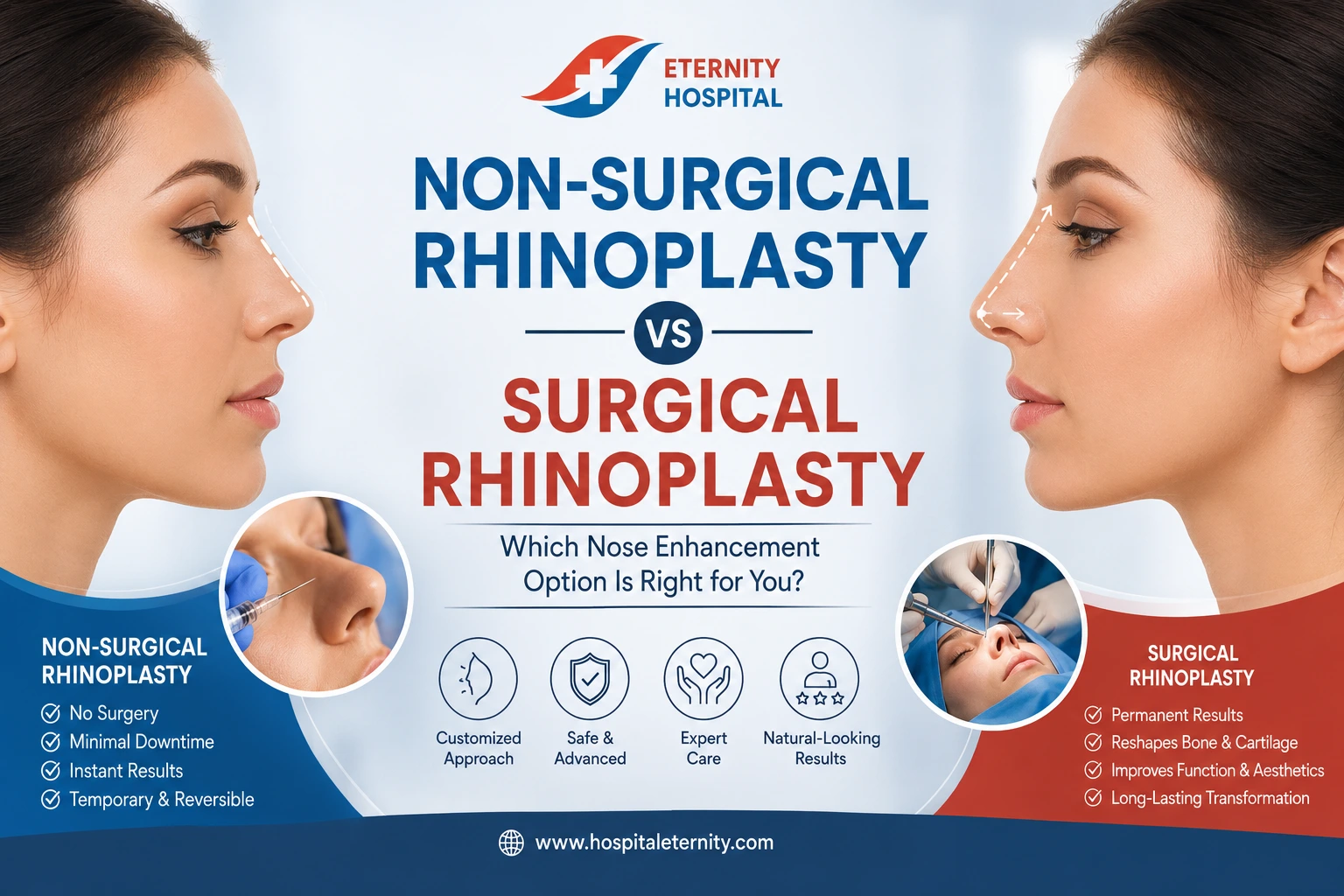
Non-Surgical Rhinoplasty vs Surgical Rhinoplasty The nose sits at the center of the face, making it one of the most important features affecting overall facial harmony. Even minor changes to the nose can dramatically alter a person’s appearance, confidence, and self-image. This is one of the reasons why rhinoplasty, commonly known as a nose job, continues to be among the most requested cosmetic procedures worldwide. According to recent data from the American Academy of Facial Plastic and Reconstructive Surgery (AAFPRS), rhinoplasty remains the most requested facial plastic surgery procedure, especially among younger patients seeking natural-looking results. Around 90% of facial plastic surgeons report performing rhinoplasty regularly, highlighting its ongoing popularity.
Today, patients have two primary options when considering nose enhancement: non-surgical rhinoplasty and surgical rhinoplasty. While both procedures aim to improve the appearance of the nose, they differ significantly in terms of technique, recovery, longevity, cost, and outcomes. Understanding these differences is essential before making a decision. Many people are attracted to the convenience of non-surgical treatments, while others prefer the permanent transformation offered by Surgery. The right choice depends on individual goals, anatomy, expectations, and lifestyle.
What Is Non-Surgical Rhinoplasty?
Non-surgical rhinoplasty, often referred to as a liquid rhinoplasty, is a minimally invasive cosmetic procedure that uses injectable dermal fillers to reshape specific areas of the nose. Instead of altering bone or cartilage, the procedure adds volume strategically to smooth irregularities, improve symmetry, or enhance the nasal bridge. The treatment can often be completed in less than an hour with little to no downtime.
What Is Surgical Rhinoplasty?
Surgical rhinoplasty is a comprehensive surgical procedure that permanently reshapes the nose by modifying bone, cartilage, and soft tissues. It can address cosmetic concerns such as a hump, wide bridge, drooping tip, or asymmetry while also correcting functional issues like breathing difficulties caused by a deviated septum. Unlike fillers, Surgery creates structural changes that can significantly alter both the appearance and function of the nose.
Why Rhinoplasty Remains One of the Most Popular Cosmetic Procedures
The growing demand for rhinoplasty reflects a broader shift in aesthetic preferences. Modern patients are no longer seeking dramatic transformations that make them look like someone else. Instead, they want subtle refinements that enhance their natural features while maintaining facial identity. This trend has fueled interest in both surgical and non-surgical options.
Recent industry surveys show that while non-surgical aesthetic treatments account for nearly 80% of cosmetic procedures because of their convenience, rhinoplasty continues to dominate the surgical category. Patients appreciate the ability to improve facial balance and self-confidence through a customized treatment plan. Social media, high-definition photography, video calls, and increased awareness of facial aesthetics have also contributed to rising demand.
The appeal of rhinoplasty extends beyond appearance alone. Many individuals seek treatment because they experience breathing problems, nasal trauma, congenital irregularities, or previous unsuccessful surgeries. In these cases, rhinoplasty serves both cosmetic and medical purposes. Advances in surgical techniques and imaging technology have also made outcomes more predictable and natural-looking than ever before. As a result, rhinoplasty continues to attract patients across different age groups and backgrounds.
How Non-Surgical Rhinoplasty Works
Dermal Fillers and Nose Reshaping
Non-surgical rhinoplasty relies on injectable fillers, most commonly hyaluronic acid-based products, to enhance specific contours of the nose. Rather than removing tissue, the treatment works by adding volume. This allows practitioners to camouflage small humps, smooth depressions, improve symmetry, elevate the nasal bridge, or create a more refined nasal tip. The procedure usually takes between 15 and 30 minutes and requires minimal recovery time. Patients can often return to their daily activities immediately after treatment.
One important limitation is that fillers cannot make the nose physically smaller. Since volume is being added, the treatment is best suited for camouflage and contour enhancement rather than reduction. Many patients appreciate the immediate results and the ability to preview changes without committing to permanent Surgery. For individuals who are uncertain about undergoing Surgery, non-surgical rhinoplasty can provide valuable insight into how subtle modifications may affect facial appearance.
Ideal Candidates for Liquid Rhinoplasty
The best candidates for liquid rhinoplasty are individuals with relatively minor cosmetic concerns. These may include a small dorsal hump, mild asymmetry, a flat bridge, or a slightly drooping nasal tip. Patients seeking a quick improvement before a special event often find this treatment appealing because there is little downtime involved.
However, non-surgical rhinoplasty is not appropriate for everyone. Patients with significant structural deformities, breathing difficulties, severe asymmetry, or those seeking major size reduction generally require surgical intervention. Proper patient selection is critical because the nose contains a complex network of blood vessels, making filler placement highly technique-sensitive. Treatment should only be performed by qualified and experienced medical professionals.
How Surgical Rhinoplasty Works
Structural Changes to Bone and Cartilage
Surgical rhinoplasty offers a level of customization that non-surgical techniques cannot achieve. During the procedure, the surgeon reshapes nasal bones, cartilage, and soft tissues to create a balanced and harmonious appearance. Depending on the patient’s goals, the surgeon may reduce a hump, narrow the bridge, refine the tip, correct asymmetry, or reconstruct damaged structures.
Because the Surgery directly alters the framework of the nose, it can produce dramatic and permanent changes. This makes it particularly suitable for patients seeking significant improvement rather than minor enhancement. Every surgical rhinoplasty is unique because no two noses are exactly alike. Surgeons must carefully balance aesthetics with functionality to ensure the nose looks natural while maintaining proper airflow and breathing.
Functional and Cosmetic Benefits
One of the greatest advantages of surgical rhinoplasty is its ability to address both cosmetic and functional concerns simultaneously. Many patients experience nasal obstruction due to structural issues such as a deviated septum or collapsed nasal valves. Surgical correction can improve breathing while also enhancing appearance.
The procedure can also repair deformities resulting from trauma, congenital disabilities, or previous surgeries. For patients who desire comprehensive transformation, Surgery provides unparalleled flexibility and long-term satisfaction. Unlike fillers that gradually dissolve over time, surgical rhinoplasty creates lasting structural improvements that may remain stable for decades.
Key Differences Between Non-Surgical and Surgical Rhinoplasty
Feature Non-Surgical Rhinoplasty Surgical Rhinoplasty
Procedure Type: Injectable fillers, Surgery
Duration 15–30 minutes, 1–4 hours
Anesthesia: Usually none or local, local or general anesthesia
Downtime: Minimal 1–2 weeks initial recovery
Results Temporary Permanent
Can Reduce Nose Size No Yes
Correct Breathing Issues No Yes
Cost Lower upfront Higher upfront
Maintenance: Repeat treatments are needed. Usually, one procedure
Advantages of Non-Surgical Rhinoplasty
Non-surgical rhinoplasty has gained tremendous popularity because it offers convenience, flexibility, and immediate gratification. Patients can undergo treatment during a lunch break and return to normal activities shortly afterward. There are no surgical incisions, no lengthy recovery period, and significantly lower upfront costs compared to traditional Surgery.
Another major advantage is reversibility. Hyaluronic acid fillers can often be dissolved if the patient is unhappy with the results. This provides a sense of security for individuals who are hesitant about permanent changes. Research also shows high patient satisfaction rates exceeding 85% in many studies evaluating non-surgical rhinoplasty outcomes.
The procedure is especially attractive to younger patients and first-time cosmetic treatment seekers. It allows them to make subtle improvements without committing to Surgery. For those who value convenience and flexibility, liquid rhinoplasty can be an excellent option.
Advantages of Surgical Rhinoplasty
Surgical rhinoplasty remains the gold standard for patients seeking comprehensive and permanent nasal reshaping. Unlike fillers, Surgery can reduce the size of the nose, alter bone structure, correct functional issues, and create long-lasting improvements. Patients who undergo successful rhinoplasty often report significant increases in self-confidence and facial harmony.
Another key benefit is cost-effectiveness over time. While Surgery requires a larger initial investment, the results are generally permanent. Patients avoid the recurring expenses associated with repeat filler treatments. Surgical rhinoplasty also offers solutions for complex concerns that cannot be addressed with injectable products, including severe asymmetry, breathing problems, and post-traumatic deformities.
For individuals seeking transformative rather than temporary change, Surgery often provides the most satisfying and durable outcome. The ability to customize every aspect of the nose makes surgical rhinoplasty one of the most powerful procedures in facial plastic surgery.
Risks and Limitations of Both Procedures
Every cosmetic procedure carries risks, and rhinoplasty is no exception. Non-surgical rhinoplasty may seem simple, but it requires exceptional expertise because the nose contains critical blood vessels. Incorrect filler placement can cause vascular complications, skin damage, or, in rare cases, vision loss. Experts consistently emphasize the importance of choosing qualified practitioners with extensive experience in nasal anatomy.
Surgical rhinoplasty also carries risks, including infection, bleeding, scarring, prolonged swelling, and dissatisfaction with aesthetic outcomes. Revision rates are generally reported between 5% and 15%, reflecting the complexity of nasal Surgery and the unpredictability of healing. Because the nose occupies a central position on the face, even minor irregularities may be noticeable. Careful planning and realistic expectations are crucial for achieving successful outcomes.
Patients should always undergo a thorough consultation before making a decision. Understanding the limitations of each approach helps ensure satisfaction and reduces the likelihood of disappointment later.
Choosing the Right Rhinoplasty Option
Choosing between non-surgical and surgical rhinoplasty depends on your goals, anatomy, budget, and willingness to undergo recovery. If your primary objective is a subtle enhancement with minimal downtime, non-surgical rhinoplasty may be the ideal solution. It offers quick results and flexibility, making it attractive for many patients.
If you desire permanent correction, significant reshaping, improved breathing, or a reduction in nasal size, surgical rhinoplasty is typically the better choice. While recovery requires patience, the long-term benefits often justify the investment. The most important step is consulting with a skilled rhinoplasty specialist who can evaluate your anatomy and recommend the most appropriate treatment plan.
Why Choosing an Experienced Surgeon Matters
Rhinoplasty is widely regarded as one of the most technically challenging cosmetic procedures. The surgeon must balance artistry, anatomy, and functionality while working with structures measured in millimeters. Small changes can have a dramatic impact on appearance and breathing. This is why surgeon experience plays such a critical role in achieving successful outcomes.
An experienced surgeon understands how to create natural-looking results that complement the patient’s unique facial features. They also recognize the limitations of both surgical and non-surgical techniques, ensuring realistic expectations from the beginning. Patients should prioritize qualifications, expertise, before-and-after results, and personalized consultations when selecting a provider.
Why Patients Trust Eternity Hospital for Rhinoplasty
For patients considering rhinoplasty in Ghaziabad, Noida, Indirapuram, Delhi NCR, and surrounding regions, Eternity Hospital has become a trusted destination for advanced cosmetic and reconstructive procedures.
The hospital offers comprehensive evaluation, personalized treatment planning, modern surgical facilities, and patient-focused care. Whether a patient is exploring non-surgical nose enhancement or considering a permanent surgical transformation, the experienced team focuses on achieving natural-looking results that enhance both appearance and confidence.
At Eternity Hospital, treatment plans are customized according to facial structure, aesthetic goals, and functional requirements. This individualized approach helps patients achieve balanced outcomes while maintaining their unique identity and facial harmony.
Conclusion
The debate between Non-Surgical Rhinoplasty vs Surgical Rhinoplasty ultimately comes down to personal goals. Non-surgical rhinoplasty offers convenience, quick recovery, and temporary enhancement, making it ideal for patients seeking subtle improvements without Surgery. Surgical rhinoplasty provides permanent structural changes, functional correction, and greater customization for those seeking comprehensive transformation.
Both procedures have distinct advantages and limitations. The key to success lies in selecting the right treatment for your needs and partnering with an experienced specialist who understands facial aesthetics and nasal function. With proper guidance and realistic expectations, rhinoplasty can be a life-changing investment in confidence and self-image
https://www.hospitaleternity.com/ear-surgery-services-in-ghaziabad/
https://www.hospitaleternity.com/fat-injections-in-ghaziabad/
https://www.hospitaleternity.com/neck-lift-surgery-in-ghaziabad/
https://www.hospitaleternity.com/eyelid-bags-correction-in-ghaziabad/
https://www.hospitaleternity.com/hair-transplant-in-ghaziabad/
https://www.hospitaleternity.com/best-face-lift-services-in-ghaziabad/
.https://www.hospitaleternity.com/rhinoplasty-surgery-in-ghaziabad/