

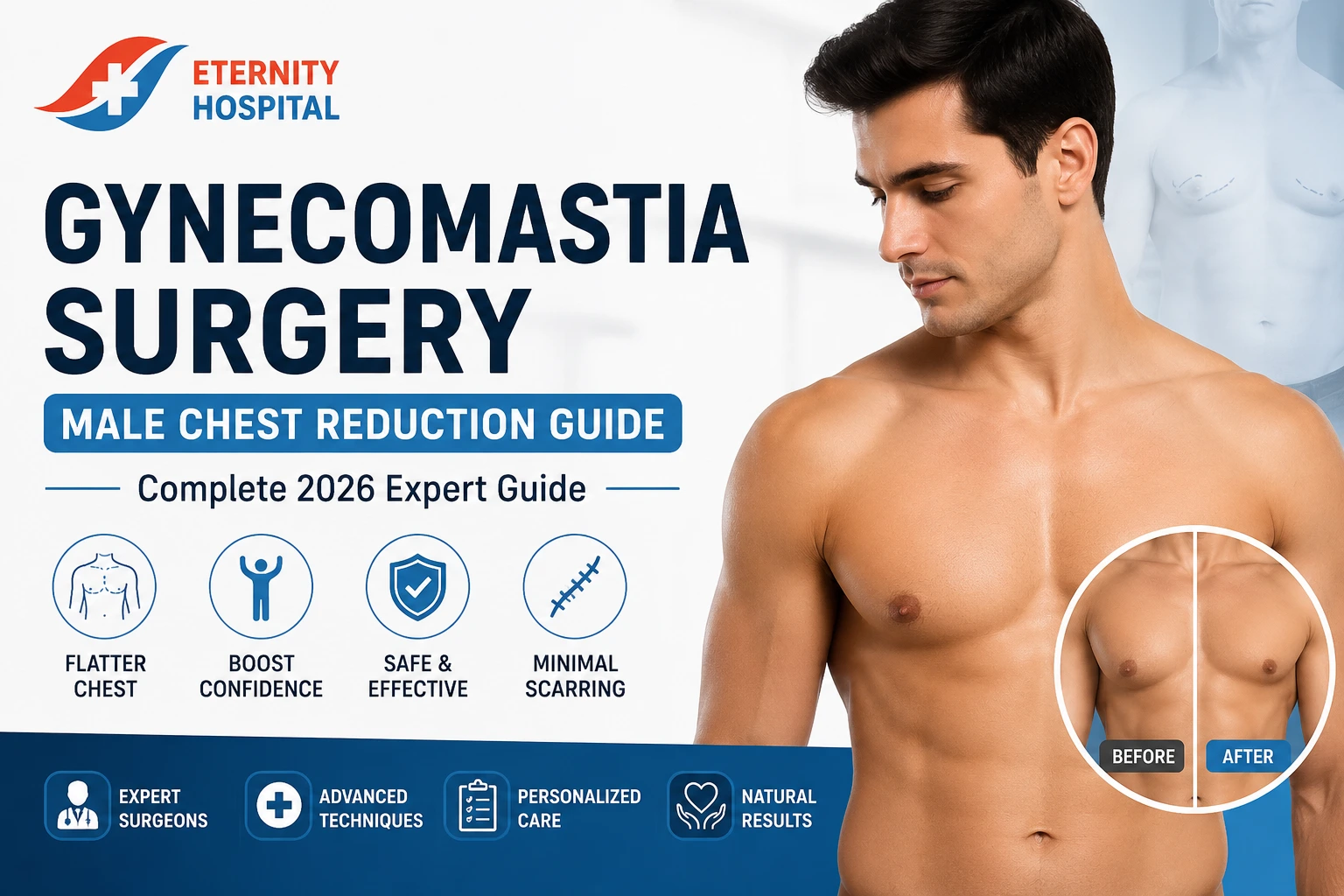
What is Gynecomastia Surgery?
Gynecomastia surgery is a medically approved cosmetic procedure that removes excess fat and glandular tissue from the male chest to create a flatter, firmer, and more masculine appearance. The condition known as gynecomastia affects thousands of men globally and often leads to psychological distress, low confidence, and body image issues.
The procedure is not just about aesthetics—it is also about restoring normal chest contour and improving quality of life. In modern medical practice, gynecomastia surgery is considered the most effective permanent solution when diet, exercise, or medication fail to reduce the enlarged chest.
In simple terms, this surgery reshapes the chest by removing unwanted tissue that cannot be reduced naturally. That is why many experts recommend it as a long-term corrective solution rather than a temporary fix.
Understanding Gynecomastia in Detail
Gynecomastia is a hormonal condition caused by an imbalance between estrogen and testosterone. While estrogen is present in small amounts in men, higher levels can stimulate breast tissue growth.
This imbalance can happen at different stages of life:
- During puberty (temporary hormonal changes)
- Middle age (natural testosterone decline)
- Old age (metabolic slowdown)
In many cases, gynecomastia may also be linked to lifestyle habits such as poor diet, alcohol consumption, or steroid use in bodybuilding.
Doctors classify the condition based on severity, which helps in planning treatment.
Types of Gynecomastia
There are generally three major types of male chest enlargement:
1. True Gynecomastia
This involves the growth of glandular breast tissue beneath the nipple. It feels firm and rubbery and does not reduce with exercise.
2. Pseudo Gynecomastia
This is caused by excess fat accumulation in the chest area, usually due to obesity or a sedentary lifestyle.
3. Mixed Gynecomastia
A combination of both glandular tissue and fat deposits. This is the most common type and usually requires surgical treatment.
Understanding the type is important because it determines the surgical approach and expected results.
Why Gynecomastia Surgery Becomes Necessary
Many men try gym workouts, fat loss diets, or supplements before considering surgery. However, glandular tissue does not respond to exercise, which is why frustration builds over time.
Emotional Impact
Men with gynecomastia often avoid social situations such as swimming, gym workouts, or wearing fitted clothes. This leads to reduced self-esteem and social withdrawal. In severe cases, it can even affect relationships and mental health.
Physical Discomfort
Apart from appearance concerns, some patients experience:
- Chest tenderness
- Sensitivity in nipples
- Heavy feeling in the chest
- Skin irritation due to rubbing
These symptoms make daily life uncomfortable, especially during physical activity.
Who is an Ideal Candidate for Gynecomastia Surgery?
Not every individual requires surgery. Doctors recommend gynecomastia surgery for patients who meet certain conditions.
You are a suitable candidate if:
- You have persistent enlarged chest tissue for more than 1 year
- Your condition is not improving with exercise or medication
- You are in good general health
- You are not currently using steroids or hormonal drugs
- You have realistic expectations about results
Age is also an important factor. Most surgeons prefer patients above 18 years of age because hormonal levels stabilize after puberty.
Gynecomastia Surgery Procedure Explained Step-by-Step
The procedure is usually performed under local or general anesthesia, depending on the severity. It typically takes 1 to 2 hours.
Step 1: Anesthesia
The patient is given anesthesia to ensure a pain-free procedure.
Step 2: Incision
A small incision is made either around the areola or under the chest.
Step 3: Fat Removal (Liposuction)
A thin cannula is inserted to remove excess fat from the chest area.
Step 4: Gland Removal
If glandular tissue is present, it is surgically removed for permanent correction.
Step 5: Chest Contouring
The surgeon shapes the chest to create a natural, masculine appearance.
Step 6: Closing and Dressing
Stitches are closed carefully, and a compression garment is applied.
Advanced Techniques Used in 2026
Modern gynecomastia surgery has evolved significantly with advanced medical technologies:
- VASER Liposuction: Uses ultrasound energy for precise fat removal
- Laser-assisted surgery: Reduces bleeding and improves recovery
- High-definition contouring: Creates an athletic chest appearance
- Minimal scar techniques: Small incisions for better cosmetic results
These innovations make surgery safer, faster, and more natural-looking than before.
Gynecomastia Surgery Cost in India (2026 Updated)
The cost varies based on hospital, city, surgeon expertise, and severity.
GradeCondition LevelEstimated Cost (INR)
Grade 1 Mild enlargement ₹40,000 – ₹65,000
Grade 2 Moderate enlargement ₹60,000 – ₹90,000
Grade 3 Severe enlargement ₹80,000 – ₹1,50,000
Major cities like Delhi, Mumbai, and Bangalore may have slightly higher costs due to advanced facilities and experienced surgeons.
Recovery After Gynecomastia Surgery
Recovery is an important part of the healing process.
First Week
- Mild swelling and bruising
- A compression garment must be worn
- Pain is manageable with medication
2–3 Weeks
- Swelling reduces significantly
- Light activities can resume
4–6 Weeks
- Normal gym workouts can begin
- Final results start becoming visible
Full healing may take up to 3 months, depending on the body’s response.
Risks and Side Effects
Although gynecomastia surgery is safe, like any procedure, it carries minor risks:
- Temporary swelling
- Bruising
- Numbness in the chest area
- Small scars
- Rare infection cases
Choosing a skilled and experienced surgeon significantly reduces complications.
Before and After Results
The transformation after gynecomastia surgery is often dramatic:
Before Surgery
- Puffy or enlarged chest
- Lack of confidence
- Avoiding tight clothing
After Surgery
- Flat and firm chest
- Improved posture
- Boost in confidence
- Better body proportion
Many patients describe it as a life-changing experience.
Non-Surgical Options vs Surgery
Non-surgical methods include:
- Exercise
- Diet control
- Medication
However, these methods only reduce fat, not glandular tissue. That is why surgery remains the only permanent and effective solution for true gynecomastia.
Choosing the Right Clinic
Selecting the right hospital or clinic is extremely important for safety and results.
One trusted option is:
👉 https://www.hospitaleternity.com/
Look for:
- Certified plastic surgeons
- Advanced operation theatres
- Patient reviews
- Before-after results
Lifestyle After Surgery
Maintaining results requires a healthy lifestyle:
- Maintain a stable weight
- Avoid anabolic steroids
- Follow balanced nutrition
- Exercise regularly after recovery
Psychological Benefits of Gynecomastia Surgery
The mental transformation is often more powerful than physical changes:
- Improved self-confidence
- Reduced social anxiety
- Better clothing choices
- Positive body image
Patients often report feeling “normal again” after surgery.
Conclusion
Gynecomastia surgery is a safe, effective, and permanent solution for men struggling with enlarged chest conditions. With advanced surgical techniques available today, patients can achieve natural-looking results with minimal downtime. It not only improves physical appearance but also restores confidence and emotional well-being.
https://www.hospitaleternity.com/inverted-nipple-surgery-in-ghaziabad/
https://www.hospitaleternity.com/breast-reduction-services-in-ghaziabad/
https://www.hospitaleternity.com/breast-augmentation-services-in-ghaz
https://www.hospitaleternity.com/gynecomastia-surgery-in-ghaziabad/