

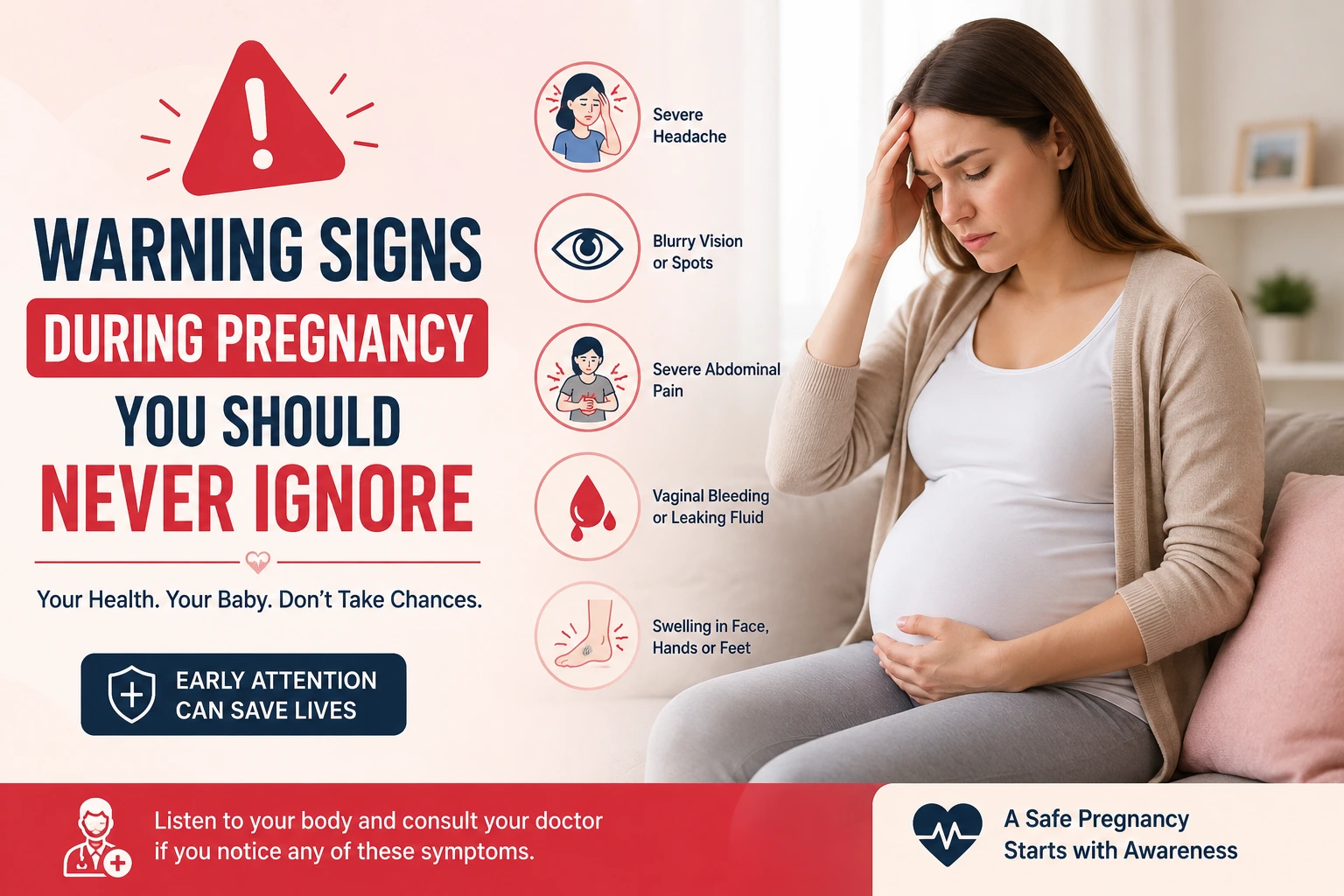
Pregnancy is often described as one of the most beautiful journeys in a woman’s life. It brings excitement, emotional moments, and dreams about welcoming a new baby into the family. At the same time, pregnancy also places enormous physical and emotional demands on the body. While many symptoms during pregnancy are completely normal, some signs can point toward serious complications that require urgent medical attention. Ignoring these warning signs during pregnancy may put both the mother and baby at risk.
According to the CDC HEAR HER Campaign, symptoms such as severe headaches, chest pain, vaginal bleeding, breathing difficulties, and reduced baby movement should never be ignored because they may indicate life-threatening pregnancy complications. Many women assume discomfort is simply “part of pregnancy,” which sometimes delays medical care. That delay can become dangerous. The truth is that your body often sends signals when something is wrong, and learning how to recognize those signals can make a life-saving difference.
If you are pregnant or planning a pregnancy, understanding these red flags can help you respond quickly and confidently. Expert maternity care from trusted healthcare providers like Hospital Eternity can ensure safer monitoring, early diagnosis, and better outcomes for both mother and child.
Why Paying Attention to Pregnancy Symptoms Matters: Warning Signs During Pregnancy You Should Never Ignore
Pregnancy changes almost every system inside the body. Hormones rise dramatically, blood volume increases, organs shift positions, and the immune system adapts to support the growing baby. Because of these changes, symptoms like nausea, fatigue, and mild swelling are common. The challenge is knowing when a symptom crosses the line from “normal” to “dangerous.” Many pregnancy complications begin quietly, almost like a small crack in a wall, before the entire structure weakens. Recognizing warning signs early gives doctors the chance to intervene before complications become severe.
Research and maternal health campaigns worldwide continue emphasizing the importance of symptom awareness because maternal complications remain a major concern globally. The CDC lists several urgent maternal warning signs, including heavy bleeding, trouble breathing, swelling, chest pain, severe headaches, and changes in baby movement. These symptoms may signal conditions such as preeclampsia, placental problems, blood clots, infections, or premature labor. Some complications progress rapidly within hours, which is why immediate medical evaluation matters so much.
Recognizing the warning signs during pregnancy you should never ignore is crucial for ensuring your health and the well-being of your baby.
Understanding the Warning Signs During Pregnancy You Should Never Ignore can empower you to seek help when it’s needed most.
Another important reason to pay attention is that every pregnancy is different. What felt “normal” during one pregnancy may not be safe during another. Some women experience complications even without previous risk factors. A 2025 study highlighted concerns that many stillbirths occurred in pregnancies without obvious warning conditions, reinforcing the need for continuous monitoring and medical care. Instead of ignoring unusual symptoms or relying solely on internet advice, expecting mothers should trust qualified obstetric specialists who can properly evaluate changes in their health.
Severe Vaginal Bleeding During Pregnancy
Light spotting in early pregnancy can occasionally happen and may not always signal danger. However, heavy vaginal bleeding should never be ignored. Bleeding during pregnancy can indicate serious complications such as miscarriage, placental abruption, placenta previa, or preterm labor. The difference between harmless spotting and dangerous bleeding often depends on the amount of blood, associated pain, and timing during pregnancy. If bleeding resembles a menstrual flow or contains clots, immediate medical care is essential.
Placental abruption is one of the most dangerous causes of bleeding during pregnancy. This condition occurs when the placenta separates from the uterine wall too early, reducing oxygen supply to the baby. Women may experience severe abdominal pain, back pain, and contractions alongside bleeding. Placenta previa, another serious condition, occurs when the placenta covers the cervix and can cause painless bleeding later in pregnancy. Both conditions require urgent medical monitoring because they can threaten the life of both mother and child.
The CDC specifically warns that vaginal bleeding or leaking fluid during pregnancy requires immediate medical evaluation. Some women mistakenly wait at home, hoping symptoms will stop naturally. That delay can worsen complications significantly. Think of pregnancy like driving a car with dashboard warning lights. Ignoring a flashing warning signal rarely makes the issue disappear. Instead, it often allows the problem to grow more severe. Seeking prompt care from experienced maternity specialists at Hospital Eternity can help identify the cause early and protect both mother and baby.
Persistent Severe Abdominal Pain
Mild stretching sensations and occasional cramps can happen during pregnancy as the uterus expands. Persistent or severe abdominal pain, however, is not normal. Sharp, stabbing, or worsening pain may indicate dangerous conditions such as ectopic pregnancy, appendicitis, placental abruption, or preterm labor. Pain that is accompanied by bleeding, fever, vomiting, or dizziness becomes even more concerning and should be treated as a medical emergency.
One particularly dangerous condition is ectopic pregnancy, where the fertilized egg implants outside the uterus, often in a fallopian tube. This condition can cause internal bleeding and become life-threatening if untreated. Severe abdominal pain later in pregnancy may also suggest uterine complications or premature contractions. The CDC identifies severe belly pain that does not go away as a major maternal warning sign. Unfortunately, many women dismiss intense pain because they assume discomfort is simply part of pregnancy.
Pain is the body’s alarm system. Imagine touching a hot stove; pain immediately tells you to pull away before serious damage occurs. Pregnancy pain works similarly. When abdominal pain becomes intense, persistent, or unusual, it is the body’s way of demanding attention. Immediate evaluation through ultrasound, blood tests, and obstetric monitoring can identify whether the pain is harmless or dangerous. Hospitals equipped with emergency maternity care and fetal monitoring systems provide the safest response in such situations.
High Fever and Infection Risks
Fever during pregnancy may seem harmless at first, especially if it resembles a common viral infection. However, a temperature of 100.4°F (38°C) or higher can signal infections that may affect both maternal and fetal health. The CDC includes fever among urgent maternal warning signs because untreated infections can trigger complications, including dehydration, premature labor, fetal distress, or sepsis.
Pregnant women are more vulnerable to certain infections because the immune system changes during pregnancy. Urinary tract infections, influenza, foodborne infections, and viral illnesses can become more severe during this period. Fever combined with abdominal pain, vomiting, difficulty urinating, or severe fatigue requires immediate medical assessment. Infections during pregnancy may spread faster than expected, almost like a spark traveling through dry grass. Quick treatment can stop complications before they become dangerous.
Doctors may recommend blood tests, urine analysis, hydration therapy, or antibiotics depending on the underlying cause. Self-medicating without professional guidance can sometimes worsen the problem. Pregnant women should always consult qualified healthcare providers before taking medications for fever. Expert obstetric care at Hospital Eternity ensures safe treatment plans designed specifically for pregnancy needs while protecting fetal development.
Sudden Swelling of Hands, Feet, or Face
Mild swelling around the ankles is common during pregnancy, especially during the third trimester. Sudden or extreme swelling of the face, hands, or feet is different and may indicate preeclampsia, a dangerous pregnancy complication associated with high blood pressure. Preeclampsia can damage organs, restrict blood flow to the baby, and increase the risk of seizures or stroke if untreated.
According to maternal health experts, warning signs of preeclampsia often include swelling, headaches, blurred vision, and elevated blood pressure. Some women notice their rings becoming tight, facial puffiness, or rapidly increasing body weight due to fluid retention. Because swelling develops gradually in many pregnancies, dangerous swelling can sometimes be overlooked. That is why regular prenatal checkups are critical for monitoring blood pressure and urine protein levels.
Preeclampsia behaves like silent pressure building inside a sealed container. Everything may appear stable until the pressure suddenly becomes overwhelming. Timely diagnosis allows doctors to manage blood pressure, monitor the baby closely, and determine the safest delivery timing. Ignoring these symptoms increases risks significantly for both mother and child.
Severe Headaches and Vision Problems
Headaches during pregnancy can occur because of hormonal changes, dehydration, or fatigue. Severe headaches that do not improve with rest or hydration are different and should never be ignored. The CDC warns that persistent headaches combined with dizziness, blurred vision, or flashing lights may indicate serious complications such as preeclampsia or stroke.
Vision changes are especially concerning. Some women experience blurred vision, double vision, flashing lights, or temporary vision loss. These symptoms may reflect dangerously high blood pressure affecting blood flow to the brain and eyes. Reddit discussions among pregnant women often reveal how confusing these symptoms can feel because they overlap with common pregnancy discomforts. That confusion makes professional evaluation even more important.
Think of headaches during pregnancy like weather patterns. A mild headache may resemble a passing drizzle, while a severe pounding headache with vision problems resembles dark storm clouds signaling danger ahead. Doctors may perform blood pressure checks, neurological assessments, and laboratory testing to identify the underlying cause quickly. Early treatment can prevent severe maternal complications and improve pregnancy outcomes dramatically.
Reduced Baby Movement
Feeling the baby move is one of the most emotional parts of pregnancy. Kicks, stretches, and rolls reassure mothers that the baby is active and developing. A noticeable reduction in fetal movement, however, can be a serious warning sign. The CDC advises immediate medical evaluation if the baby suddenly stops moving or moves significantly less than usual.
There is no single “perfect” number of kicks that applies to every pregnancy. The key factor is recognizing your baby’s normal activity pattern. If movements decrease suddenly, it may indicate fetal distress, placental problems, or reduced oxygen supply. Some women wait too long because they hope movement will return naturally. That delay can sometimes have devastating consequences.
Doctors may use non-stress tests, ultrasounds, and fetal monitoring to evaluate the baby’s condition. Monitoring movement daily during the third trimester is often recommended. Mothers should trust their instincts. If something feels different or concerning, contacting a healthcare provider immediately is always safer than waiting.
Shortness of Breath and Chest Pain
Mild breathlessness can happen during pregnancy because the growing uterus places pressure on the lungs and diaphragm. Severe breathing difficulty or chest pain is different and may signal dangerous conditions such as blood clots, heart complications, or severe anemia. The CDC lists trouble breathing and chest pain among the most urgent maternal warning signs.
Symptoms such as chest tightness, rapid heartbeat, dizziness, or pain radiating to the arm or back should never be ignored. Pregnancy increases the risk of blood clots because hormonal changes affect blood circulation. A clot traveling to the lungs can become life-threatening within minutes. Some women describe the sensation as feeling unable to catch their breath even while resting.
The body often whispers before it screams. Subtle symptoms may escalate quickly into emergencies if ignored. Emergency obstetric and cardiac evaluation can identify whether symptoms are caused by pregnancy-related circulation changes or something more dangerous. Immediate medical attention saves lives in these situations.
Severe Vomiting and Dehydration
Morning sickness is common, especially during the first trimester. Severe vomiting that prevents eating or drinking is not normal and may indicate hyperemesis gravidarum, a serious condition causing dehydration and nutritional deficiencies. The CDC warns that persistent severe nausea and vomiting require medical evaluation.
Women with hyperemesis gravidarum may experience dizziness, weakness, rapid weight loss, confusion, and inability to keep fluids down. Dehydration can affect both mother and baby, leading to electrolyte imbalances and hospitalization. Some women mistakenly try to “push through” severe vomiting because they believe it is simply a stronger version of morning sickness.
Treatment often includes IV fluids, anti-nausea medications, nutritional support, and monitoring. Pregnancy already demands significant energy from the body. Severe vomiting drains that energy further, almost like trying to run a marathon without water. Early treatment helps mothers regain strength and reduces risks for fetal growth complications.
Leaking Fluid Before Labor
Fluid leaking from the vagina before labor may indicate rupture of membranes, commonly known as water breaking. If this occurs too early, it can increase infection risks and trigger premature birth. Some women confuse leaking amniotic fluid with urine leakage, which is also common during pregnancy. Persistent watery discharge, however, should always be checked by a doctor.
Amniotic fluid protects the baby inside the womb much like a cushion protecting fragile glass during transport. When that protective barrier breaks too early, infection and complications become more likely. The CDC specifically identifies fluid leakage during pregnancy as a warning sign requiring immediate care.
Doctors may use ultrasound and fluid testing to confirm membrane rupture. Depending on the pregnancy stage, treatment may involve hospitalization, antibiotics, or delivery planning. Fast medical attention significantly improves outcomes for premature membrane rupture.
Mental Health Warning Signs During Pregnancy
Pregnancy affects emotional health as much as physical health. Anxiety, mood swings, and emotional sensitivity are common because of hormonal fluctuations and lifestyle changes. Persistent hopelessness, severe anxiety, panic attacks, or thoughts of self-harm are serious warning signs that require immediate support. Maternal mental health concerns are increasingly recognized as critical components of prenatal care.
Some women feel ashamed of discussing emotional struggles during pregnancy because society expects pregnancy to be joyful all the time. The reality is more complex. Depression and anxiety during pregnancy can affect sleep, appetite, bonding, and overall maternal health. Untreated mental health conditions may also increase risks of postpartum depression and complications after delivery.
Emotional health deserves the same attention as blood pressure or physical symptoms. Just as a broken bone requires treatment, mental distress also needs professional care. Counseling, family support, therapy, and medical treatment can make a tremendous difference. Comprehensive maternity hospitals increasingly provide integrated emotional wellness support alongside obstetric care.
When to Contact Your Doctor Immediately
The safest approach during pregnancy is simple: if something feels wrong, contact your healthcare provider immediately. Women should never feel embarrassed about asking questions or seeking reassurance. Doctors prefer evaluating symptoms early rather than treating severe complications later.
The following symptoms require urgent medical attention:
Warning Sign: Possible Concern
Heavy vaginal bleeding Placental problems or miscarriage
Severe headache with blurred vision, Preeclampsia
Chest pain or breathing difficulty Blood clot or heart problem
Reduced baby movement: Fetal distress
High fever Infection
Severe swelling, high blood pressure complications
Persistent vomiting Dehydration
Fluid leakage, Premature rupture of membranes
Quick medical response often prevents complications from becoming life-threatening. Pregnancy care is not only about routine checkups; it is about staying alert, informed, and proactive throughout the journey.
Why Choosing the Right Pregnancy Hospital Matters
The quality of maternity care plays a major role in pregnancy safety. Access to experienced gynecologists, fetal monitoring, emergency obstetric services, neonatal care, and advanced diagnostic facilities can dramatically improve maternal and baby outcomes. Complications may develop unexpectedly, which is why choosing a trusted hospital matters from the beginning of pregnancy.
Hospital Eternity provides specialized maternity and gynecological care designed to support women through every stage of pregnancy. From prenatal monitoring and diagnostic testing to emergency obstetric management and delivery care, expert supervision helps ensure safer motherhood experiences. High-risk pregnancies especially benefit from hospitals equipped with modern technology and experienced specialists capable of rapid intervention when complications arise.
A strong healthcare team acts like a safety net beneath a tightrope walker. Pregnancy may feel smooth most of the time, but if complications occur unexpectedly, having expert support ready can make all the difference. Expecting mothers should prioritize regular prenatal appointments, open communication with doctors, and delivery planning with a reliable maternity hospital.
Conclusion
Pregnancy is a remarkable journey filled with anticipation, joy, and transformation. At the same time, it requires awareness, vigilance, and timely medical care. Understanding warning signs during pregnancy can protect both mother and baby from potentially dangerous complications. Symptoms such as severe bleeding, intense headaches, swelling, chest pain, breathing difficulties, reduced fetal movement, and persistent vomiting should never be ignored.
The body often provides early signals when something is wrong. Responding quickly to those signals can prevent emergencies and improve pregnancy outcomes significantly. Every mother deserves safe, compassionate, and expert maternity care throughout her pregnancy journey. Choosing experienced healthcare providers like Hospital Eternity ensures access to professional guidance, advanced diagnostics, and emergency support whenever needed
https://www.hospitaleternity.com/menopausal-problems-treatment-in-ghaziabad/
https://www.hospitaleternity.com/gynaecological-problems-treatment-in-ghaziabad/
https://www.hospitaleternity.com/best-medical-abortion-in-g
https://www.hospitaleternity.com/caesarean-delivery-in-ghaziabad/
https://www.hospitaleternity.com/best-normal-delivery-in-ghaziabad/
.https://www.hospitaleternity.com/best-pregnancy-care-in-ghaziabad/