

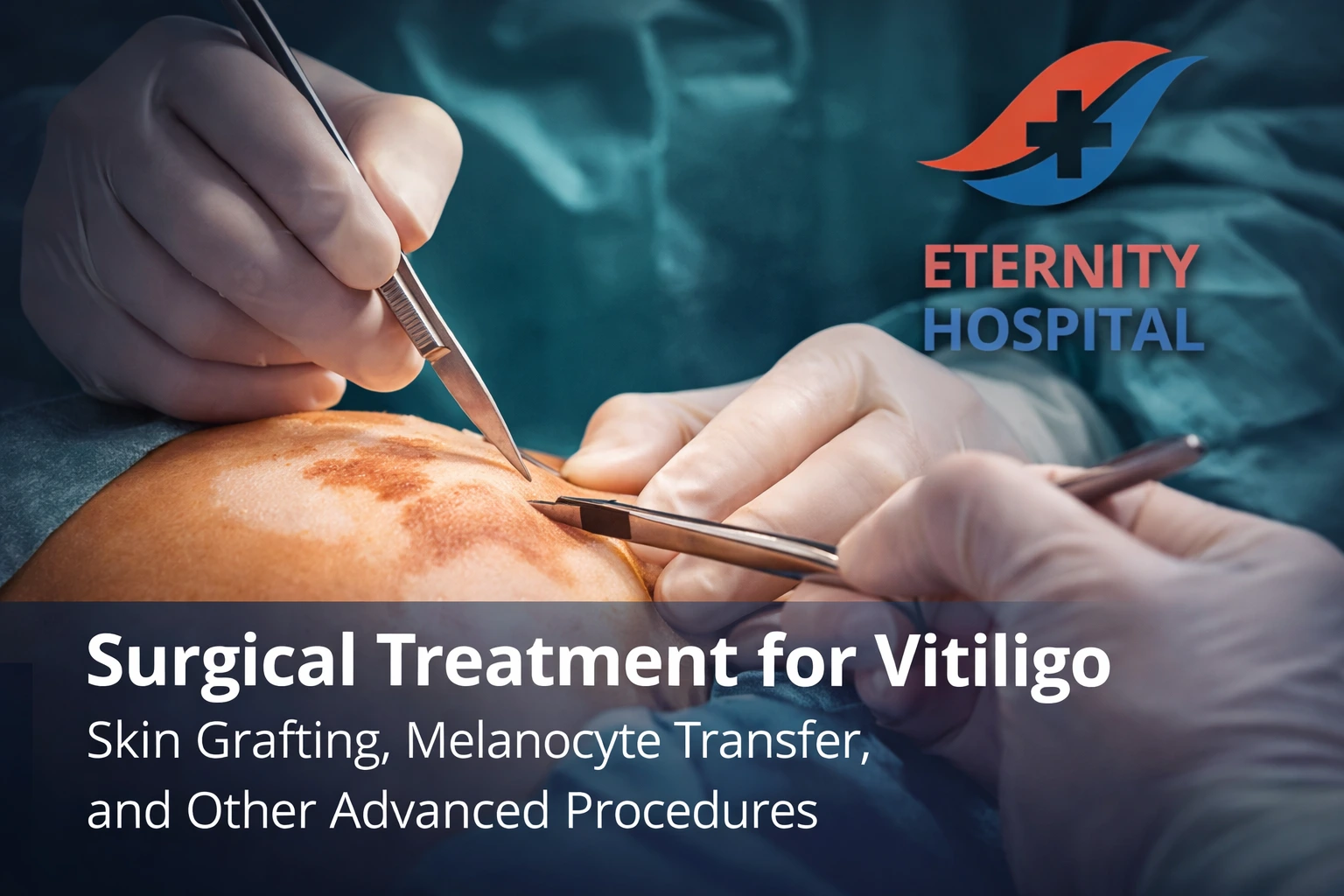
Understanding Vitiligo and Why Surgery May Be Needed
Surgical Treatment for Vitiligo is a chronic skin condition characterized by the loss of melanocytes, the cells responsible for producing melanin, which gives skin its natural color. When these pigment-producing cells are destroyed or become inactive, white patches begin to appear on different parts of the body. Although vitiligo is not contagious or life-threatening, its impact often goes far beyond physical appearance. Many patients experience emotional distress, social anxiety, and a decline in self-confidence, especially when the condition affects visible areas such as the face, hands, neck, or scalp.
Over the past decade, treatment options for vitiligo have expanded significantly. Dermatologists commonly use topical corticosteroids, calcineurin inhibitors, phototherapy, excimer laser therapy, and newer immunomodulatory medications to manage the disease. While these treatments can be highly effective for many individuals, they do not always restore pigmentation completely. Some patients continue to have persistent white patches despite months or even years of medical therapy. In such cases, surgical treatment emerges as an advanced and highly specialized solution.
Modern vitiligo surgery focuses on transferring healthy pigment-producing cells into depigmented skin areas. These procedures aim to restore natural skin color, improve cosmetic appearance, and help patients regain confidence. Surgical interventions are generally recommended only when the disease has remained stable for a prolonged period and has not responded adequately to conventional therapies. Recent advances in skin grafting and melanocyte transplantation have dramatically improved outcomes, making surgical treatment one of the most promising options for carefully selected patients.
Who Is the Ideal Candidate for Vitiligo Surgery?
Not every vitiligo patient is a suitable candidate for surgery. The most important requirement is disease stability. Dermatologists generally recommend surgical intervention only when no new patches have appeared, and existing patches have not expanded for at least six to twelve months. Stability indicates that the autoimmune process attacking melanocytes has become inactive, increasing the likelihood that transplanted pigment cells will survive and function successfully after surgery.
A comprehensive evaluation is necessary before proceeding with any surgical procedure. During consultation, the dermatologist examines the distribution of vitiligo patches, reviews previous treatments, assesses skin type, and evaluates overall health. Factors such as keloid tendency, active infections, uncontrolled autoimmune disorders, and unrealistic expectations may influence treatment eligibility. Patients who have undergone adequate medical treatment without satisfactory repigmentation are often considered ideal candidates.
The location of vitiligo patches also plays a significant role. Areas such as the face, neck, trunk, and upper limbs typically respond better to surgical procedures than regions like fingertips, toes, lips, and joints. Age is usually not a major limiting factor, provided the patient meets stability criteria and can comply with post-operative care requirements.
The goal of patient selection is to maximize the likelihood of successful repigmentation while minimizing risks. Careful screening helps ensure that surgery delivers long-lasting, natural-looking results and reduces the possibility of treatment failure. For this reason, choosing an experienced dermatologist or reconstructive surgeon with expertise in vitiligo surgery is essential for achieving optimal outcomes.
Overview of Modern Surgical Treatments for Vitiligo
Vitiligo surgery has evolved from simple grafting techniques to sophisticated cellular transplantation procedures. Today, surgical treatments are broadly categorized into tissue grafting methods and cellular grafting methods. Both approaches aim to restore pigmentation, but they differ in technique, complexity, and suitability for different types of lesions.
Tissue grafting involves transferring small portions of healthy pigmented skin from one part of the body to depigmented areas. Examples include punch grafting, split-thickness skin grafting, and suction blister grafting. These procedures are generally straightforward and have been used successfully for decades. They are particularly effective for small to moderate-sized vitiligo patches.
Cellular grafting represents a more advanced approach. Instead of transferring entire skin segments, specialists harvest melanocytes and keratinocytes from healthy skin and transplant these cells into depigmented regions. Techniques such as non-cultured melanocyte-keratinocyte transplantation and melanocyte transfer can cover larger treatment areas using relatively small donor sites. These procedures often produce more uniform pigmentation and superior cosmetic outcomes.
The growing popularity of cellular grafting reflects advancements in laboratory processing and surgical precision. Modern equipment allows clinicians to isolate and transplant melanocytes more effectively than ever before. As a result, patients with stable vitiligo now have access to treatments capable of producing remarkable repigmentation results, often with minimal scarring and shorter recovery periods.
Skin Grafting for Vitiligo
Skin grafting remains one of the most reliable and widely practiced surgical treatments for stable vitiligo. The procedure involves transferring pigmented skin from a healthy donor site to areas affected by depigmentation. Different grafting techniques are selected based on lesion size, location, and patient-specific factors.
Split-Thickness Skin Grafting
Split-thickness skin grafting involves harvesting a thin layer of pigmented skin from a donor area, typically the thigh or buttocks. The harvested skin is carefully placed onto a prepared vitiligo patch. Over time, melanocytes within the graft begin producing pigment, gradually restoring skin color.
This technique is particularly useful for larger vitiligo patches. It often produces excellent color matching and can achieve substantial repigmentation. Patients usually notice progressive improvement over several months as pigmentation spreads throughout the treated area.
Suction Blister Grafting
Suction blister grafting is a minimally invasive procedure that creates blisters on healthy skin using controlled suction. The blister roofs, containing healthy melanocytes, are then transferred to depigmented regions. Because only the superficial epidermal layer is used, scarring is minimal, and cosmetic outcomes are generally excellent.
Many dermatologists favor suction blister grafting for facial vitiligo because it often produces smooth, natural pigmentation with minimal textural changes. Recovery is relatively quick, and the procedure can be performed under local anesthesia.
Punch Grafting
Punch grafting uses tiny circular skin grafts harvested from pigmented areas and implanted into depigmented patches. The technique is relatively simple and cost-effective, making it accessible in many dermatology centers.
Although punch grafting can produce excellent results, complications such as cobblestoning and uneven pigmentation may occur if not performed carefully. Advances in surgical technique have reduced these risks, but proper patient selection and surgeon experience remain critical factors for success.
Melanocyte Transfer Procedure
What Is Non-Cultured Melanocyte-Keratinocyte Transplantation?
Melanocyte transfer, often referred to as Non-Cultured Melanocyte-Keratinocyte Transplantation (MKTP) or Non-Cultured Melanocyte Suspension (NCMS), is considered one of the most advanced surgical treatments for stable vitiligo. Instead of transferring whole skin sections, the procedure focuses on transplanting pigment-producing cells directly into depigmented skin.
This innovative technique allows a relatively small donor skin sample to treat a significantly larger depigmented area. Because only cellular components are transplanted, the resulting pigmentation is often more uniform and aesthetically pleasing compared to traditional grafting methods.
Step-by-Step Procedure
The procedure begins with harvesting a thin layer of healthy skin from a concealed donor site. The skin is then processed under sterile conditions to separate melanocytes and keratinocytes. These cells are suspended in a specialized solution, creating a melanocyte-rich cellular graft.
The recipient vitiligo area is prepared through dermabrasion or laser resurfacing. Once prepared, the cellular suspension is evenly applied across the depigmented patch and covered with protective dressings. Over the following weeks and months, transplanted melanocytes establish themselves within the skin and begin producing melanin.
The entire process is typically performed under local anesthesia, and most patients can return home the same day. Proper post-operative care is essential to maximize graft survival and promote successful repigmentation.
Success Rates and Expected Results
Clinical studies and specialist reports consistently demonstrate high success rates for melanocyte transfer procedures in carefully selected patients. Significant repigmentation often ranges from 70% to 95% or higher in stable vitiligo cases, particularly when lesions are located on the face and neck.
Results develop gradually. Small pigmented dots usually appear within weeks before merging into larger areas of restored color. Full results may take several months to become evident. Patients frequently report substantial improvements in appearance, confidence, and overall quality of life after successful treatment.
Other Advanced Vitiligo Surgical Procedures
Vitiligo surgery continues to evolve with innovations aimed at improving effectiveness and reducing recovery time. Among the most promising developments are advanced cellular suspension grafting techniques and epidermal cell transplantation procedures. These approaches represent the next generation of vitiligo surgery and offer solutions for patients with extensive or treatment-resistant disease.
Cellular suspension grafting utilizes concentrated melanocyte-rich solutions prepared from donor skin. These cellular suspensions are distributed across carefully prepared depigmented areas, enabling large treatment zones to be covered using relatively small donor samples. The method minimizes donor-site morbidity while maximizing pigmentation potential.
Epidermal cell transplantation follows a similar principle but focuses on transferring highly purified epidermal cell populations. The procedure requires advanced laboratory support and specialized expertise, making it available primarily at specialized dermatology centers. Patients often benefit from more uniform pigmentation and reduced risk of textural irregularities.
Researchers continue to explore cultured melanocyte transplantation, stem-cell-assisted therapies, and regenerative medicine approaches. Although some of these technologies remain under investigation, they highlight the exciting future of vitiligo treatment and the growing ability of clinicians to restore pigmentation with increasingly sophisticated techniques.
Recovery, Risks, and Post-Operative Care
Successful vitiligo surgery extends beyond the operating room. Recovery and aftercare play a crucial role in determining long-term outcomes. Following surgery, treated areas are usually protected with specialized dressings for one to two weeks. During this period, patients must avoid excessive movement, friction, and trauma that could disrupt graft adherence.
Healing typically progresses through several stages. Initial redness, mild swelling, and temporary discoloration are common. Over the following weeks, transplanted melanocytes begin functioning within the recipient skin. Visible pigmentation often appears gradually, with continued improvement occurring over several months. In many cases, adjunctive phototherapy may be recommended to stimulate melanocyte activity and enhance pigmentation development.
Although vitiligo surgery is generally safe, potential complications can occur. These include infection, scarring, incomplete repigmentation, color mismatch, cobblestoning, and graft failure. Fortunately, such complications are relatively uncommon when experienced specialists perform procedures and patients follow aftercare instructions carefully.
Regular follow-up appointments allow clinicians to monitor healing progress and address concerns promptly. Patients who maintain realistic expectations and commit to post-operative care typically achieve the most satisfying outcomes. Long-term success depends on both surgical expertise and patient cooperation throughout the recovery process.
Choosing the Right Vitiligo Treatment Center
Selecting the right treatment center is one of the most important decisions a patient can make when considering vitiligo surgery. Advanced procedures such as melanocyte transfer and skin grafting require specialized training, sophisticated equipment, and extensive experience. Outcomes can vary significantly depending on the skill of the treating surgeon and the quality of the facility.
Patients should look for hospitals that offer comprehensive dermatology and reconstructive surgery services, modern technology, personalized treatment planning, and long-term follow-up care. A multidisciplinary approach often leads to better outcomes because dermatologists, plastic surgeons, and support staff work together to create individualized treatment strategies.
For patients seeking advanced skin and reconstructive care in the Delhi NCR region, Eternity Hospital in Indirapuram, Ghaziabad, provides specialized dermatology, skin care, and reconstructive surgery services under the leadership of Dr. Arvind Jain. The hospital emphasizes advanced treatment technologies, personalized care, and comprehensive reconstructive procedures, including skin grafting and tissue restoration techniques.
Choosing an experienced center not only improves the likelihood of successful repigmentation but also ensures access to expert guidance before, during, and after treatment.
Conclusion
Surgical treatment has transformed the management of stable vitiligo, offering hope to patients who have not achieved satisfactory results with medications or phototherapy. Techniques such as skin grafting, suction blister grafting, punch grafting, melanocyte transfer, and advanced cellular transplantation can restore pigmentation with impressive success rates when performed on carefully selected candidates.
The key to achieving excellent outcomes lies in proper patient selection, disease stability, surgical expertise, and diligent post-operative care. Modern melanocyte transplantation techniques have pushed the boundaries of what is possible, enabling larger treatment areas, more natural pigmentation, and improved cosmetic results.
As technology continues to advance, vitiligo surgery is expected to become even more precise and effective. Patients considering these procedures should consult qualified specialists to determine the most appropriate treatment approach for their specific condition and goals.
https://www.hospitaleternity.com/vitiligo-treatment-in-ghaziabad/