

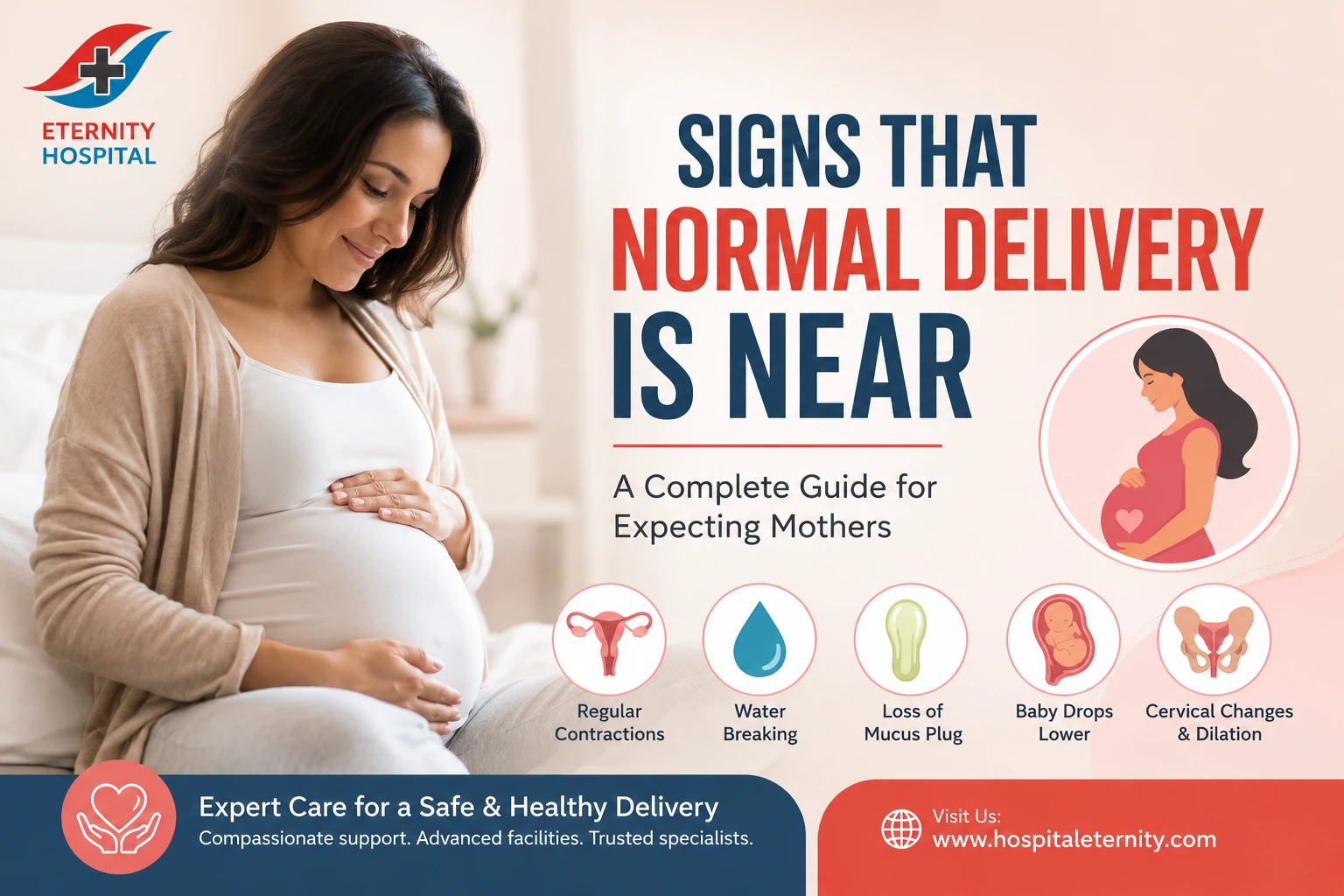
Pregnancy is one of the most exciting and transformative experiences in a woman’s life. As the expected delivery date gets closer, many mothers become curious, anxious, and excited about recognizing the Signs That Normal Delivery is Near. While every pregnancy is unique, there are several common indicators that suggest your body is preparing for normal delivery.
Understanding these signs can help reduce anxiety and ensure that you are ready when the big moment arrives. Whether you are a first-time mother or have experienced childbirth before, knowing what to expect can make the journey smoother and more comfortable.
If you are seeking expert maternity care, prenatal consultations, and safe delivery services, Hospital Eternity provides specialized support for mothers throughout every stage of pregnancy.
Why It Is Important to Recognize Labor Signs
Recognizing labor signs early allows mothers and families to prepare mentally and physically for childbirth. It helps ensure timely arrival at the hospital and reduces unnecessary stress during labor.
Many women experience subtle changes before labor begins. These changes may occur days, weeks, or even hours before delivery. Paying attention to these signals can help you understand what your body is communicating.
Proper awareness also allows healthcare providers to monitor your progress effectively and provide the best possible care during labor and delivery.
Baby Drops Lower Into the Pelvis
One of the earliest signs that normal delivery is approaching is known as “lightening.” This occurs when the baby moves lower into the pelvis in preparation for birth.
As the baby descends, mothers often notice that breathing becomes easier because there is less pressure on the diaphragm. However, increased pelvic pressure may cause discomfort while walking, standing, or sitting for extended periods.
You may also experience more frequent urination because the baby’s head places additional pressure on the bladder. While this can be inconvenient, it is generally a positive sign that your body is preparing for labor.
For first-time mothers, this change may occur several weeks before delivery, whereas experienced mothers may notice it only a few days before labor begins.
Cervical Changes and Dilation
The cervix undergoes significant changes as labor approaches. During pregnancy, the cervix remains closed, firm, and positioned high in the uterus.
As the delivery date nears, the cervix begins to soften, thin out, and gradually open. This process is known as cervical effacement and dilation.
Healthcare providers often monitor cervical changes during prenatal visits. Dilation is measured in centimeters, with full dilation reaching 10 centimeters before delivery can occur.
Although cervical dilation is a strong indicator of approaching labor, the rate of progression varies greatly among women. Some may experience gradual changes over several weeks, while others progress rapidly within hours.
Increased Braxton Hicks Contractions
Braxton Hicks contractions are commonly referred to as practice contractions. These contractions help prepare the uterus for labor but do not indicate active labor.
As normal delivery approaches, Braxton Hicks contractions may become stronger, more frequent, and more noticeable. They often cause temporary tightening of the abdomen and mild discomfort.
Unlike true labor contractions, Braxton Hicks contractions are usually irregular and may stop with rest, hydration, or changes in position.
Monitoring the pattern and intensity of contractions can help distinguish between practice contractions and actual labor.
Loss of the Mucus Plug
The mucus plug acts as a protective barrier that seals the cervix throughout pregnancy, helping prevent infection from entering the uterus.
As the cervix begins to dilate and efface, the mucus plug may be released. This discharge often appears as a thick, jelly-like substance that may be clear, pink, or slightly blood-tinged.
Many women notice the loss of the mucus plug days or weeks before labor begins. While it is an important sign that the body is preparing for delivery, it does not necessarily mean labor will start immediately.
If you notice significant bleeding or unusual symptoms, contact your healthcare provider promptly for evaluation.
Bloody Show
A bloody show occurs when small blood vessels in the cervix break as it begins to open. This results in a pink, brown, or slightly bloody discharge.
The appearance of a bloody show often indicates that labor is approaching and may occur within hours or days before active labor starts.
While a small amount of blood is generally normal, heavy bleeding should always be evaluated by a medical professional.
Expecting mothers should remain observant and communicate any concerns with their healthcare provider.
Water Breaking
One of the most recognizable signs that normal delivery is near is the rupture of the amniotic sac, commonly known as water breaking.
The fluid may be released as a sudden gush or a slow, continuous trickle. Once the water breaks, the protective environment surrounding the baby is compromised, increasing the importance of medical evaluation.
Not all women experience water breaking before labor begins. In some cases, labor starts first, and healthcare providers may rupture the membranes later during delivery.
If your water breaks, contact your doctor or visit the hospital immediately for assessment.
Regular and Strong Labor Contractions
True labor contractions are among the most reliable indicators that delivery is near. These contractions become increasingly regular, stronger, and closer together over time.
Unlike Braxton Hicks contractions, true labor contractions continue regardless of movement, rest, or changes in position. They often begin in the lower back and move toward the abdomen.
As labor progresses, contractions become more intense and last longer. Timing contractions can help determine when it is time to go to the hospital.
Many healthcare providers recommend following the 5-1-1 rule: contractions occurring every five minutes, lasting one minute each, for at least one hour.
Lower Back Pain and Pelvic Pressure
Many women experience increased lower back pain as labor approaches. This discomfort occurs because the baby’s head places additional pressure on the pelvis, lower spine, and surrounding muscles.
The pain may feel dull, persistent, or occasionally sharp. Walking, stretching, and changing positions may provide temporary relief.
Pelvic pressure often accompanies back pain and can create a sensation that the baby is pushing downward. These symptoms frequently intensify during active labor.
Understanding these changes helps mothers distinguish normal labor preparation from other pregnancy-related discomforts.
Sudden Burst of Energy
Some women experience a phenomenon known as nesting. This refers to a sudden increase in energy and motivation to prepare for the baby’s arrival.
Mothers may feel compelled to clean, organize, decorate, or complete unfinished tasks around the home.
While nesting can occur at various stages of pregnancy, it often becomes particularly noticeable during the final days before labor.
Balancing activity with adequate rest is essential to conserve energy for childbirth.
Changes in Bowel Movements
Hormonal changes before labor can stimulate the digestive system, leading to increased bowel movements or mild diarrhea.
Although this symptom may seem unrelated to labor, it is a natural way for the body to clear the intestines in preparation for delivery.
Maintaining hydration remains important during this period, especially if bowel activity increases significantly.
Discuss persistent gastrointestinal symptoms with your healthcare provider if you have concerns.
Comparison of Early Labor and Active Labor Symptoms
| Symptom | Early Labor | Active Labor |
|---|---|---|
| Contractions | Mild and irregular | Strong and regular |
| Cervical Dilation | 0-6 cm | 6-10 cm |
| Walking Effect | May slow contractions | No effect |
| Pain Intensity | Manageable | Increasingly intense |
| Hospital Admission | Monitor at home | Usually recommended |
When to Visit the Hospital
Knowing when to seek medical care is crucial for a safe delivery experience.
Visit the hospital if you experience:
- Regular labor contractions
- Water breaking
- Significant vaginal bleeding
- Reduced fetal movement
- Severe abdominal pain
- High blood pressure symptoms
- Persistent headaches or vision changes
For expert maternity care, labor management, and safe delivery services, Hospital Eternity offers comprehensive support for expecting mothers. Learn more at https://www.hospitaleternity.com/.
Why Choose Hospital Eternity for Maternity Care
Selecting the right hospital can significantly impact your pregnancy and childbirth experience. Hospital Eternity focuses on providing personalized maternity care through experienced obstetricians, advanced medical facilities, and compassionate support.
The hospital offers prenatal care, fetal monitoring, labor management, normal delivery assistance, cesarean delivery services, and postnatal care under one roof.
Mothers benefit from comprehensive guidance throughout pregnancy, helping ensure the health and well-being of both mother and baby.
The team prioritizes patient comfort, safety, and individualized treatment plans tailored to each family’s needs.
Conclusion
Signs That Normal Delivery is Near can appear gradually or suddenly, depending on the individual pregnancy. Common indicators include baby dropping, cervical changes, loss of the mucus plug, water breaking, regular contractions, pelvic pressure, and increased nesting behavior. Recognizing these signs allows expecting mothers to prepare confidently for labor and delivery.
Timely medical care is essential for ensuring a safe and positive childbirth experience. If you are searching for trusted maternity services, prenatal care, and delivery support, Hospital Eternity provides expert guidance throughout your pregnancy journey. Visit https://www.hospitaleternity.com/ to learn more about their maternity and women’s healthcare services.
https://www.hospitaleternity.com/menopausal-problems-treatment-in-ghaziabad/
https://www.hospitaleternity.com/gynaecological-problems-treatment-in-ghaziabad/
https://www.hospitaleternity.com/caesarean-delivery-in-ghaziabad/
https://www.hospitaleternity.com/best-normal-delivery-in-ghaziabad/
https://www.hospitaleternity.com/best-pregnancy-care-in-ghaziabad/