

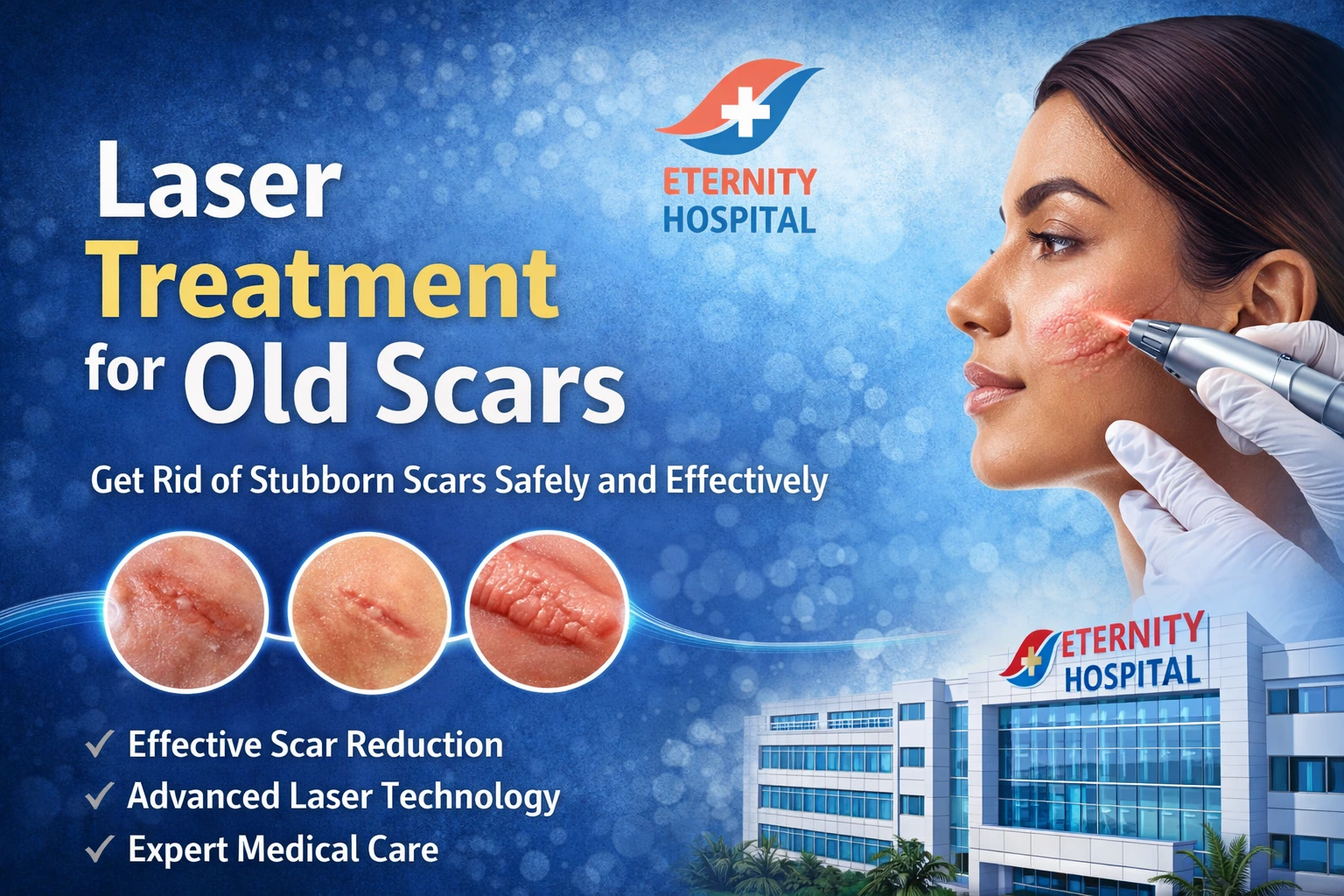
Old scars can feel like stubborn reminders that refuse to fade. Maybe it is an acne scar that has stayed for years, a surgical scar that changed your confidence, or an injury mark that still catches your eye every time you look in the mirror. The good news? Modern laser treatment for old scars has become one of the most effective non-surgical options for improving scar texture, colour, and visibility. But here’s the truth most people need to hear before spending money: lasers can improve old scars significantly, but they usually do not erase them. Leading medical sources like the Mayo Clinic and the American Society of Plastic Surgeons clearly state that scar revision treatments improve appearance, texture, and blending with surrounding skin, not total removal.
That makes this topic important because people searching for old scar laser treatment often have unrealistic expectations. Clinics may advertise “scar removal,” but medically speaking, the real goal is scar reduction, scar resurfacing, collagen remodelling, and better skin texture. If you have an old scar that is 1 year, 5 years, or even 20 years old, a laser can still help, depending on the scar type, depth, colour, location, and your skin tone. Fractional technologies, especially fractional CO2 laser and Er: YAG-based resurfacing, are commonly used because they create controlled micro-injuries that stimulate collagen and improve skin texture over time. The Mayo Clinic notes that fractional lasers are widely preferred because they reduce downtime and lower side-effect risk compared with more aggressive, fully ablative treatments.
If you are looking for a reliable place in NCR for consultation and personalized scar care, Hospital Eternity is a strong option to consider. Their laser treatment page highlights advanced laser services for concerns like acne scars, pigmentation, and skin texture, with personalized treatment plans designed for different skin types. The hospital also specifically promotes safe and effective laser treatments in the Ghaziabad region, which is helpful for patients around Delhi-NCR
Why Old Scars Are So Hard to Treat
Old scars are tricky because they are no longer in the “active healing” stage. Think of fresh scars like wet cement—you can still shape them, smooth them, and influence how they set. Old scars, on the other hand, are like concrete that has fully dried. The collagen fibres have already matured, tightened, and arranged themselves in an abnormal pattern. That is why a scar that has been sitting on your face, arms, legs, or abdomen for years often looks more resistant than a new scar. Many people try creams for years and see little to no change because most topical products cannot deeply remodel established scar tissue.
Scar tissue is different from normal skin in both structure and function. It may have fewer hair follicles, fewer oil glands, altered pigmentation, and a rough or sunken texture. In some cases, the scar may be depressed, like acne scars or pitted injury marks. In other cases, it may be raised, thick, red, or even itchy, like hypertrophic scars. The American Society of Plastic Surgeons explains that scar revision depends heavily on scar type—surface irregularities, acne scars, discoloration, hypertrophic scars, and other forms each need different strategies.
This is exactly why laser treatment for old scars has become so popular. Instead of simply sitting on top of the skin like a cream, laser energy interacts with the skin at controlled depths. It either removes damaged outer layers, heats the dermis to stimulate collagen, or does both, depending on the laser type. That is what makes lasers more powerful than over-the-counter products. But power must be used carefully, especially for Indian skin tones, where post-inflammatory pigmentation can be a real concern. That is why choosing an experienced clinic matters just as much as choosing the laser itself.
What Happens to Scar Tissue Over Time
As scars age, they usually become flatter, paler, and less active—but not always less noticeable. Some scars settle into the skin and create dents or shadows. Others remain darker than surrounding skin, especially in medium to deeper skin tones. Some stay raised or become wider due to tension on the wound over time. When the scar is old, the body has already done most of the natural remodelling it can do. This is where procedures like fractional laser resurfacing step in to “restart” controlled healing in a smarter way.
Medical experts describe this as collagen remodelling. The Mayo Clinic notes that laser resurfacing heats deeper skin layers and stimulates new collagen production while improving the skin’s outer texture. In ablative methods, the top layer is removed; in non-ablative methods, the skin surface is preserved more while collagen is stimulated underneath. Fractional delivery spreads this treatment into tiny columns rather than one large aggressive area, which helps healing happen faster and reduces risk.
That is why even a 10-year-old scar can still improve. The scar may be “old,” but your skin still responds to controlled injury by producing collagen and reorganizing tissue. The results are usually gradual rather than instant. If someone promises one session and total scar removal, that is a red flag. Real scar treatment is more like renovation than magic—you improve the structure layer by layer.
Can Laser Treatment Really Work on Old Scars?
Yes, laser treatment can absolutely work on old scars, but the answer needs honesty. It can reduce the appearance, soften edges, improve pigmentation, smooth texture, and, in many cases, make the scar blend better with nearby skin. What it usually cannot do is make the scar disappear as if it never existed. This point matters because people often judge success incorrectly. If your old scar becomes 40% to 70% less visible, that can be life-changing in real life, even if a dermatologist still sees a scar under bright light.
The Mayo Clinic confirms that results from fractional ablative and fractional non-ablative lasers often require 2 to 4 sessions spaced over weeks or months for noticeable improvement. The Cleveland Clinic and American Society of Plastic Surgeons also reinforce that scar revision is about improvement, not perfect removal.
What makes old scars respond differently is the type of scar. A shallow acne scar may respond very well to fractional CO2. A broad surgical scar may improve in texture and colour but still needs additional treatments like microneedling, RF, PRP, steroid injections, subcision, silicone therapy, or even surgical revision. Raised scars often need flattening first before resurfacing. This is why a good doctor never says “laser for all scars,” like it is a one-size-fits-all shirt. The best scar plans are customized.
What “Improvement” Actually Means in Scar Treatment
When doctors talk about improvement, they are looking at several things at once:
Scar Improvement Factor: What It Means: How Laser Helps
Texture Scar feels smoother or less rough. Resurfaces skin and stimulates collagen
Depth Depressed scar looks shallower. Builds collagen under indented areas
Colour Dark, red, or uneven scar blends better. Targets pigmentation and skin turnover
Edges Scar borders become softer. Improves transition to normal skin
Thickness Raised scar becomes flatter. May help in combination with injections
Visibility Scar catches less attention in normal light. Overall refinement after multiple sessions
This table matters because many patients focus only on “Can the scar vanish?” That is the wrong question. A better question is: Can the scar become less obvious in daily life? If the answer is yes, then treatment can be very worthwhile. Many patients are happiest not because the scar disappeared, but because they stopped noticing it every morning.
Types of Old Scars That Respond Best to Laser
Not every old scar behaves the same way. Some scars are like shallow scratches in the paint, while others are more like dents in metal. If you want the best outcome, you need to understand which scars respond best to laser treatment for old scars and which ones need combination therapy. This is one of the biggest reasons people waste money—treating the wrong scar with the wrong device.
Acne Scars
Old acne scars are among the most common reasons people choose laser treatment. These are usually divided into boxcar scars, rolling scars, and ice pick scars. Fractional CO2 and fractional resurfacing tend to work better for boxcar and rolling scars, especially when the goal is a smoother texture and shallower depressions. Community discussions from recent patient experiences also frequently mention that results are better for broader, softer depressed scars than for deep, narrow pits. Some anecdotal reports on Reddit also stress that practitioner skill matters heavily, especially with acne scar laser work.
That said, old acne scars often do best with a combination plan. Deep tethered rolling scars may need subcision before or along with laser. Ice pick scars may need TCA CROSS or punch techniques. A laser alone can help, but sometimes it is like ironing a wrinkled shirt that still has knots tied underneath. A skilled clinic will identify whether the scar is surface-based, depth-based, or both.
Surgical and Injury Scars
Old surgical scars, C-section scars, accident scars, and injury scars can respond well when the main issues are roughness, uneven thickness, mild pigmentation, and visible borders. If the scar is flat but noticeable, a laser can often soften the appearance beautifully. If the scar is raised or widened due to tension, it may need a mix of treatments. The Cleveland Clinic and ASPS both emphasize that scar type and function matter—some scars are purely cosmetic, while others can affect movement or comfort.
For body scars, especially on legs or joints, healing can be slower, and the risk of pigmentation can be higher than in facial areas. This is where realistic planning becomes critical. Old body scars often improve, but they may require more patience than facial scars because body skin heals differently and is subject to more friction and movement.
Raised Scars and Pigmented Scars
Raised scars like hypertrophic scars or keloid-prone scars are more delicate. Laser may still be useful, but not always as the first treatment. Raised scars often respond better when combined with steroid injections, silicone therapy, or other medical scar-flattening approaches before aggressive resurfacing. The Mayo Clinic specifically warns that people with a history of keloid scars may be cautioned against laser resurfacing, and pigmentation changes are a bigger concern in darker skin tones.
Pigmented old scars—especially brown post-inflammatory marks common in Indian skin—may respond to gentler protocols or alternative devices depending on whether the issue is colour, texture, or both. This is why a consultation is everything. The scar you hate may actually need pigment correction more than resurfacing.
Best Laser Treatments for Old Scars
When people search “best laser for old scars,” they often expect one perfect answer. In reality, the best laser depends on scar depth, texture, colour, skin tone, and downtime tolerance. That said, there are a few laser categories that come up again and again in real clinical practice.
Fractional CO2 Laser
If there is one name that dominates scar treatment discussions, it is the fractional CO2 laser. This is often considered a strong option for old acne scars, textural scars, and certain surgical scars because it is an ablative fractional laser. It creates microscopic channels in the skin, removes tiny columns of damaged tissue, and heats deeper layers to stimulate collagen. The Mayo Clinic notes that CO2 lasers are a type of ablative laser, and fractional methods are widely preferred because they shorten recovery time and reduce side effects compared with fully ablative approaches.
Fractional CO2 is powerful, but power comes with trade-offs. Downtime can range from several days to over a week, depending on settings, and redness can last longer. In Indian skin, pigmentation risk needs careful handling. Still, when done properly, it can deliver meaningful improvement in mature scars. Many real-world discussions also show that people with old scars often pursue multiple sessions rather than one dramatic session, especially when downtime needs to stay manageable.
Erbium Laser
Erbium (Er: YAG) lasers are another important option. They are generally considered less aggressive than CO2, which means less downtime, faster healing, and often lower risk of side effects—but sometimes with more subtle results per session. The Mayo Clinic lists erbium lasers among ablative options and also notes that certain non-ablative or fractional Er: YAG approaches may need multiple treatments.
For patients who are nervous about downtime or have skin types more prone to pigmentation, erbium-based approaches can be attractive. Think of it like choosing a smaller hammer with better control rather than a bigger hammer with bigger impact. Both can work. The real question is which one fits your scar and skin safely.
Non-Ablative Fractional Lasers and IPL
Non-ablative fractional lasers do not remove the top layer in the same way aggressive ablative lasers do. Instead, they heat deeper skin to stimulate collagen with less surface disruption. Recovery is shorter, but results are often more gradual. The Mayo Clinic specifically says non-ablative methods have shorter recovery times but subtler results, and often need multiple sessions.
IPL (intense pulsed light) is sometimes discussed, too, but it is not the same as a classic resurfacing laser. It may help more with redness or pigmentation than with deep scar texture. If the main issue is discoloration rather than depth, IPL or pigment-focused devices may be useful. If the scar is deeply indented, IPL alone is usually not enough.
How Laser Scar Treatment Works on Deep, Mature Scars
Laser scar treatment works because it forces your skin to do something it stopped doing naturally long ago: rebuild itself with intention. Old scars are stable, but they are not untouchable. A laser creates a controlled injury that is far more precise than random damage from a cut, burn, or acne breakout. Instead of chaotic healing, you get targeted remodelling.
With ablative lasers, tiny portions of the outer skin are vaporized. At the same time, heat reaches deeper into the dermis. This combination encourages fresh collagen formation and tissue remodelling. With non-ablative lasers, the surface stays more intact, but heat still signals the skin to regenerate collagen beneath. The Mayo Clinic explains that this collagen stimulation is what improves smoothness, firmness, and texture over time.
This is why results are not immediate. Right after treatment, the skin may be swollen, red, dry, or flaky. Then, over weeks and months, collagen slowly remodels the scar. It is less like painting over a wall and more like rebuilding the wall from the inside. The best results usually appear after a series of sessions plus proper sun protection, skincare, and sometimes supportive treatments.
Collagen Remodelling and Skin Resurfacing
Collagen is the star of the show here. Scars are basically collagen that healed in a messy, unbalanced way. Laser treatment does not “delete” that collagen. It breaks the old pattern and encourages a better one. This is especially useful for depressed scars where you want the base to become stronger and slightly fuller over time.
The Mayo Clinic also notes that after laser resurfacing, especially fractional procedures, multiple sessions over weeks or months may be needed for noticeable results. This is why experienced doctors set up staged treatment plans. One session might start the process. The second and third often build on the gains. Patience matters here more than hype.
Who Is a Good Candidate for Laser Treatment for Old Scars
A good candidate is someone with realistic expectations, a scar type that responds well, and a willingness to follow aftercare seriously. If your scar is flat but discoloured, or mildly to moderately depressed, or texturally uneven, you may be a strong candidate. Old acne scars, post-surgical scars, and traumatic scars often fall into this category.
The best candidates usually understand three things. First, multiple sessions may be needed. Second, improvement is gradual. Third, sun protection after treatment is not optional. The Mayo Clinic stresses daily sunscreen use after laser resurfacing, especially because sun exposure can worsen pigmentation and reduce the quality of results.
People with medium to deeper Indian skin tones can still get excellent results, but they need extra care with laser selection, settings, and pre/post treatment planning. This is where local expertise becomes valuable. A clinic that routinely treats Indian skin safely is often a better choice than one that owns an expensive machine.
Who Should Avoid or Delay Laser Scar Treatment
Laser treatment is not for everyone at every moment. The Mayo Clinic warns that you may be advised against laser resurfacing if you have a history of keloid scars, recent isotretinoin use, active infection, recent herpes outbreaks, certain autoimmune/connective tissue issues, or significant risk for pigmentation problems. Pregnancy and breastfeeding may also affect timing decisions depending on the treatment plan.
You should also delay treatment if your skin barrier is irritated, sunburned, or actively inflamed. If you have very dark post-inflammatory pigmentation after even minor irritation, your doctor may choose gentler settings or different treatments first. This is especially relevant in Indian climates where sun exposure is intense and often unavoidable.
If a clinic skips a proper consultation and immediately pushes “laser package today,” that is not a great sign. Scar treatment should feel more like a medical strategy than a salon offer.
What Happens During a Laser Scar Treatment Session
Most people feel nervous before the first session because “laser” sounds intense. In reality, a well-run session is structured and controlled. The doctor or skin specialist first evaluates the scar, photographs the area, discusses expected improvement, and may numb the skin with a topical anesthetic. Depending on the area and laser type, the treatment can take anywhere from 30 minutes to 2 hours, especially for larger or more intensive resurfacing sessions, according to the Mayo Clinic.
During the procedure, the laser passes over the scarred area in a planned pattern. With fractional lasers, it treats tiny micro-columns rather than blasting the entire surface. You may feel heat, prickling, or a rubber-band snapping sensation. For deeper settings, stronger numbing or supportive measures may be used. After the treatment, the skin may look red, swollen, or sunburned, depending on the laser intensity.
This is where clinic quality really shows. Good clinics do not just “do the laser.” They explain settings, downtime, healing expectations, and what is normal vs. what is not. They also tell you what to avoid—harsh products, scrubbing, heat, sun, and picking at flaking skin.
Recovery Time, Downtime, and Aftercare
If laser treatment is the engine, aftercare is the steering wheel. You can get a good treatment and still ruin your result with poor aftercare. The Mayo Clinic explains that after ablative laser resurfacing, treated skin is often swollen, itchy, and may be covered with ointment or dressings. New skin typically forms in 7 to 10 days, but full recovery can take at least a month, and redness may last longer. For non-ablative laser resurfacing, recovery is usually much shorter, and many people return to normal routines quickly.
Here is where patients often make mistakes:
- They go in the sun too soon.
- They use active skincare too early.
- They stop moisturizing.
- They peel the skin.
- They compare results after 5 days instead of 8 weeks.
For Indian skin, pigmentation prevention is a huge part of aftercare. Sunscreen, sun avoidance, barrier repair, and gentle products matter a lot. The Mayo Clinic specifically recommends daily sunscreen with at least SPF 30 after laser resurfacing.
A simple aftercare routine often includes:
- Gentle cleansing
- Healing ointment or prescribed moisturizer
- Strict sunscreen once re-epithelialized
- No scrubs, acids, retinoids, or harsh actives until cleared
- Follow-up visits to monitor healing and pigment response
If your clinic gives vague aftercare like “just apply cream,” that is not enough. Detailed aftercare is part of the treatment, not an extra.
Realistic Results, Cost in India, and Why Hospital Eternity Deserves Attention
Let’s talk honestly: How much improvement can you expect? For many old scars, meaningful improvement often falls in the 30% to 70% range depending on scar type, depth, treatment combination, and the doctor’s expertise. Some patient-reported and clinician-shared case discussions also describe noticeable gains in that range for targeted fractional CO2 protocols, though real outcomes vary widely. One cited retrospective case summary discussed estimated improvement of around 40% to 70% after focal fractional CO2 techniques in selected acne scar cases.
Now the practical question—cost in India. Pricing varies by city, clinic reputation, laser technology, treatment area, and whether you are paying for one session or a package. A rough India range for laser treatment for old scars can look like this:
Treatment Type, Estimated Cost in India (Per Session), Typical Sessions
Fractional CO2 for small facial scar areas ₹4,000 – ₹10,000 3–6
Full-face acne scar resurfacing ₹8,000 – ₹25,000+ 3–6
Body scar laser treatment ₹6,000 – ₹30,000+ 3–8
Combination plans (laser + PRP / adjuncts) ₹10,000 – ₹40,000+ Customized
These are practical market-style estimates, not fixed hospital prices. Actual pricing always depends on consultation, scar size, and technology used.
Why Choose Hospital Eternity for Scar Laser Treatment
If you want a clinic option to mention and genuinely promote in this article, Hospital Eternity fits naturally because it already positions itself around advanced aesthetic and laser care in the Delhi-NCR/Ghaziabad region. On its official page, Hospital Eternity highlights laser treatment in Ghaziabad for concerns such as acne scars, pigmentation, unwanted hair, and dull skin, with emphasis on advanced laser technology, personalized treatment, and care for all skin types. It also provides visible contact details for appointment inquiries, which builds trust for local searchers looking for a real facility rather than a vague online claim.
Why does that matter? Because with scars, the machine alone is not the hero—the assessment and treatment plan are. A patient with old acne scars may need fractional CO2. Another may need a gentler resurfacing path. Someone with raised or pigmented scars may need staged treatment. A hospital that promotes customized laser care is already speaking the right language for scar management. If you are searching from Delhi, Ghaziabad, Indirapuram, Noida, or nearby NCR locations, Hospital Eternity is worth considering for a consultation because scar treatment success depends heavily on the right diagnosis before the first laser pulse.
Conclusion
If you have been wondering whether laser treatment for old scars is worth it, the short answer is yes—when the scar is properly diagnosed, the laser is correctly chosen, and your expectations are realistic. Old scars are stubborn, but they are not untreatable. Modern options like fractional CO2 laser, erbium laser, and non-ablative fractional resurfacing can significantly improve texture, depth, and discoloration. Trusted medical sources like the Mayo Clinic, Cleveland Clinic, and the American Society of Plastic Surgeons all support the idea that laser and scar revision are effective for improvement, while also making it clear that scars are rarely erased.
That is actually empowering, not disappointing. Why? Because once you stop chasing the fantasy of “perfect removal,” you can focus on what really changes confidence: a scar that looks smoother, blends better, photographs better, and stops dominating your attention. If you are in the Delhi-NCR area and want a practical next step, Hospital Eternity is a strong option to explore for a consultation, especially since their official laser services already cover acne scars and skin resurfacing concerns with advanced, personalized care.