

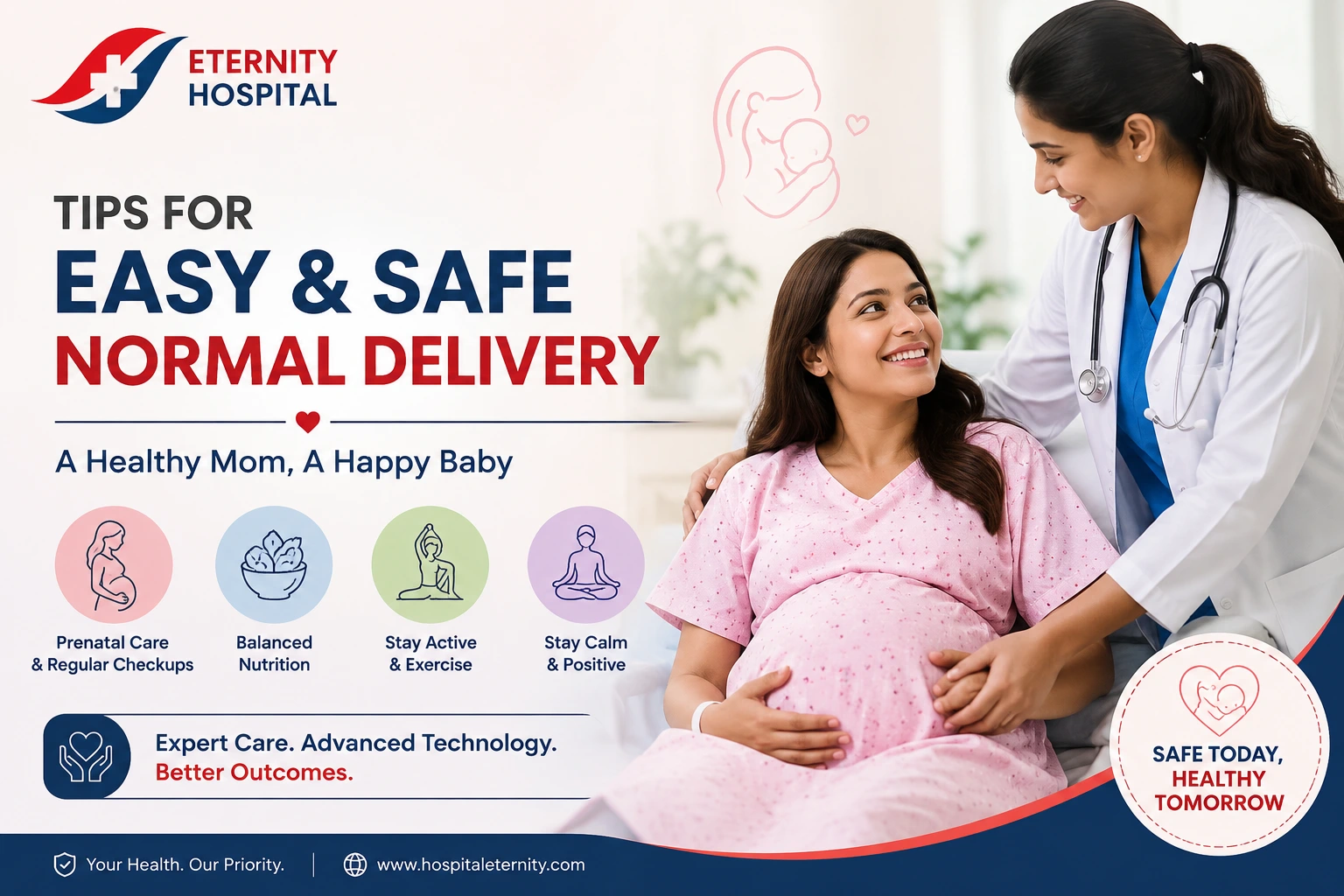
Tips for Easy and Safe Normal Delivery Pregnancy is one of the most beautiful journeys in a woman’s life. Still, as the due date approaches, many mothers start wondering, “How can I increase my chances of having a safe and easy normal delivery?” The good news is that while no one can guarantee a vaginal birth, proper preparation, healthy habits, and expert medical care can significantly improve your overall pregnancy and childbirth experience.
According to the latest recommendations from the World Health Organization (WHO), regular prenatal care, healthy nutrition, physical activity, and respectful maternity care play a vital role in improving maternal and newborn health outcomes. WHO also emphasizes the importance of skilled healthcare professionals during pregnancy and childbirth.
For mothers looking for comprehensive maternity care, advanced obstetric services, and expert guidance throughout pregnancy, Hospital Eternity offers specialized pregnancy care, prenatal monitoring, labor management, and delivery services designed to support safe motherhood and healthy newborn outcomes.
What Is a Normal Vaginal Delivery?
A normal delivery, often called a vaginal delivery, occurs when labor starts naturally, and the baby is born through the birth canal without major surgical intervention. Medical experts define normal childbirth as spontaneous labor that progresses naturally and results in the birth of a healthy baby while maintaining the safety of the mother. Although many women desire a normal delivery, it is important to understand that every pregnancy is unique. Factors such as maternal health, fetal position, medical conditions, and labor progression can influence the final mode of delivery.
Many people mistakenly believe that certain foods, exercises,10
Many people mistakenly believe that certain foods, exercises, or home remedies can guarantee a normal delivery. In reality, no method can guarantee vaginal birth. However, maintaining good health throughout pregnancy can improve your body’s readiness for labor and reduce unnecessary complications. The goal should always be a safe delivery for both mother and baby, rather than focusing solely on the mode of birth.
Benefits of Normal Delivery
Normal delivery offers several advantages for both mothers and babies. Recovery is generally faster compared to cesarean delivery, allowing mothers to return to daily activities sooner. Women who undergo vaginal birth often experience shorter hospital stays and fewer surgical complications. Additionally, early skin-to-skin contact and breastfeeding initiation are often easier after a normal delivery.
For babies, vaginal birth helps clear fluid from the lungs naturally during the birth process. It also exposes newborns to beneficial bacteria that support immune system development. While cesarean sections are life-saving when medically necessary, a successful normal delivery can provide several physiological benefits to maternal and neonatal well-being. citeturn0search5turn0search33
Importance of Prenatal Care
Regular Pregnancy Checkups
One of the most effective ways to support a safe, normal delivery is through consistent prenatal care. The World Health Organization recommends multiple antenatal visits throughout pregnancy to monitor maternal and fetal health. Regular checkups help detect complications early, including gestational diabetes and fetal growth concerns. citeturn0search3turn0search1
Prenatal visits also provide opportunities to discuss birth preferences, understand warning signs, and receive personalized recommendations from healthcare professionals. Expectant mothers should never skip scheduled appointments, even if they feel healthy. Many pregnancy-related complications develop silently and can only be detected through routine medical assessments.
Monitoring Mother and Baby’s Health
Modern prenatal care includes ultrasounds, blood tests, urine examinations, blood pressure monitoring, and fetal growth assessments. These evaluations ensure that both mother and baby remain healthy throughout pregnancy. Early identification of potential risks allows healthcare providers to implement interventions that can improve delivery of Hospital Eternity, such as urlHospital Eternityhttps://www.hospitaleternity.com/, provide comprehensive pregnancy monitoring services, helping mothers receive expert guidance at every stage. Having access to experienced obstetricians and advanced medical facilities can make a significant difference in ensuring a safe and positive childbirth experience.
Nutrition for Normal Delivery
Essential Nutrients During Pregnancy
Nutrition serves as the foundation for a healthy pregnancy. A balanced diet supports fetal development, strengthens maternal health, and prepares the body for labor. Essential nutrients include protein, iron, calcium, folic acid, vitamin D, omega-3 fatty acids, and complex carbohydrates. These nutrients contribute to healthy fetal growth, strong bones, and pain energy levels during labor. citeturn0search6turn0search2
Pregnant women often hear the phrase “eating for two,” but this can be misleading. Quality matters far more than quantity. Instead of doubling food intake, focus on nutrient-dense meals that provide the vitamins and minerals required for both mother and baby. A balanced dietary approach helps maintain healthy weight gain and reduces the risk of pregnancy-related complications.
Foods That Support a Healthy Pregnancy
The following table highlights some important foods that can support maternal health during pregnancy:
Nutrient Food Sources: Benefits
Protein Eggs, fish, lentils, dairy Muscle growth and fetal development
Iron Spinach, beans, lean meat, prevent anemia
Calcium Milk, yogurt, and cheese support bone health
Folic acid: Leafy vegetables, citrus fruits. Reduces neural tube defects
Healthy Fats: Nuts, seeds, avocados, for brain development
Fiber: Whole grains, fruits, and vegetables. Prevents constipation
Hydration is equally important. Drinking sufficient water helps maintain amniotic fluid levels, supports circulation, and prevents dehydration during pregnancy. Experts recommend staying consistently healthy during the third trimester. citeturn0search6turn0search11
Staying Active During Pregnancy
Safe Exercises for Expectant Mothers
Physical activity can be one of the most powerful tools for preparing the body for childbirth. Regular exercise improves stamina, strengthens muscles, supports healthy weight gain, and enhances overall well-being. Studies and clinical recommendations suggest that most healthy pregnant women can engage in activity with medical approval. citeturn0search13turn0search2
Walking, swimming, prenatal yoga, stretching exercises, and pregnancy-safe strength training are among the most recommended activities. Exercise also promotes better circulation, reduces swelling, improves sleep quality, and helps manage stress. Women who remain active during pregnancy often feel more physically prepared for the demands of labor.
Benefits of Walking and Prenatal Yoga
Walking is one of the simplest and safest exercises during pregnancy. It requires no special equipment and can easily be adjusted according to fitness levels. Regular walking helps maintain cardiovascular health, supports healthy weight management, and improves endurance.
Prenatal yoga focuses on flexibility, breathing, posture, and relaxation. It helps strengthen muscles used during labor while reducing physical discomfort. Many pregnant women find yoga particularly beneficial for relieving back pain and improving emotional well-being. Combined with proper medical guidance, it can lead to a smoother pregnancy journey. citeturn0search2turn0search7
Maintaining Healthy Weight Gain
Risks of Excessive Weight Gain
Healthy weight gain is a critical component of pregnancy care. Gaining too much weight can increase the risk of gestational diabetes, hypertension, prolonged labor, and delivery complications. On the other hand, inadequate weight gain may affect fetal growth and development.
The ideal amount of weight gain varies depending on a woman’s pre-pregnancy body mass index (BMI). Healthcare providers can offer individualized recommendations based on medical history and pregnancy progress. Rather than focusing solely on numbers, pregnant women should prioritize balanced nutrition, regular activity, and consistent prenatal monitoring.
Maintaining a healthy weight is not about dieting during pregnancy. It is about making informed nutritional choices and developing sustainable habits that support both maternal and fetal health. A healthy pregnancy, labor, and postpartum recovery. citeturn0search13turn0search34
Pelvic Floor Strengthening
Kegel Exercises and Their Benefits
The pelvic floor muscles play a vital role during pregnancy and childbirth. These muscles support the uterus, bladder, and bowel while contributing to effective pushing during labor. Kegel exercises strengthen and improve awareness of these important muscle groups.
Regular pelvic floor exercises may help reduce urinary incontinence, improve muscle control, and support postpartum recovery. Healthcare professionals often recommend incorporating Kegel exercises into daily pregnancy routines. Learning both contraction and relaxation techniques requires flexibility as well as strength. citeturn0search13
Some women also benefit from consulting a pelvic floor physiotherapist who can provide personalized guidance. Proper training can help ensure exercises are performed correctly and effectively.
Preparing Mentally for Labor
Managing Fear and Anxiety
Mental preparation is just as important as physical preparation. Fear and anxiety can increase stress hormones, which may affect labor progression and overall birth experience. Many first-time mothers feel nervous about labor pain, delivery complications, and the unknown aspects of childbirth.
Education is one of the best ways to overcome these fears. Childbirth classes, prenatal counseling, and discussions with healthcare providers can provide valuable information and build confidence. Understanding what to expect during labor helps replace uncertainty with preparedness.
Having a supportive partner, family member, or birth companion can also reduce anxiety. Emotional support creates a sense of security and reassurance during labor, helping mothers remain focused and confident throughout the process.
Relaxation and Breathing Techniques
Breathing exercises are often underestimated, but they can be incredibly effective during labor. Controlled breathing helps improve oxygen delivery, reduce muscle tension, and promote relaxation. Many childbirth education programs are designed for labor management. citeturn0search11turn0search6
Meditation, mindfulness practices, visualization techniques, and gentle stretching can further support emotional well-being. These approaches encourage relaxation and help mothers develop coping strategies for labor discomfort.
Labor Preparation Strategies
Recognizing Labor Signs
Knowing the signs of labor can help expectant mothers seek timely medical attention. Common signs include regular contractions, lower back pain, rupture of membranes (water breaking), pelvic pressure, and cervical changes. Labor experiences vary significantly among women, making it important to discuss with healthcare providers. citeturn0search0turn0search3
Early recognition allows families to reach the hospital safely and avoid unnecessary stress. Women should contact their healthcare provider immediately if they experience unusual symptoms such as vaginal bleeding, reduced fetal movement, severe headache, or sudden swelling.
Creating a Birth Plan
A birth plan outlines preferences regarding labor, pain management, support persons, and newborn care. While flexibility remains important, creating a birth plan encourages communication between families and healthcare teams.
An effective birth plan should address:
- Preferred labor positions
- Pain management options
- Birth companion preferences
- Immediate newborn care
- Breastfeeding intentions
Discussing these preferences during prenatal visits helps ensure everyone understands the mother’s wishes while maintaining medical safety.
Choosing the Right Hospital and Doctor
Why Expert Maternity Care Matters
One of the most important decisions during pregnancy is selecting the right hospital and healthcare team. Even the healthiest pregnancy can develop unexpected complications, making access to experienced obstetricians and emergency medical services essential.
A good maternity hospital should offer comprehensive prenatal care, fetal monitoring, labor support, neonatal care, and emergency obstetric services. Mothers should look for facilities with experienced specialists, modern infrastructure, and patient-centered hospital care.Hospital Eternityhttps://www.hospitaleternity.com/ provides specialized obstetric and gynecological services, pregnancy monitoring, labor management, and comprehensive maternal healthcare solutions. Their commitment to personalized care helps expecting mothers feel supported throughout pregnancy, delivery, and postpartum recovery.
Conclusion
Achieving an easy and safe normal delivery is not about following a single secret formula. It is the result of consistent prenatal care, proper nutrition, regular physical activity, mental preparedness, healthy lifestyle choices, and expert medical support. While no exercise, diet, or technique can guarantee a vaginal birth, these evidence-based practices can help improve overall maternal health and prepare the body for labor.
The ultimate goal should always be the safety and well-being of both mother and baby. By staying informed, attending regular checkups, and working closely with experienced healthcare professionals, expecting mothers can approach childbirth with confidence. Hospital Eternity, such as urlHospital Eternityhttps://www.hospitaleternity.com/, can further enhance the pregnancy journey and ensure access to quality care whenever it is needed.