

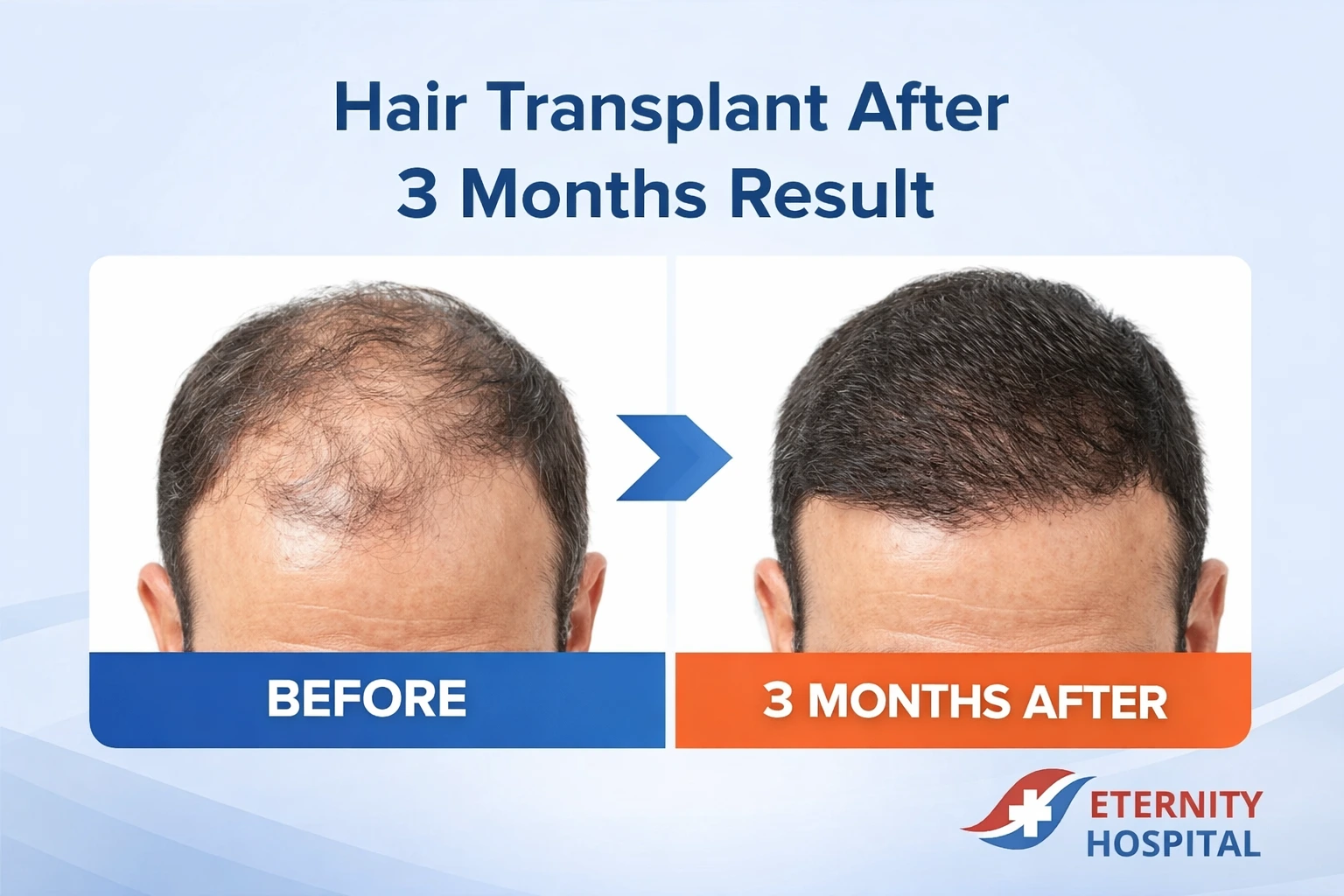
Hair loss can affect confidence, appearance, and even social interactions. That’s why many people today choose hair transplant surgery as a permanent solution to baldness or thinning hair. But after undergoing the procedure, one of the most common questions patients ask is: “What will my hair transplant look like after 3 months?” Understanding the Hair Transplant After 3 Months Result is crucial for setting expectations.
The 3-month stage is actually a very important milestone in the hair restoration journey. It is the point where early regrowth begins, and patients start noticing the first visible changes. However, expectations must remain realistic because the final results of a hair transplant typically appear after 9–12 months.
In this detailed guide, we will explore hair transplant results after 3 months, the growth timeline, what is normal, what is not, and how you can improve your results. We will also explain why many patients trust Hospital Eternity for advanced hair restoration treatments and what to expect in terms of Hair Transplant After 3 Months Result.
Understanding the Hair Transplant Process
Hair transplant surgery is a cosmetic procedure where healthy hair follicles are taken from a donor area (usually the back of the head) and implanted into thinning or bald areas. This technique works because hair follicles taken from the donor area are genetically resistant to hair loss. Once transplanted, they continue to grow naturally for the rest of the patient’s life.
The procedure has become extremely popular in recent years thanks to advancements in technology and minimally invasive techniques. Today, procedures such as FUE (Follicular Unit Extraction) and FUT (Follicular Unit Transplantation) allow surgeons to implant thousands of grafts with precision, resulting in natural-looking hairlines and improved density.
During the procedure, doctors extract individual hair follicles or small strips of scalp containing hair roots. These grafts are then carefully implanted into the target area following the natural direction and angle of hair growth. This meticulous process ensures the transplanted hair blends seamlessly with existing hair.
Many people assume that hair begins growing immediately after surgery, but the reality is more complex. Hair growth occurs in phases and follows the body’s natural hair cycle. After transplantation, the follicles enter a temporary resting phase before producing new hair. That’s why patience is essential when evaluating results.
Modern clinics like Hospital Eternity use advanced surgical techniques, precision instruments, and experienced surgeons to maximize graft survival rates and achieve natural-looking results. Choosing the right clinic can significantly influence the success of your hair transplant.
Hair Growth Timeline After Transplant
Understanding the timeline of hair growth after a transplant can help reduce anxiety and unrealistic expectations. The journey from surgery to full results takes about 9 to 12 months, and each month brings noticeable changes.
Month 1 – Healing and Scab Formation
The first month after hair transplant surgery is primarily focused on healing. During the first few days, tiny scabs form around the implanted grafts. These scabs are completely normal and usually fall off within 7–10 days. Patients may also experience mild redness, itching, or swelling in the scalp, but these symptoms typically resolve quickly with proper care.
By the end of the first month, the transplanted hair shafts often fall out. Many patients panic at this stage because they think the transplant has failed. In reality, this is a completely natural process called shock loss. The hair shafts shed while the follicles remain safely embedded in the scalp.
During this phase, the scalp continues to heal internally. Blood vessels connect to the transplanted follicles, allowing them to receive nutrients and oxygen. This process is essential for long-term hair growth.
Clinics like Hospital Eternity provide detailed post-procedure care instructions to ensure patients heal properly and protect their newly implanted grafts.
Month 2 – Shock Loss Phase
The second month is often referred to as the “ugly duckling phase.” Most of the transplanted hair has fallen out, and the scalp may appear similar to the pre-surgery condition. This stage can be psychologically challenging for patients because visible improvements have not yet started.
However, beneath the surface, important biological processes are happening. The transplanted follicles enter the telogen phase, a resting stage where the follicles prepare to produce new hair strands. This phase is temporary but necessary for the hair growth cycle.
Patients are usually advised to continue prescribed medications such as minoxidil or finasteride to support hair growth. Proper scalp care, good nutrition, and avoiding excessive stress also contribute to better results.
At this stage, it is important to trust the process and remain patient. The most exciting changes usually begin around the third or fourth month.
Month 3 – Beginning of New Hair Growth
By the third month after a hair transplant, the first signs of new hair growth typically start appearing. These hairs are often very thin, soft, and light in color. Although they may not yet resemble normal hair, they indicate that the follicles have successfully taken root in the scalp.
Studies suggest that around 10–20% of the final hair growth may be visible at 3–4 months after the procedure.
Growth at this stage may appear uneven or patchy, which is completely normal. Some follicles activate earlier than others because each hair root follows its own growth cycle. The newly emerging hair gradually thickens and darkens over time.
This stage marks the beginning of visible transformation. Patients often feel relieved and excited as they finally see signs that the procedure is working.
Hair Transplant After 3 Months Result
The 3-month result is often subtle but important. It represents the transition from recovery to active hair growth.
Percentage of Hair Growth at 3 Months
At three months, patients generally experience early regrowth rather than full results. Research indicates that around 10–20% of transplanted hair becomes visible during this stage, depending on individual healing and genetics.
Here is a typical growth timeline:
Timeline Hair Growth Progress
3–4 Months 10–20% hair growth
6 Months, Around 50% growth
8–9 Months Approximately 80% density
9–12 Months Final results visible
Although the density is still low, patients often notice improvements in the hairline and frontal scalp area. Hair in the crown region usually grows more slowly and may take longer to show visible changes.
Texture and Appearance of New Hair
Newly transplanted hair at the 3-month stage often looks different from natural hair. It may appear thin, slightly curly, or lighter in color. This happens because the follicles are still adjusting to their new location and rebuilding the hair shaft.
Over the next several months, the hair gradually becomes thicker, darker, and stronger. By the sixth month, the texture typically starts resembling normal hair, and the density improves significantly.
Patients who undergo surgery at reputable clinics like Hospital Eternity often experience smoother recovery and better graft survival rates. This leads to more consistent and natural-looking hair growth in the long run.
Signs Your Hair Transplant Is Working
Many patients worry about whether their hair transplant is successful. Fortunately, several positive signs can indicate healthy progress by the third month.
Early Hairline Development
One of the most noticeable improvements during the third month is the gradual formation of the new hairline. Even though the hair strands are thin, they help define the shape of the restored hairline. This is particularly noticeable in patients who have had frontal hairline reconstruction.
As the months pass, the density increases and the hairline becomes more natural. Skilled surgeons design hairlines carefully to match facial structure, ensuring long-term aesthetic results.
Reduction in Scalp Sensitivity
Another good sign is the reduction of redness, itching, and scalp sensitivity. By the third month, most patients feel completely comfortable touching or styling their hair again.
Some individuals may still notice mild pinkness or tingling in the scalp, especially if they have sensitive skin. This is usually temporary and fades as the skin continues to heal.
Why Hair Growth Varies Between Patients
Hair transplant results can vary significantly from one person to another. Several factors influence the speed and quality of hair growth.
Genetics and Hair Cycle
Every individual has a unique hair growth cycle. Some people naturally experience faster hair growth, while others have slower cycles. Genetics also determines hair thickness, color, and density.
Because of these biological differences, two patients who receive identical procedures may experience different growth timelines.
Surgeon Skill and Clinic Quality
The expertise of the surgeon plays a critical role in the success of a hair transplant. Proper graft extraction, careful implantation, and correct hair angle placement are essential for achieving natural results.
Clinics with experienced surgeons and advanced equipment usually deliver higher graft survival rates and better cosmetic outcomes.
This is why many patients prefer Hospital Eternity, known for its skilled specialists and advanced hair restoration techniques.
Visit:
How to Improve Hair Transplant Results
While the surgeon performs the procedure, patients also play an important role in achieving the best results.
Diet and Lifestyle Tips
Healthy hair growth requires proper nutrition and lifestyle habits. Consuming foods rich in protein, iron, zinc, and vitamins helps strengthen hair follicles and accelerate growth.
Good dietary choices include eggs, fish, nuts, leafy vegetables, and fruits. Staying hydrated and getting enough sleep also supports overall scalp health.
Avoiding smoking and excessive alcohol consumption can improve blood circulation to the scalp, promoting faster recovery.
Medical Treatments for Better Growth
Doctors often recommend medications to support transplanted hair follicles. Common treatments include:
- Minoxidil – stimulates hair growth
- Finasteride – prevents further hair loss
- PRP therapy – improves follicle strength
Following your doctor’s instructions carefully can significantly improve long-term results.
Choosing the Right Clinic
Selecting the right clinic is one of the most important decisions when considering a hair transplant.
Why Hospital Eternity Is Trusted
Hospital Eternity is a well-known medical center offering advanced hair restoration procedures with experienced specialists. The clinic focuses on personalized treatment plans, ensuring every patient receives the best solution for their hair loss condition.
Key advantages include:
- Advanced FUE hair transplant techniques
- Experienced surgeons and dermatologists
- Modern medical facilities
- Natural hairline design
- High graft survival rates
Patients from across India and abroad trust the clinic for safe procedures and natural-looking results.
Benefits of Expert Hair Transplant Specialists
An experienced surgeon can make the difference between an average and an outstanding result. Skilled specialists carefully analyze the patient’s hair density, scalp condition, and facial structure before designing the transplant plan.
This personalized approach ensures the final results look completely natural and long-lasting.
Conclusion
The 3-month stage after a hair transplant is an exciting milestone because it marks the beginning of new hair growth. While the results may still appear subtle, this phase confirms that the transplanted follicles have successfully taken root.
Patients typically see 10–20% of their final hair growth by the third or fourth month, with more dramatic improvements appearing between months six and twelve.
Patience, proper aftercare, and choosing the right clinic are essential for achieving the best outcome. If you are considering a hair transplant or want expert guidance for hair restoration, Hospital Eternity offers advanced treatments designed to deliver natural and long-lasting results.