

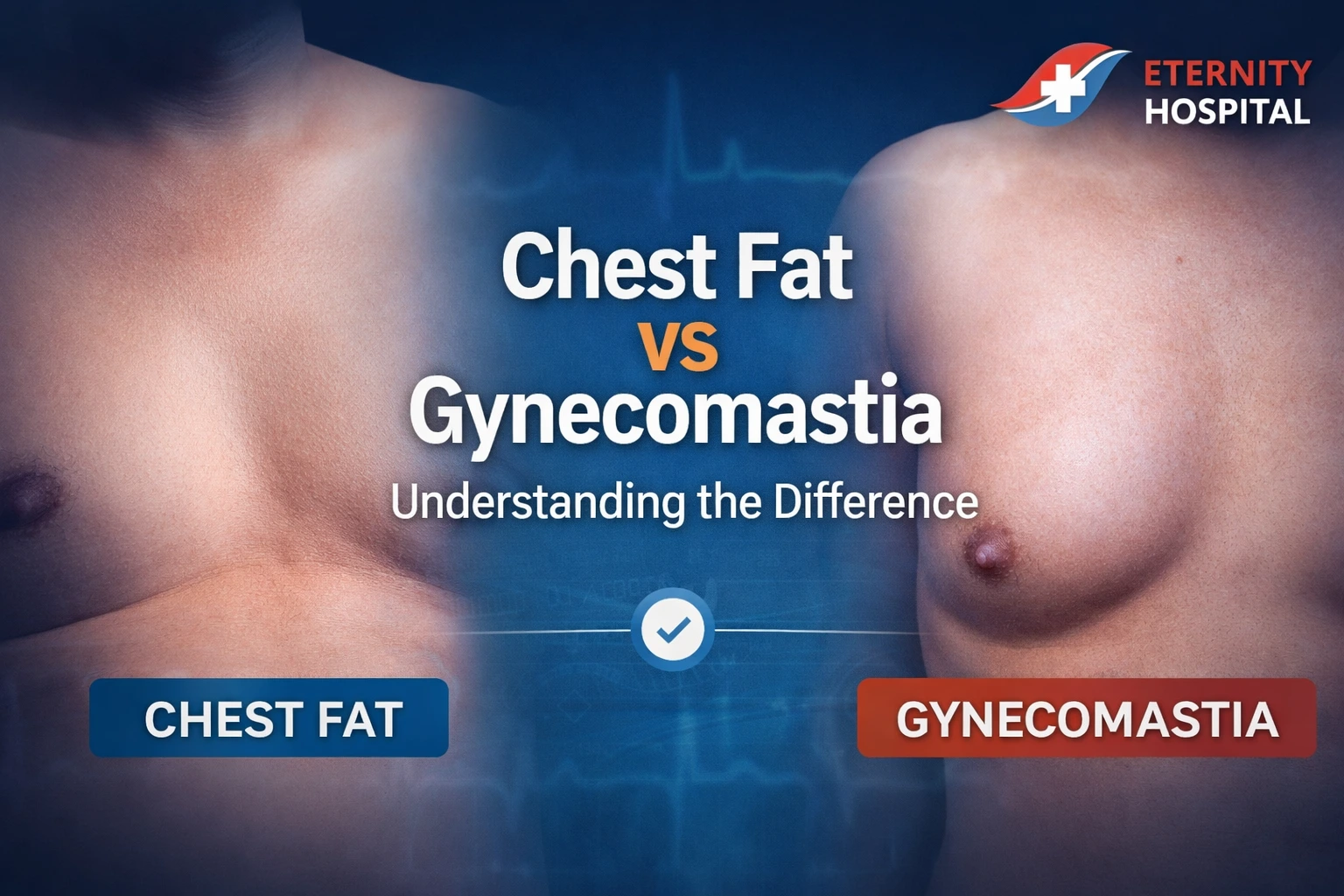
Have you ever looked in the mirror and wondered, “Why does my chest look enlarged?” You’re not alone. Many men struggle with chest fullness and immediately assume the worst. But here’s the thing — not every enlarged male chest is gynecomastia.
Sometimes it’s just chest fat. Other times, it’s true gynecomastia.
And trust me, knowing the difference can save you time, money, and frustration.
Let’s break it down clearly and honestly.
Introduction to Male Chest Enlargement
Why Men Notice Chest Changes
Men are becoming more health-conscious than ever, whether it’s the gym, social media, or just wanting to look confident in a fitted shirt — chest shape matters.
When the chest looks puffy, saggy, or swollen, it affects confidence. Some avoid swimming. Others avoid tight clothes. Sound familiar?
But before panicking, you need clarity.
Why It’s Important to Know the Difference
Chest fat and gynecomastia may look similar from the outside, but they are completely different conditions internally. And here’s the key — their treatment is different too.
To further understand these conditions, it’s crucial to compare them directly: Chest Fat vs Gynecomastia. Understanding the differences between these two conditions is essential for effective treatment.
You can’t treat glandular tissue with push-ups. And you can’t solve excess fat with surgery alone if lifestyle isn’t addressed.
Understanding the root cause is everything.
What Is Chest Fat?
Chest fat is exactly what it sounds like — excess fat stored in the chest area.
Causes of Chest Fat
Chest fat usually develops due to:
- Weight gain
- Poor diet
- Sedentary lifestyle
- Lack of strength training
- High body fat percentage
It’s not a medical condition. It’s simply fat accumulation.
How Lifestyle Affects Chest Fat
Your daily habits play a huge role.
Role of Diet
High-calorie diets, processed foods, sugary drinks — they all contribute to fat storage. And guess what? The chest is one of the areas where men store fat.
Think of your body like a storage warehouse. If you keep sending in extra calories, they have to be stored somewhere.
Role of Exercise
Lack of exercise leads to fat gain. However, targeted chest workouts combined with full-body fat loss can significantly reduce chest fat.
If your chest size decreases when you lose overall weight, it’s likely just fat.
What Is Gynecomastia?
Now let’s talk about the real medical condition.
Gynecomastia is the enlargement of male breast gland tissue due to a hormonal imbalance.
Medical Definition of Gynecomastia
According to medical science, gynecomastia occurs when estrogen levels increase or testosterone levels decrease, leading to glandular tissue growth in men.
Unlike fat, gland tissue feels firm or rubbery.
Hormonal Imbalance Explained
Estrogen and Testosterone Connection
Men have both estrogen and testosterone. But testosterone dominates.
When this balance shifts — due to puberty, aging, medications, steroids, or health conditions — glandular growth can happen.
Common Triggers and Risk Factors
- Puberty
- Steroid use
- Obesity (can trigger hormonal imbalance)
- Liver disease
- Certain medications
- Aging
This is not about being overweight. Even slim men can have gynecomastia.
Chest Fat vs Gynecomastia: Key Differences
Here’s where it gets interesting.
Difference in Tissue Type
- Chest fat = soft, squishy
- Gynecomastia = firm, rubbery lump under nipple
Difference in Appearance
- Chest fat = saggy appearance
- Gynecomastia = puffy nipples, rounded shape
Difference in Pain and Sensitivity
Gynecomastia can sometimes cause tenderness or sensitivity around the nipple.
Fat does not.
Difference in Treatment Approach
- Chest fat → Diet + Exercise
- Gynecomastia → Surgery (in most cases)
Simple. But a powerful difference.
How to Identify Chest Fat at Home
Try this simple test:
- Press your chest area.
- If it feels soft throughout and reduces with weight loss, it’s likely fat.
Also, check if your overall body fat is high. If yes, chest fat is more likely.
How to Identify Gynecomastia at Home
- Feel for a firm disc-like lump beneath the nipple.
- Notice puffy nipples even if you are slim.
- No change despite weight loss.
If these signs are present, it may be gynecomastia.
But self-diagnosis isn’t enough. Professional consultation is important.
When to See a Doctor
If:
- The chest feels painful
- Enlargement persists
- You feel emotional distress
- Weight loss doesn’t change the chest shape
It’s time to consult a specialist.
Can Exercise Fix Gynecomastia?
Short answer? No.
Exercise can reduce fat. But it cannot remove glandular tissue.
You can build chest muscles underneath, but the gland remains.
It’s like placing a brick under a carpet — the bump will still be there.
Medical Treatments for Gynecomastia
Non-Surgical Options
In early hormonal cases (especially puberty), it may resolve naturally.
But in most adult cases, surgery is the definitive solution.
Surgical Treatment (Gynecomastia Surgery)
Gynecomastia surgery removes gland tissue and excess fat. It reshapes the chest to create a flatter, masculine contour.
Modern techniques are minimally invasive with quick recovery.
Why Professional Consultation Matters
Correct diagnosis is crucial.
An experienced surgeon evaluates:
- Fat vs gland
- Skin elasticity
- Grade of gynecomastia
- Overall health
That’s why choosing the right hospital makes a big difference.
Why Choose Hospital Eternity for Treatment
If you’re looking for expert care, Hospital Eternity is known for advanced cosmetic and surgical solutions.
With experienced specialists, modern technology, and patient-focused care, they provide:
- Accurate diagnosis
- Customized treatment plans
- Safe surgical procedures
- Comprehensive aftercare support
When it comes to something as personal as chest correction, experience matters.
And confidence begins with the right decision.
Recovery After Gynecomastia Surgery
Recovery is usually smooth:
- Mild swelling for a few weeks
- Compression garment required
- Return to work in a few days
- Gym after 4–6 weeks
Results are long-lasting and confidence-boosting.
Myths About Chest Fat and Gynecomastia
- “It’s always because of obesity.” (False)
- “Gym will fix everything.” (Not true for gland)
- “Only teenagers get it.” (Adults, too)
- “Surgery is risky.” (Modern techniques are safe)
Don’t let myths delay your decision.
Emotional Impact and Confidence Issues
Let’s be honest.
Chest enlargement affects:
- Body image
- Relationships
- Social confidence
- Self-esteem
Many men suffer silently.
But you don’t have to.
Prevention Tips for Chest Fat
- Maintain a healthy weight
- Avoid steroid misuse
- Eat a balanced diet
- Exercise regularly
- Limit alcohol intake
Healthy habits prevent fat-related chest issues.
Conclusion
Chest fat and gynecomastia may look similar — but they are not the same.
One is excess fat. The other is glandular growth.
One can improve with lifestyle changes. The other usually requires medical treatment.
If you’re unsure, consult professionals at Hospital Eternity for proper evaluation and guidance. Because when you understand the problem correctly, the solution becomes clear.
https://www.hospitaleternity.com/gynecomastia-surgery-in-ghaziabad/